What to Check Before Buying a Sofa You Cannot Sit On
Last month I visited a Tampines HDB showflat with a colleague who was furnishing her first three-room flat in Punggol. She had already picked a side table and a wardrobe, but the living room sofa was still undecided because every sofa in the showroom felt different to sit on, and she didn't trust the showroom comfort to translate into her own living room at Block 268A. Before we even touched a cushion, we spent forty minutes measuring the lift, the corridor corner, and the front door. That afternoon taught me that buying a sofa in Singapore, especially a solid wood sofa built overseas and shipped to your door, is really an exercise in measuring, reading, and trusting the right paperwork. Here is the checklist I now use, with the local context every HDB and condo buyer in Bedok, Tampines, or Punggol has to handle.

How wide is your lift, your corridor, and your front door?
Singapore lift cars in newer HDB blocks typically measure around 1.1 m wide by 1.4 m deep with a door opening of about 0.9 m, but older blocks at Bedok Reservoir and certain Tampines blocks run tighter. A three-seater sofa can be 210 cm to 240 cm long, and a single sofa crate from a Foshan workshop can easily be 230 cm by 95 cm by 80 cm. Before you fall in love with anything, take a folding rule and physically check the lift door diagonal, the inside diagonal of the lift car, and the corner where the corridor turns 90 degrees. If the crate won't clear the corner, you will not be carrying that sofa into your home, no matter how beautiful the marble table or the bed frame looks in the brochure.
For condos, the service lift is often 1.5 m by 2.0 m, which gives you more breathing room, but you also have a loading bay booking window to consider. Ask your concierge about the largest delivery slot. A reasonable buffer is at least 10 cm of clearance on every side of the crate, because hand trucks need room to pivot on the ramp.

What should I check on the frame, the foam, and the suspension?
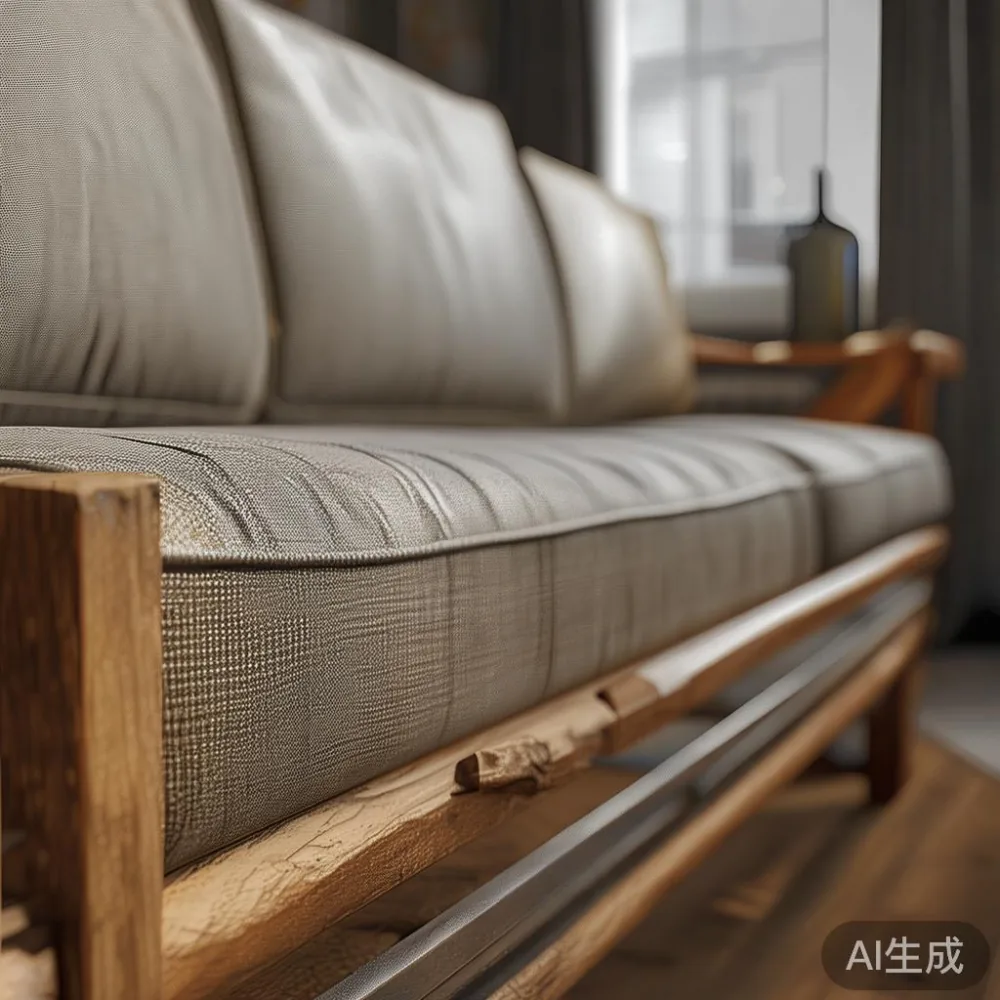
A sofa you cannot sit on has to be judged on three internal layers: the skeleton, the cushion, and the webbing. For the skeleton, ask whether the frame is kiln-dried solid wood (often ash, oak, or rubberwood for an export-grade piece) or a mix of plywood and metal furniture hardware. A solid wood sofa with mortise-and-tenon joinery will outlive a stapled plywood frame by a decade, and the warranty paperwork will tell you which one you are paying for. Look for corner blocks that are glued AND screwed, not just stapled. Run your finger along visible joints; if you can feel a staple head, that is a yellow flag.
For cushions, density matters more than softness in a showroom. Seat foam at 32 to 35 kg per cubic metre will keep its shape after two years of evening Netflix, while 22 kg foam feels wonderful for ten minutes and sags by month six. Down-wrapped foam feels plusher but needs daily fluffing. For the suspension, eight-way hand-tied springs are the gold standard, but sinuous S-springs at 8-gauge are perfectly acceptable if the gauge and the spring count are listed. A three-seater should have at least 24 sinuous springs across the seat deck. If the salesperson cannot tell you the foam density or the spring count, walk out.
How do I choose a rattan furniture for a HDB living room?
For a typical HDB living room in Singapore, choose rattan furniture with a sealed or lacquered finish, a solid wood inner frame (not hollow rattan core), and removable cushion covers rated for tropical humidity above 80 percent. Rattan pieces pair naturally with a solid wood sofa in a French light luxury scheme because the warm cane texture softens the polished marble and brushed brass you see in post-modern light luxury interiors. If your unit faces the afternoon sun on the 12th floor of a Punggol EC, avoid untreated natural rattan and pick UV-resistant synthetic rattan or PE wicker woven over an engineered wood core.
When I was helping my colleague choose, we measured 3.2 m of wall behind the TV console. A 2.4 m rattan daybed left 80 cm of breathing room on each side, which is the minimum to keep the room from feeling cramped under HDB's 9 ft ceiling. We also placed a small ceramic side table next to it, because rattan chairs without a flat surface nearby always end up collecting mugs on the floor.
Will the sofa survive Singapore's humidity, and how is it shipped?
Singapore's average humidity sits between 70 and 85 percent for most of the year, with afternoon peaks above 90 percent. A solid wood sofa shipped from Foshan, China, has to handle eight to twelve weeks inside a container where temperature can swing from 5 °C at the Shanghai port in January to 38 °C on the Singapore wharf in July. Ask the seller three questions: what is the moisture content of the wood when packed (target 8 to 12 percent), is the finish a conversion varnish or a nitrocellulose lacquer, and are the legs pre-attached or packed separately in foam-lined cartons?
Two extra practical checks. Confirm the shipping terms: free delivery to your door is common above a certain order value (for MIDHILL, for instance, complimentary shipping kicks in above US$350, which is roughly SGD 480 at today's rates, and the company has been exporting solid wood pieces since 2008 to more than fifteen countries). Confirm the GST treatment. From 1 January 2023, GST is 9 percent on imported goods above the SGD 400 threshold, and the seller should be able to tell you whether the displayed price is GST-inclusive or whether you will be billed the 9 percent on top at your door. I have seen buyers in Bedok caught by surprise on a Saturday delivery because nobody asked.
What does the warranty actually cover, and what happens after year ten?
A ten-year structural warranty on the frame is a meaningful number, but you need to read what "structural" means. In a good policy, structural covers broken joinery, cracked load-bearing rails, and spring failure. It usually does not cover foam softening, fabric pilling, or finish yellowing, because those are considered wear items. A strong sign of a serious workshop is lifetime refinishing: the ability to send the piece back for re-varnishing or re-upholstery. MIDHILL, the Foshan workshop I mentioned earlier, offers exactly that, and refinishing every eight to ten years is what keeps a French light luxury sofa looking current as the bouclé trend fades and boucle gives way to linen blends.
Also check the return window. Fourteen days is a fair baseline, and you want it to be no-questions-asked for manufacturing defects, with the freight cost borne by the seller. If the sofa arrives with a chipped leg or a torn seam, photos taken at the doorstep with the courier still present are the only evidence that matters for any claim. A 4-ply cardboard crate with foam corners and a wooden base is what you should be looking for, not a thin plastic wrap. Pieces like a dining table, a nightstand, or a marble table often travel in the same container, so the crate quality tells you about the whole shipment.
Why fabric care matters more than the showroom swatch
Showroom swatches feel one way under air-conditioning at 22 °C. Your living room at 28 °C with 80 percent humidity will feel completely different. For a family with a cat and a toddler in a Punggol five-room flat, performance fabric with a Martindale rub count above 30,000 is the practical baseline. A rub count of 50,000 is the comfort zone for daily use. If you love the look of Italian light luxury linen, ask about the stain treatment and whether cushion covers are removable and washable. The phrase Italian light luxury fabric care japan often comes up in trade press because Japanese stain-guard technology is currently the benchmark for pet-friendly performance weaves, and several Foshan workshops now apply that same chemistry to their export lines.
Ask the seller for a swatch, take it home, spill a teaspoon of kopi on it, and let it sit for ten minutes. If it wipes clean with a damp microfibre cloth, you have your answer. If it stains permanently, you have a different answer, and you should pick a darker shade or a textured weave that hides marks. Bouclé, for instance, hides cat hair beautifully but traps it in the loops, so a lint roller becomes part of your weekly routine.
How do I judge a sofa I can't physically sit on, using video and paperwork?
When a sofa is shipped from overseas and you can't reach a showroom, you fall back on three documents: the spec sheet, the unboxing video, and the third-party review. The spec sheet must list frame material, joinery method, foam density in kg per cubic metre, spring type and count, fabric composition with Martindale rating, and carton dimensions in cm with gross weight in kg. A 2.4 m three-seater in solid wood typically weighs 55 to 75 kg packed. If the listed weight is suspiciously low, say under 35 kg, the frame is likely plywood or MDF, and the "solid wood" wording is about the legs only.
Ask the seller for a customer unboxing video shot on a phone, not a marketing render. Real videos show how the legs bolt on, how the cushions compress, and how the fabric looks under daylight rather than showroom spotlights. My colleague ended up choosing a Japanese-made sinuous-spring sofa because she could see the 8-gauge springs in a third-party tear-down video, and the same seller offered a ten-year warranty on the frame and lifetime refinishing. The price landed around SGD 2,400 with GST included and free delivery to her 14th floor Punggol unit. That is a real number, not a guess, and it was the paperwork that closed the sale, not the cushion.
Putting it all together for a Singapore living room
After forty minutes of measuring, an hour of paperwork review, and a kopi spilled on a swatch, my colleague bought a sofa with confidence. The lift diagonal worked, the corridor corner worked, the foam was 34 kg per cubic metre, the springs were listed, the warranty was ten years on the frame, and refinishing was available for life. That is the standard I now apply to every piece of solid wood, marble, or metal furniture I recommend to friends in Bedok, Tampines, or Punggol. Measure first, read second, sit third, and never pay full price before you have seen the unboxing video, the warranty PDF, and the GST-inclusive invoice. A sofa is a ten-year relationship with your living room, and the day you cannot sit on it is exactly the day you should be paying the most attention.