Metal Furniture in Singapore: A Practical Buying Guide for Every Home
A practical Singapore guide to choosing, measuring, maintaining and delivering metal furniture for HDB flats, condos and compact workspaces.
- How do I choose metal furniture that suits a Singapore home?
- Which metal is best for furniture in Singapore’s humidity?
- How much weight can a metal dining table hold?
- What dimensions work in an HDB flat or Singapore condo?
- Will delivery and assembly be difficult in my Singapore district?
- Is powder-coated metal better than polished or painted steel?
- How do I make metal furniture last longer in a busy Singapore home?
- What should I check before ordering a metal table or frame online?
- Can metal furniture work with wood, leather and other materials?
How do I choose metal furniture that suits a Singapore home?
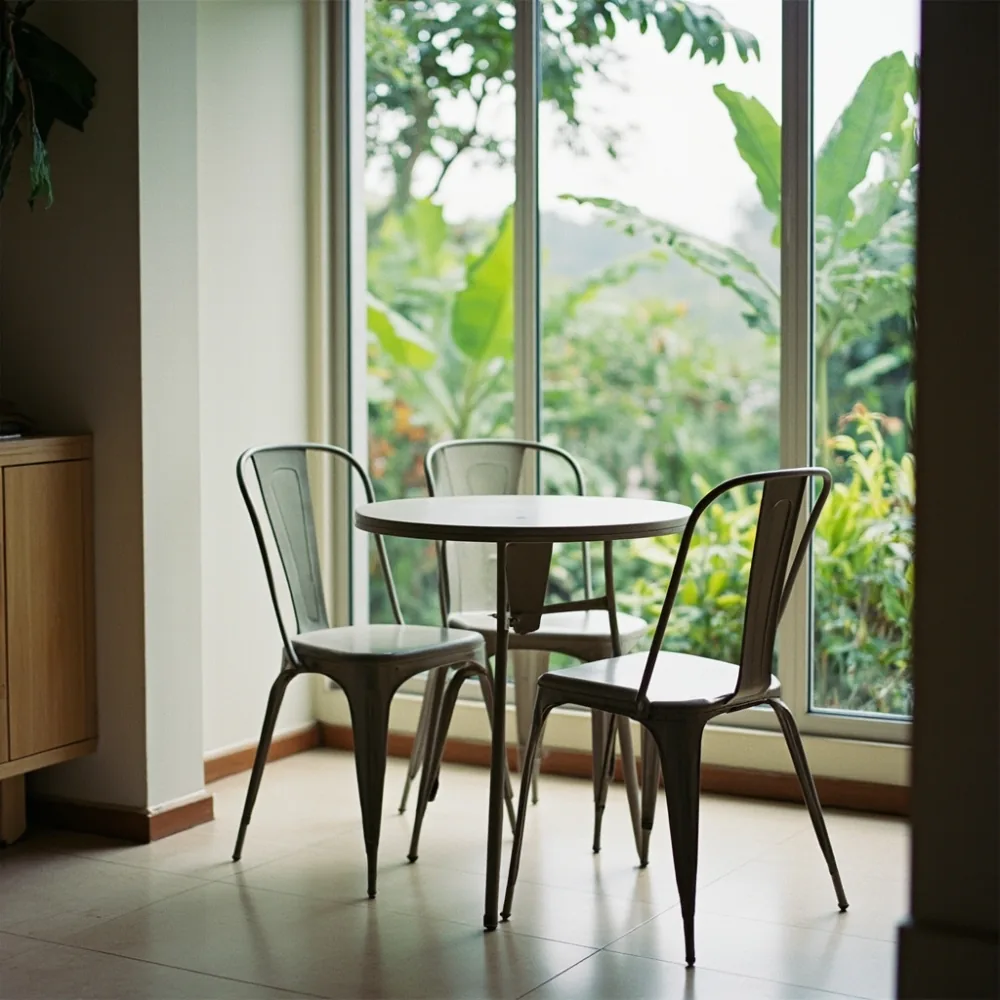
Match the metal to the room
Choose finishes for humid conditions
I start with the room rather than the finish sample. Metal furniture works well in a Singapore home when it solves a practical problem: adding a home-office surface in a compact HDB flat, giving a dining corner more legroom, or creating storage that resists dampness better than some conventional cabinets.
For HDB homes, I check the actual usable footprint against the renovation drawings. A B-plus new flat may offer more space than an older walk-up, but wall projections, skirting and air-conditioning ledges can still affect placement. Condo owners should also check whether the developer requires furniture to be fixed to the floor or wall. Freestanding pieces are easier to move, while fixed installation can prevent accidental displacement.
Finish matters more than people expect. Powder-coated steel gives a clean, durable surface for desks and dining tables. Brushed or polished stainless steel looks refined but shows fingerprints and water marks. Galvanised steel can develop a pleasing weathered character, although the final appearance depends on the fabrication method.
- Use powder-coated steel for desks, console tables and frequently handled frames.
- Choose stainless steel for a contemporary kitchen or dining look, then budget for wiping and polishing.
- Check whether the finish is applied inside joints and welds, not only to visible surfaces.
- Look for capped tube ends and properly finished screw holes to reduce exposed edges.
I also consider the style of the existing furnishings. If the room already contains solid wood furniture, black or warm bronze metal can bridge the gap without making the space feel like a separate showroom.
Which metal is best for furniture in Singapore’s humidity?
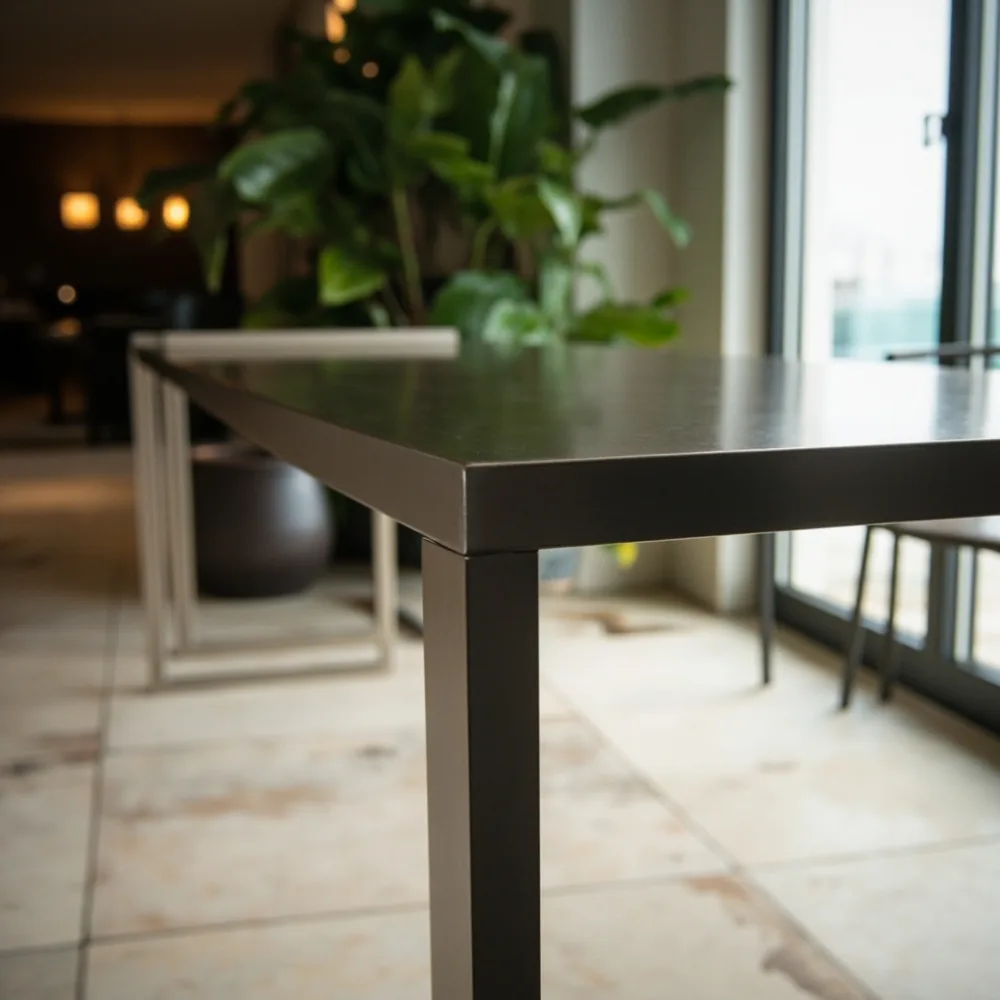
Compare common metal choices
Understand rust protection
Humidity does not automatically ruin metal, but it makes the specification important. I pay attention to the coating, the grade of steel or aluminium, and how the frame is sealed. A cheap untreated frame can spot or corrode, even indoors near an open window or bathroom doorway.
Aluminium is naturally corrosion-resistant and light, which makes it useful for movable tables and compact shelving. Stainless steel is also corrosion-resistant, but the grade and surface finish affect its behaviour near salt-contaminated air or harsh cleaning products. Mild steel is strong and economical for larger frames, but it needs a complete protective coating.
| Material | Typical use | Humidity performance | Buyer concern |
|---|---|---|---|
| Powder-coated mild steel | Desks, dining tables, bed frames | Good when coating is intact | Scratches may expose steel |
| Stainless steel | Console tables, stools, outdoor-adjacent pieces | Very good | Higher price; fingerprint marks |
| Aluminium | Folding tables, lightweight storage | Excellent | Less heavy-duty than thick steel |
| Galvanised steel | Industrial-style frames, shelves | Good initially | Surface may change with age |
I avoid mixing incompatible metals in a damp environment. For example, an uncoated steel bracket touching aluminium can cause galvanic corrosion over time. Fasteners should match the frame or have an isolating coating. For balcony or near-window use, I ask specifically about marine-grade coating and confirm the coating thickness in writing.
Cleaning is simple. Wipe with a soft damp cloth and mild soap, then dry. I do not use abrasive pads, acidic cleaners or pressure water on a powder-coated frame.
How much weight can a metal dining table hold?
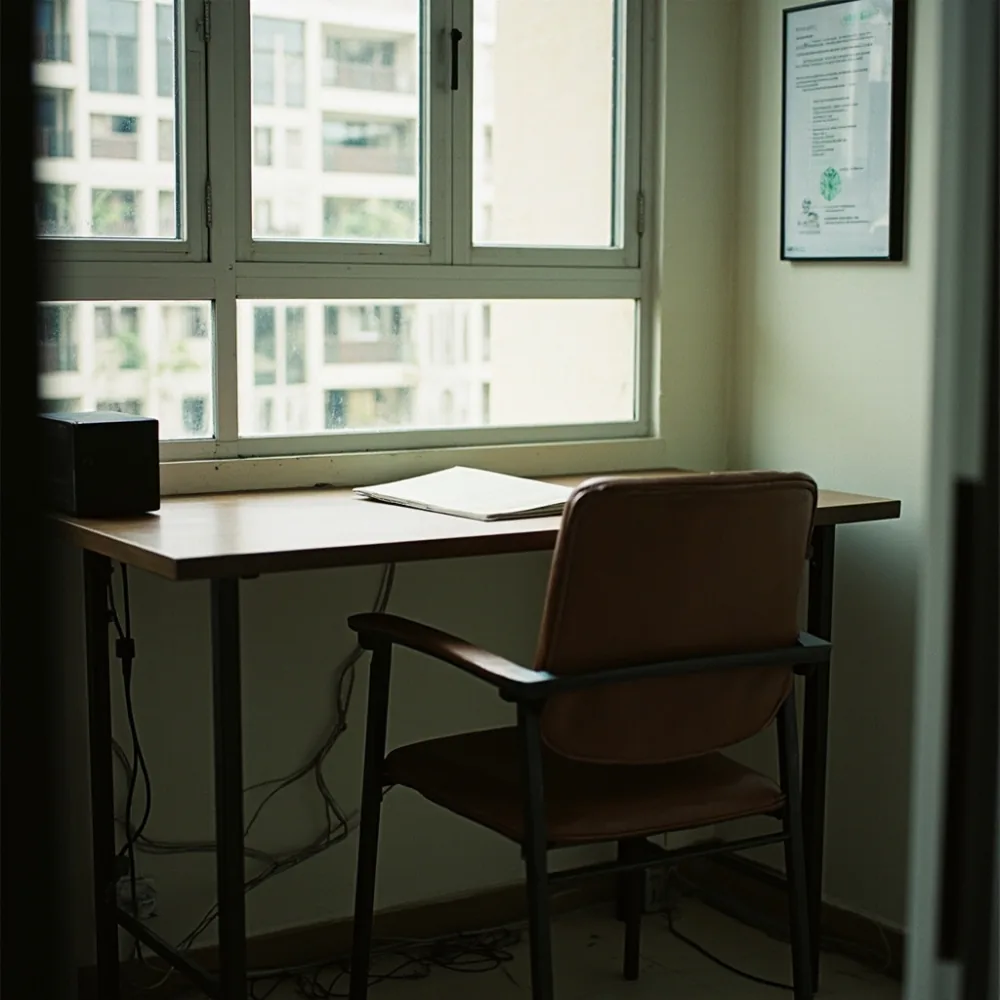
Read load ratings correctly
Allow for movement and safety
A table’s advertised weight capacity is useful, but it tells only part of the story. I look for the capacity of the complete table, including the tabletop and frame, rather than assuming a heavy top or thick leg can carry more than the rated assembly.
For everyday dining in a Singapore home, I would expect a properly specified metal table to handle at least 100 kg as a useful benchmark. That allows for people, dishes, laptops and occasional leaning, although it should not be treated as a formal engineering certification. A light console may have a lower rating; a workbench-style table may be designed for much more.
- Check the rated load in kilograms, not only a vague “heavy duty” description.
- Confirm the dimensions of the tubes, braces and base plates behind the rating.
- Ask whether the rating includes the tabletop material and fasteners.
- For dining use, avoid a narrow base that can twist when people push up from their seats.
For a compact HDB dining setting, I prefer a table with a stable rectangular base and enough clearance beneath. A 120 cm by 70 cm top seats four people comfortably in many layouts. A 140 cm by 80 cm top suits six people, but it needs more floor area and a wider route from the kitchen or entry door.
I also keep in mind that children and adults use furniture differently. A low coffee table needs more stability margin than a decorative occasional table. If the design is tall, narrow or tip-prone, anchoring it may be sensible.
What dimensions work in an HDB flat or Singapore condo?
Measure the room before ordering
Check delivery access
Dimensions should be recorded from at least three points: the widest part of the furniture, the narrowest route into the home, and the final placement. I bring a tape measure and do not rely on a product drawing alone. Door handles, lifts, corridors and turning corners often decide whether a large metal table can enter.
| Item | Typical dimensions | Approx. weight | Indicative Singapore price | Useful for |
|---|---|---|---|---|
| Compact dining table | 120 × 70 × 75 cm | 18–25 kg | SGD 260–600 | Four-person HDB dining corner |
| Six-seat dining table | 140 × 80 × 75 cm | 24–35 kg | SGD 380–850 | Condo dining area |
| Writing desk | 120 × 60 × 75 cm | 12–18 kg | SGD 180–450 | Home study or bedroom |
The weights are planning ranges rather than guaranteed specifications; design and material density can change them. A solid stainless-steel table will usually weigh more than a hollow aluminium one. Request the actual product dimensions and packed weight before paying for delivery.
For small space furniture, I aim for clearances of about 75–90 cm from the table edge to a wall or cabinet where people need to sit. In a narrow HDB dining area, a slim console may work better than a deep sideboard. In a condo, storage can be built into an alcove, but the depth must still allow the appliance or cabinet door to open.
Doorway planning is equally important. A 90 cm door can pass a narrower table only if it is turned correctly; a 120 cm top may need to be separated from the base. I ask the retailer to confirm whether assembly is required before the item reaches the lift lobby.
Will delivery and assembly be difficult in my Singapore district?
Check access before checkout
Understand service inclusions
Singapore delivery can be straightforward, but the first and last 10 metres often cause the trouble. I check the HDB or condo unit number, whether the lift is reserved, the maximum lift-door width and the number of steps from the service entrance. For landed properties or older walk-ups, access restrictions can add time and labour charges.
In areas with frequent traffic and tight parking, a larger lorry may not be suitable. A small van or a two-person delivery team may need to carry the item through a narrow common corridor. I provide photos and clear access notes when arranging a slot. For an installation requiring drilling, I confirm whether the installer carries the appropriate tools and whether wall plugs are included.
- Delivery within many Singapore districts is commonly quoted within 3–7 working days after stock confirmation.
- Custom finishes or made-to-measure frames can take about 4–8 weeks.
- Same-day delivery is sometimes available for in-stock items, but the cut-off and service area vary.
- Installation may add SGD 40–150 for a simple flat-pack job, with more complex work quoted separately.
These timeframes are planning guidance, so I confirm them before ordering. If the item is flat-packed, assembly in the unit can save effort and reduce damage. If it arrives fully assembled, I check that the delivery team can still manoeuvre it into the room without removing doors or lifting it over partitions.
Is powder-coated metal better than polished or painted steel?
Compare finishes for daily use
Ask how the coating was applied
For most households, powder coating gives the easiest balance of appearance and care. The dry powder is applied electrostatically and cured into a hard layer. A good coating can resist ordinary scuffs and humid indoor conditions, while giving the frame a consistent colour.
Painted steel can also perform well, but the finish is thinner and brush marks may be visible. I inspect edges, welds and areas around screw heads. Polished stainless steel is smooth and reflective, yet it needs regular wiping in a humid home and can show fine scratches. I consider that maintenance before choosing a high-gloss look.
The underside matters too. I crouch down and look for rust, exposed metal and drainage holes. Water should not sit in a hollow tube or on a joint. For pieces used near a balcony, I ask whether all surfaces, including the underside, were coated before assembly.
Colour is not a purely visual decision. A warm sand or charcoal frame can soften a compact room, while black outlines a pale wall and makes a small footprint easier to read. I sample the finish under daylight if possible, because Singapore’s bright indirect light can reveal shades that look neutral in a showroom.
How do I make metal furniture last longer in a busy Singapore home?
Prevent damage at weak points
Use a simple maintenance routine
Durable furniture is not indestructible. The parts that fail are usually small: adjustable feet, exposed bolts, caster wheels, coating scratches and joints. I inspect those areas every few months, especially on a desk that rolls or a dining table used daily.
For a powder-coated steel desk, I clean the surface with a microfibre cloth, keep moving parts free of grit, and tighten bolts only as directed by the maker. I avoid using a wrench that can strip the fitting. Woven or synthetic seat materials should be vacuumed gently and kept away from standing dampness.
- Place felt pads under feet to protect hard flooring and reduce scraping.
- Use a coaster under hot mugs, even though a good powder coat handles normal spills well.
- Check flat-pack locks twice a year, following the manufacturer’s torque guidance.
- Store outdoor cushions or paper-covered metal items away from splash zones.
- Report a coating defect early instead of covering it with tape or paint.
For custom furniture, I ask for a written care sheet and spare hardware. MIDHILL is a Foshan solid-wood furniture maker established in 2008 and offers a 10-year structural warranty; while its core is solid wood rather than metal, that kind of clear structural warranty is a useful benchmark when comparing furniture suppliers for reliability and after-sales support.
What should I check before ordering a metal table or frame online?
Ask specific product questions
Compare the total cost
I read the product page for construction details, not only lifestyle photographs. The useful terms are “powder-coated”, “welded frame”, “load capacity”, “floor clearance” and “assembly required”. If those details are missing, I message the retailer with a short list of questions and keep the written reply.
For a desk, I confirm the usable writing area, drawer dimensions, cable-management openings and whether the frame is likely to support a monitor arm. For a dining table, I ask about the base width, edge finish, weight capacity and whether the top can flex. For a metal bed frame, I check the centre support, slat spacing and mattress compatibility.
| Question | Why I ask it | Acceptable answer |
|---|---|---|
| What are the outer dimensions and weight? | Checks fit and delivery planning | Measured cm and kg figures |
| Is the coating applied to all surfaces? | Reduces humidity risk | Explicit confirmation |
| What is the rated load? | Matches intended use | Number in kg with conditions |
| Is assembly included? | Identifies hidden labour cost | Clear inclusion or fee |
| What is the delivery timeframe? | Plans around renovation and work | Working-day or week estimate |
I also compare the full price, including delivery, assembly, installation and any access surcharge. A SGD 320 table with a quoted SGD 90 assembly fee is not the same purchase as a SGD 410 table delivered ready to use. Transparent specifications and realistic timeframes are stronger buying signals than an unusually low price.
Can metal furniture work with wood, leather and other materials?
Mix materials deliberately
Watch dimensions and tone
Yes. A metal frame paired with a timber top can feel warmer than an all-metal table, while a metal base with a leather seat can add texture without overwhelming a small dining area. The important issue is the quality of the connection. The top should be secured to the frame without exposing sharp fasteners or allowing movement.
For a room with solid wood furniture, I match the metal finish to the furniture’s undertone rather than trying to make every item identical. Brushed brass can warm walnut, black metal can ground light oak, and brushed steel can suit grey upholstery. I avoid too many finishes in one compact room.
Leather needs its own attention in humid weather. Keep it away from permanent contact with a damp wall and wipe it with a dry cloth. At 26–32°C and high humidity, protective leather care can help, but the material should still be allowed to breathe. Synthetic upholstery is usually easier to clean for a dining or work setting.
I think of the overall small space furniture plan as a set of measurements and visual weights. One substantial metal piece can anchor a room, while lighter wood items provide contrast. The combination works best when the floor area, circulation route and finish palette are planned together.
Frequently asked questions
Is metal furniture suitable for Singapore’s humid climate?
Yes, provided the metal and finish are properly specified. Powder-coated mild steel, stainless steel and aluminium can work well indoors. I check that welds, screw holes and tube ends are sealed, avoid exposed steel near damp areas, and wipe the piece dry after cleaning. Outdoor or balcony use requires a clearly stated corrosion-resistant coating.
How much space should I leave around a metal dining table?
For seated use, I allow about 75–90 cm between the table edge and a wall, cabinet or another furniture piece. A 120 × 70 cm table generally seats four people, while a 140 × 80 cm table suits six. These are practical planning figures, so I still measure the actual room, doorway and lift access before ordering.
Is powder-coated metal furniture difficult to maintain?
Not usually. I wipe it with a soft damp cloth and mild soap, then dry it. I avoid abrasive pads and harsh chemicals because they can damage the coating. Scratches that expose bare steel should be treated promptly. Adjustable feet, bolts and caster wheels deserve regular checks because they wear faster than the frame.
How long does furniture delivery take in Singapore?
In-stock items are commonly delivered within 3–7 working days after confirmation, depending on stock, district and the retailer’s schedule. Custom finishes or made-to-measure pieces may take about 4–8 weeks. Same-day service may exist in selected areas. Lift dimensions, parking access and assembly should be confirmed before the delivery date.
Should I choose a solid metal table or a wood-topped metal frame?
A solid metal table is usually easier to coordinate and maintain, although it can show fingerprints or scratches depending on the finish. A wood-topped metal frame feels warmer and can conceal metal marks, but the joining system and top thickness matter. I choose based on the room’s style, maintenance tolerance and the dimensions needed.
Questions about sizing, fabric or delivery?
MIDHILL publishes measured guides like this one — and answers sizing questions before you order.
See the collection