Choosing the Right Size for a Singapore HDB Living Room: A Measurement-First Guide From a Foshan Workshop
Last month I visited a 92 sqm HDB flat in Punggol with a client who had just moved out of a 2-bedroom rental in Bedok. She had bought a 2.6m solid wood sofa online before the move, and it physically would not fit through the lift. The lift car measured 1.6m deep by 1.5m wide with a door opening of 0.9m by 2.1m, so any sofa longer than 2.2m had to be delivered in two pieces or hoisted through the service yard. That single afternoon pushed me to write this: a measurement-first buying guide for Singapore HDB and condo living rooms, with hard numbers, corridor widths, GST, and shipping math included.
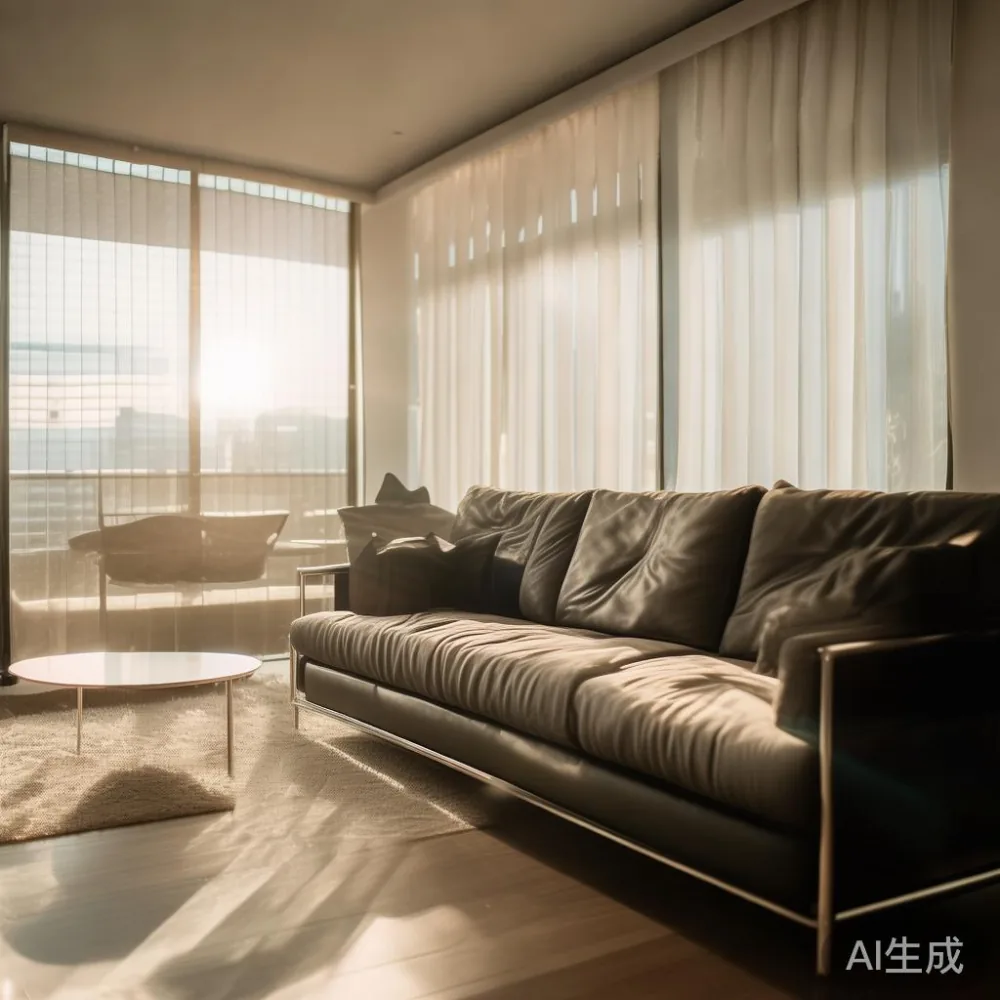
Why HDB living rooms cannot swallow Western-standard sofa sets
An HDB 4-room flat in Tampines typically gives you a living room of about 3.2m wide by 3.0m to 3.6m deep, depending on the block year. Once you subtract 60cm to 80cm behind the sofa for an air-conditioner ledge and a walkway, and another 60cm for circulation in front of the TV, your usable footprint for seating shrinks to roughly 2.4m by 2.4m. A European 3-seater sofa at 2.4m long will technically fit, but pair it with a coffee table and a TV console and the room starts to feel like a furniture showroom rather than a place to breathe.
Condos are slightly more forgiving. A 99-year leasehold unit at Punggol Digital District or around the Bedok Reservoir area usually offers a 3.6m to 4.0m living width. Even then, the corridor rule still bites: HDB and most condo service corridors are 1.2m to 1.5m wide, and the lift opening I described above is fixed. Always measure your lift car, your lift door, and any turn in the corridor before you commit to a 2.4m marble table or a 1.8m dining table on the upper floor of an HDB point block.
What is the right sofa length for a 3.2m HDB living room wall?
For a 3.2m wall, the safe sofa length is between 1.8m and 2.1m. That keeps at least 50cm clearance on each side for a side table or a lamp and leaves the walkway unimpeded. A solid wood sofa in that length range sits four adults comfortably and visually grounds the room without crowding it. Going to 2.3m or 2.4m is possible only if you remove every other accent piece and accept a tighter aisle.
Depth matters just as much. A 95cm to 100cm deep sofa is the comfort sweet spot in Singapore's air-conditioned environment. Anything shallower and your knees hang over the edge; anything deeper than 105cm and a 65cm TV screen on the opposite wall will feel too close. As a rule of thumb, the distance from the sofa front to the TV should be 2.5 times the TV's diagonal size.
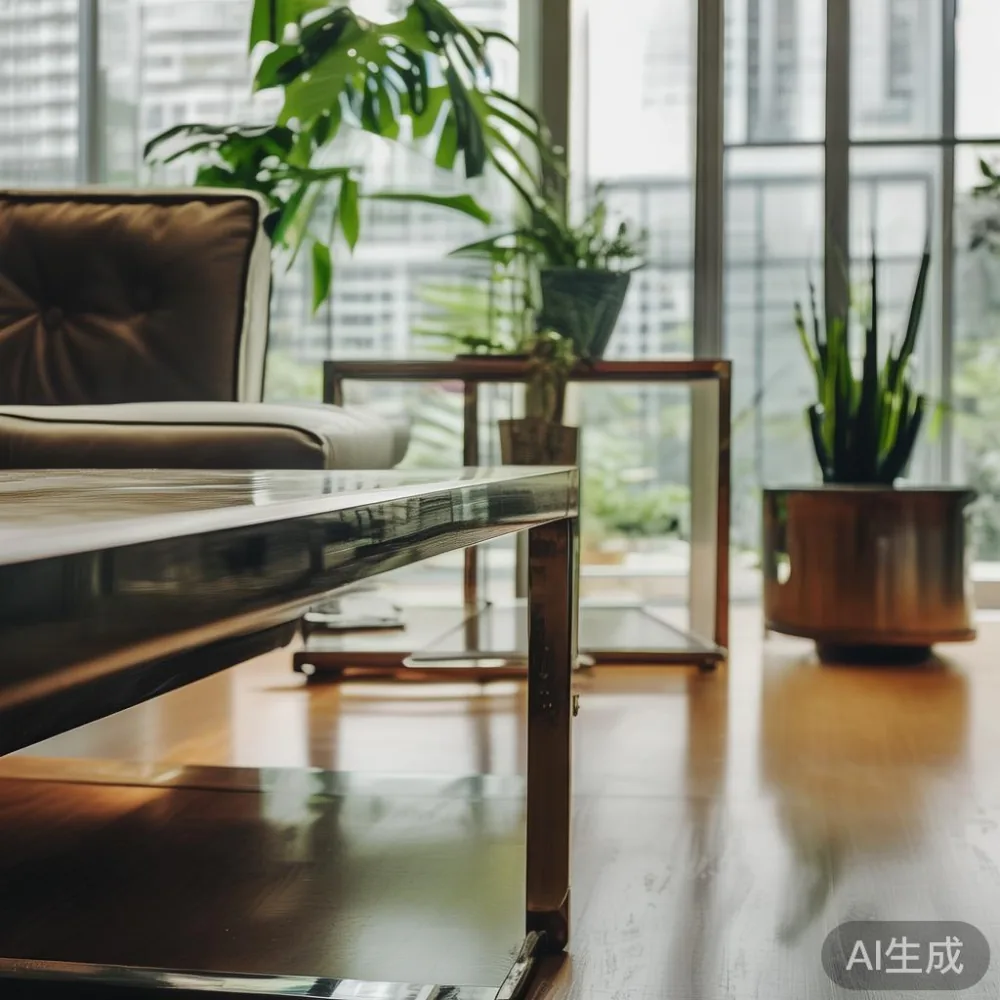
How do I pick a coffee table and TV console that do not fight the sofa?
Pick the coffee table first, then the sofa. A common mistake is buying a sofa first and trying to fit a table around it. In a 3m-by-3.2m HDB living room, a rectangular coffee table of 110cm by 55cm or a round table of 80cm to 90cm diameter keeps the walkway open. Round tables outperform rectangles in tight rooms because they eliminate the corner-clipping risk near lift doors and corridor turns.
For the TV console, measure the wall behind your TV. Most 55-inch TVs need a console at least 150cm wide so the screen has air on both sides. If your wall is shorter than 1.6m, switch to a 50-inch TV, or mount the screen and skip the console entirely. A light luxury TV console at 160cm wide, 38cm deep, and 45cm tall gives you two drawers and an open shelf for a soundbar, and the low profile keeps the wall from looking top-heavy.
If you want a single set that solves storage, display, and styling in one stroke, browsing collections of MIDHILL furniture for living room suites makes the comparison easier, because the catalogue groups matching coffee tables, consoles, and side tables by dimension.
How tall and deep should the sofa and side tables be?
Sofa seat height between 42cm and 48cm is the ergonomic sweet spot for adults of average Singapore height (about 1.68m for women, 1.75m for men). Anything lower than 40cm forces a deep squat to stand up; anything higher than 50cm pushes the elbows above shoulder level and strains the trapezius during long dinners. Backrest height between 80cm and 90cm supports the lumbar and the shoulder blades; if you choose a sofa with a headrest, add 15cm to 20cm on top.
Side tables should sit within 5cm of the sofa arm height so a cup of kopi does not require a contortionist move. A 55cm to 60cm tall side table with a 45cm to 55cm diameter top pairs well with standard arm heights. Nightstand thinking carries over: the same rules for nightstand clearance around a bed frame apply to side-table clearance around a sofa, both call for 10cm to 20cm of overlap between furniture and seating edge.
How do corridor and lift dimensions shape your furniture list?
Corridor widths in HDB blocks range from 1.2m to 1.5m. Lift cars range from 1.4m by 1.6m to 1.8m by 1.8m depending on the block. Furniture longer than 2.1m must clear two right angles to reach the lift lobby, and a 2.6m sofa almost never survives that geometry intact. This is the single biggest reason buyers in Tampines, Bedok, and Punggol end up returning pieces that physically arrived but cannot enter the home.
Plan for it before you pay. Ask the showroom for box dimensions, not just product dimensions. A solid wood sofa frame in a flat-pack form will save you the hoisting fee, which can run S$120 to S$280 per floor in Singapore if the lift cannot take the assembled piece. Heavy pieces such as a marble table at 70kg to 90kg need at least two delivery crew plus landing floor staging. Calculate landed price including 9% GST, the 14-day return policy, and shipping thresholds before you place the deposit.
For dining tables specifically, the same rules apply: a 1.6m table seats six but may not enter a 25-year-old HDB lift. A 1.4m table is the realistic maximum for most point blocks without hoisting. Before you commit, work out where to buy dining table from MIDHILL or similar workshops that publish box dimensions, lift-friendly flat-pack options, and an in-home warranty of at least 10 years on the structural joinery.
How do I keep the room feeling expensive without overstuffing it?
Light luxury is a styling language, not a price ceiling. French light luxury leans on curved silhouettes, tapered legs in brass or black metal, and one accent piece per room, often a marble table or a dresser with a fluted facade. American light luxury is rectilinear, low to the ground, and uses quilted headboards, thick cushion profiles, and warm walnut tones. Post-modern light luxury mixes both: think a curved velvet sofa paired with a square walnut TV console and a glass coffee table on a chrome base.
In a 3m-by-3.2m HDB living room, apply light luxury with restraint. One curved accent chair, one marble table or marble-topped coffee table, and one piece with a visible metal frame is the comfortable upper limit. Going beyond that and the room tips into showroom territory. Sofas are usually the largest single piece and should anchor the room quietly; let the metal-furniture accents speak. A French provincial dressing table in the bedroom, paired with a simple upholstered chair, carries the same French light luxury note into the master suite without competing with the living room.
Material consistency matters more than branding. If you choose a metal-framed sofa, choose a metal-framed coffee table base or metal legs on the TV console. If you choose walnut tones, repeat them on the dining table, the bed frame, and the wardrobe doors. Visual repetition ties a HDB living room together faster than any single statement piece.
What about the air-conditioner ledge and window placement?
HDB air-conditioner ledges are usually 60cm to 80cm deep and sit about 2.2m above the finished floor. Treat them as immovable objects. Plan the sofa and wardrobe footprint around them, not through them. Bookshelves or wardrobes that block the AC ledge trap heat and force the compressor to work harder, which shortens its life and inflates the SP Group bill during the June to October peak.
Windows in HDB living rooms are typically 1.8m to 2.4m wide. If a wardrobe or tall cabinet would block more than 30% of the daylight, switch to a lower dresser or to a sideboard. Bedrooms follow the same logic. In the master bedroom, a 1.8m-wide bed frame with two nightstands of 50cm width each fits a standard 3m bedroom wall and still leaves room for a 1.2m-wide wardrobe on the side wall.
Should I buy flat-pack or assembled? A cost-and-service breakdown
Flat-pack saves on assembly fees but adds to your build time. A solid wood sofa delivered flat-packed from a Foshan workshop to a Singapore door runs about 14 to 21 sea days plus 3 to 5 days for last-mile, depending on PSA or Tuas clearance. Assembled white-glove delivery is faster but heavier and harder to clear the corridor. Decide which trade-off matters more to you.
Price tiers in Singapore light-luxury furniture are roughly S$1,200 to S$2,800 for a 3-seater sofa, S$300 to S$900 for a coffee table, S$600 to S$1,400 for a TV console, and S$1,400 to S$3,500 for a 6-seater dining table. Midhill's Guangzhou-to-Singapore shipments with free shipping over US$350 generally translate to free delivery above roughly S$470, but always confirm at checkout. The 14-day return policy and 10-year structural warranty also travel with the piece; a lifetime refinishing option is worth keeping in mind for solid wood pieces that develop patina over a decade of air-conditioned use.
How do I connect living room sizing to bedroom and dining sizing?
The same measurement logic applies everywhere in the home. Thinking about how to choose American bed for a master bedroom, you would weigh the same lift-and-corridor rules against the bedroom wall length, usually 3.0m to 3.4m in an HDB master. An American-style bed frame at 1.8m wide and 2.1m long sits well in a 3.2m-by-3.0m room and leaves space for two nightstands plus a 1m-wide dresser on the opposite wall.
For low-platform styling, the question of how to style Japanese bed in bedroom comes down to proportions more than props. A 1.5m-wide low platform futon at 25cm seat height paired with 35cm-tall nightstands and a single wall-hung lamp keeps the room visually quiet and reading-friendly. Japandi, a cross between Japanese restraint and Scandinavian function, asks the same questions in heavier materials. The guide on how to style Japandi bed in bedroom usually recommends a solid ash or walnut bed frame with tapered legs, a linen duvet in oatmeal, and a single pendant light to keep ceiling clutter low.
Midhill's collection of MIDHILL furniture for bedrooms pairs well with the same workshop's dining and living pieces, which simplifies the metal-furniture and wood-tone continuity problem across a small HDB flat.
What checklist should I run before I click pay?
Run through this six-point list before any furniture checkout. One: measure the lift car, lift door, corridor, and any tight corners on the delivery route. Two: confirm box dimensions, not just product dimensions, for every item over 1.8m long. Three: check finished-furniture weight and that your floor load rating can handle it (HDB floors handle about 150kg per sqm for static loads, which is generous, but marble tables near balcony edges still warrant care). Four: verify the warranty covers structural joinery for at least 10 years and refinishing for life. Five: confirm return window is at least 14 days and that returns cover non-defect reasons. Six: add 9% GST, shipping above S$470 or US$350, and any hoisting fees of S$120 to S$280 per floor before you commit.
Buying light-luxury furniture for Singapore HDB living rooms is part geometry, part shipping math, and part stylistic restraint. The clients who enjoy their pieces ten years later are the ones who measured their lift, picked the sofa before the coffee table, and repeated one material across the solid wood sofa, the bed frame, the dining table, the wardrobe, the nightstand, and the marble table. Three or four well-chosen pieces will always outlast a crowded room of mid-market filler.