Veneer vs Solid Wood Over 5 Years: What Actually Costs Less for Singapore Homes?
I keep a small notebook on my phone for every renovation or furniture purchase I make. Last month I visited a four-room HDB flat in Tampines where the owner had bought a veneer dining table in 2020 for S$1,250. The top was peeling along the edge near the window, the corner had swollen from one humid season, and the warranty was long gone. Across the same floor, a friend in a 1,080 sqft Punggol condo showed me a solid wood dining table he bought in 2021. Five years of family dinners, three kids, two monsoons, and the surface still looked like it just needed a cloth and some beeswax. That contrast is exactly why I wanted to run a proper five-year cost comparison between veneer and solid wood for Singapore homes — not for showrooms, but for real HDB corridors, lift openings, and humid bedrooms.
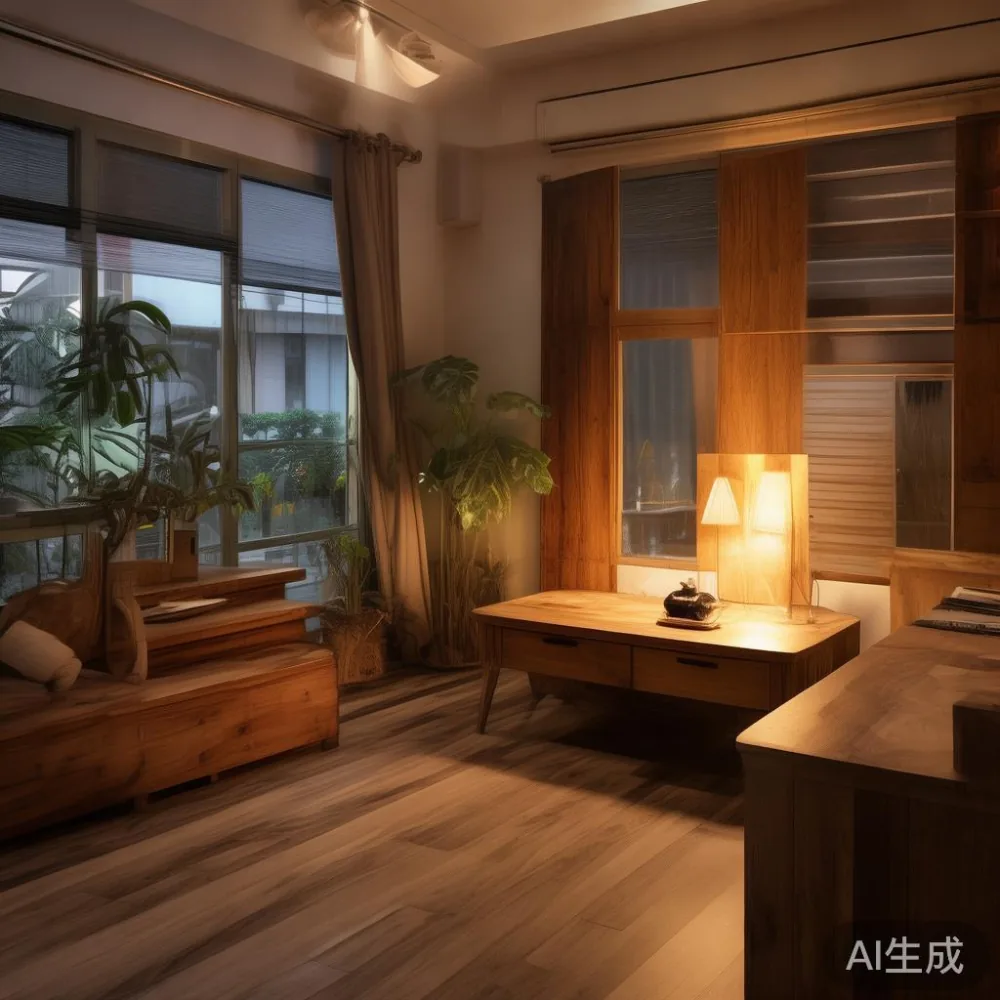
If you are furnishing a BTO in Bedok or upgrading a condo in Punggol, the sticker price is only the first chapter. Living here means 28 to 32 degrees most of the year, humidity that climbs past 85% in September and February, and daily use by kids, pets, and visiting parents. We will go through real SGD numbers, weight in kg, corridor widths in cm, and the small fees people forget to count — GST, delivery up narrow HDB lifts, and the cost of refinishing a dining table or a wardrobe once, twice, or three times across five years. Along the way I will also reference French light luxury sources, post-modern light luxury styling, and a couple of MIDHILL solid wood sofa and bed frame references, because the comparison only makes sense if you can picture the actual pieces.
What Is the Real Difference Between Veneer and Solid Wood?
Veneer furniture uses a thin slice of real wood — often 0.5 mm to 2 mm — glued onto an engineered panel such as MDF, plywood, or particleboard. When that thin layer chips, you cannot sand it back; the substrate shows through. A solid wood dining table, by contrast, is cut from one continuous piece of timber, typically 2 cm to 4 cm thick, and can be sanded and refinished a minimum of four to six times in its lifetime. That difference — repairable versus single-use — is the financial heart of this article.
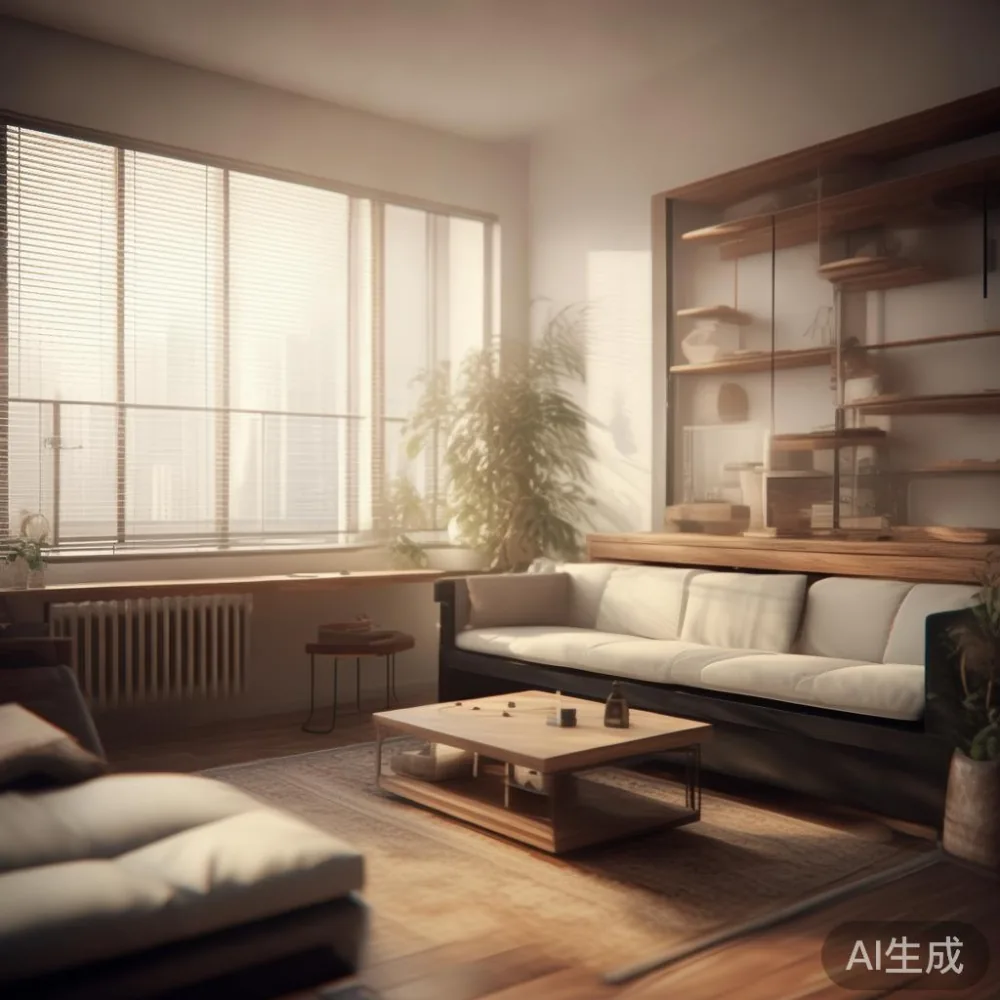
In Singapore showrooms I have seen a 1.6 m veneer dining table priced from S$720 to S$1,450, and a comparable solid wood dining table at S$2,400 to S$3,800. A typical four-door veneer wardrobe in a 90 cm x 200 cm footprint runs S$1,800 to S$2,800, while a comparable solid wood wardrobe lands at S$3,800 to S$5,800. The solid wood price looks painful in month one. Over five years, the math starts to shift.
How Do Climate and Daily Use Hit Both Materials?
Singapore sits on the equator, and that is the worst possible setting for veneer furniture. Relative humidity regularly crosses 85%, and air-con creates sharp swings between 22 degrees and 30 degrees inside the same unit. Veneer panels respond by expanding across the grain and contracting when the compressor cycles off. After 18 to 24 months, you see edge lifting on a wardrobe, hairline cracks along a bed frame headboard, and bubbling under a coffee table lamp.
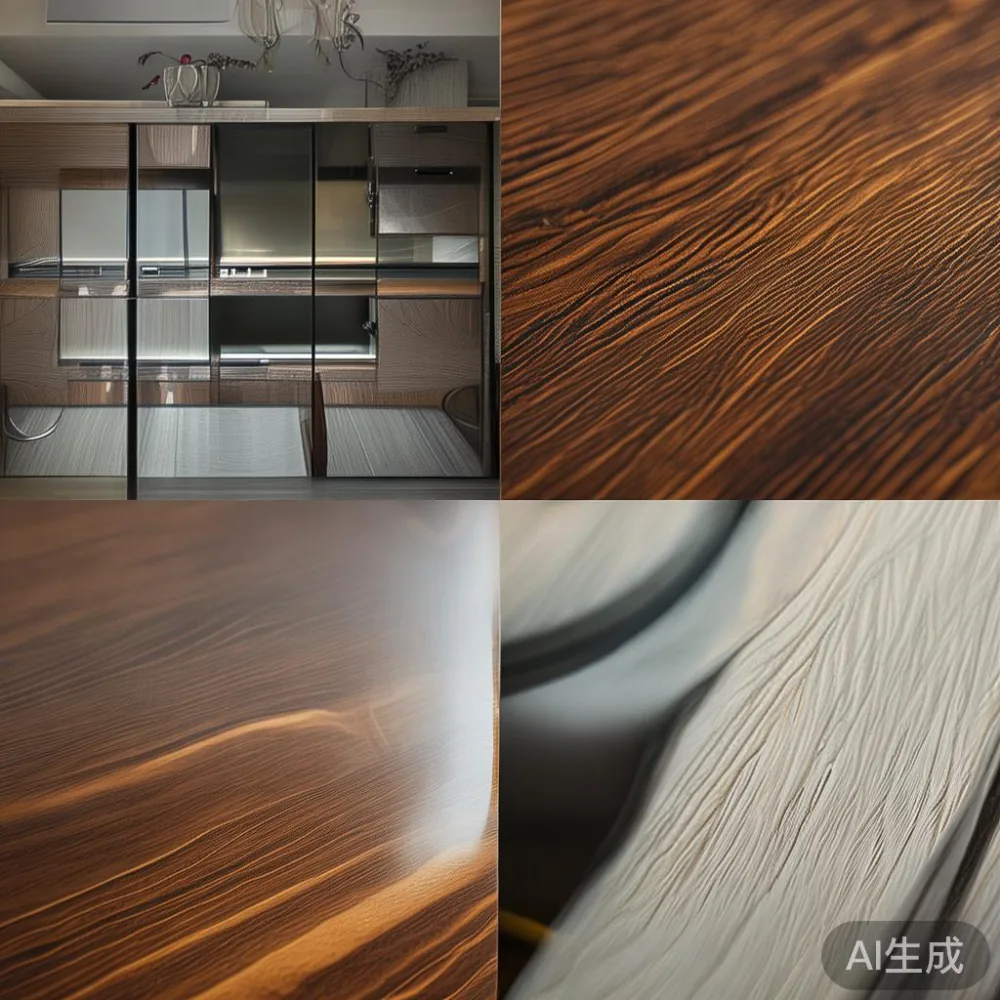
Solid wood handles the humidity by absorbing and releasing moisture slowly, especially when the kiln-drying is done right. A Foshan furniture workshop that has been drying wood for 17 years — such as the team behind MIDHILL — typically holds stock in a humidity-controlled room at 10 to 14% moisture content before assembly. That is why a light luxury for hotel setting and a HDB flat are not actually that different in performance; the controlled environment of a serviced residence mimics what the kiln did in the workshop.
Veneer vs Solid Wood: The Five-Year Cost Table in SGD
Let us look at one realistic living room: a four-seat dining table, a six-door wardrobe, a 1.8 m king bed frame, and a bedside nightstand.
Veneer package at month one, layered together for a number of buyers. The dining table is around S$1,100, the wardrobe S$2,200, the bed frame S$1,400, and the nightstand S$320. Total: roughly S$5,020 before GST. Add 9% GST (currently 9% in 2025 on home furniture) and you land near S$5,470. Delivery in Tampines or Bedok, including lift access and corridor handling for a 200 cm long wardrobe panel, runs S$80 to S$160 per trip. Two trips brings the opening figure to about S$5,650.
Solid wood package at month one, layered together for a number of buyers. The dining table — say a Mid-century modern dining table in solid ash at S$2,900 — the six-door wardrobe at S$4,800, the 1.8 m king bed frame at S$2,600, and the nightstand at S$650. Total: roughly S$10,950. Add 9% GST and two trips of S$110 to S$180 each for the heavier panels (a solid wood wardrobe door can weigh 28 kg to 38 kg per leaf, against 10 kg to 14 kg for veneer), and the opening figure sits near S$11,450.
That is a S$5,800 spread on day one. Now layer the repairs.
What Maintenance Costs Show Up Across Years One to Five?
Veneer furniture, layered over five years, would on average require one edge repair and one surface respray. In Singapore, a carpentry edge repair on a wardrobe or bed frame is S$180 to S$320 per visit. A veneer table respray, including colour matching and 24-hour cure, runs S$260 to S$420. Add a replacement at year four or five — many owners simply replace a peeling veneer coffee table rather than respray it, because the substrate keeps showing through. A replacement of one coffee table is S$450 to S$700, or a light luxury coffee table at S$550 to S$950 for a slightly better build.
Total maintenance and replacement across five years for veneer: roughly S$900 to S$1,600 on top of the purchase.
Solid wood furniture, layered over five years, requires very different care. A solid wood dining table might need one light sanding and re-oiling at year three — S$220 to S$380 if you hire a furniture restorer, or a weekend DIY with S$60 worth of oil and a S$40 foam sanding block. A wardrobe rarely needs anything more than tightening the hinges, around S$0 to S$80. Refinishing, if you want it, runs S$320 to S$480 for a full sand and re-stain of a dining table, and many workshops, including MIDHILL, offer lifetime refinishing on qualifying pieces.
Total maintenance across five years for solid wood: roughly S$120 to S$480, with refinishing as the higher figure if you actually book the service.
Stacked against each other over the same five-year window, the gap of S$5,800 on day one shrinks to between S$4,300 and S$5,500 once you include the replacement coffee table and edge repairs on the veneer set.
How Much Does Coridor Width and Lift Access Add to the Bill?
This is the bit nobody in an overseas catalog warns you about. HDB corridor widths at the lift landing are usually 1.2 m to 1.5 m, and older blocks in Bedok and Tampines have tighter turns at around 90 degrees. The internal lift cabin is often 1.1 m deep and 1.4 m wide, with a door opening of about 0.9 m. A flat-pack veneer wardrobe can often be carried in panels of 35 cm to 45 cm wide. A solid wood wardrobe, fully assembled, might measure 200 cm long x 60 cm deep x 220 cm high, and at 90 kg to 130 kg the team has to bring it in unassembled and build it inside the unit.
That assembly step is typically S$120 to S$220 in Singapore, on top of delivery. So factor S$150 to S$200 per solid wood wardrobe or bed frame for in-unit build, versus S$40 to S$80 for a flat-pack veneer piece that simply slots together. Over four pieces, that adds another S$300 to S$500 to the solid wood side.
Which Option Holds Value Better When You Sell or Renovate?
This is the question most buyers forget to ask. After five years in a Punggol or Bedok unit, a resale inspection will usually flag a peeling dining table, a swollen wardrobe shelf, or a bubbled nightstand. Buyers negotiate S$800 to S$2,000 off the asking price for visible damage on built-ins that cannot be moved. A solid wood dining table, by contrast, often goes with the owner when they upgrade to a condo, and a S$2,900 table in 2025 might still resell at S$1,200 to S$1,800 on Carousell in 2030. I have watched my colleague in Clementi move three solid wood pieces across two rentals and a condo without a scratch.
For buyers thinking past the next five years, the resale value alone closes the gap further. The total five-year cost of a S$5,650 veneer package, with maintenance and a small loss on resale, lands around S$6,500 to S$7,000 in real spend. The total five-year cost of a S$11,450 solid wood package, with light care and a partial resale, lands around S$9,800 to S$10,200 in real spend. The spread is still around S$3,000, but it is half of what the sticker suggested.
How Do You Choose the Right Pieces If You Split the Budget?
Most Singapore households do not need to pick one camp. A common-sense split — layered into one living plan, with a few pieces of metal furniture as accents — is to put the highest-touch pieces in solid wood and the low-touch pieces in veneer or metal. A solid wood dining table, a solid wood bed frame, and a solid wood wardrobe are the high-touch purchases; they get opened, leaned on, and scuffed daily. A nightstand, a console, and a desk can be a light luxury coffee table in metal furniture, a post-modern light luxury console in oak veneer, or a steel-and-walnut hybrid.
For the bed, think carefully about style and longevity. A Modern light luxury bed in solid ash or oak will outlast three paint colours on the feature wall, and it will still photograph well in 2030. For the dining table, the classic shape of a Mid-century modern dining table in solid walnut or ash pairs with both French light luxury sources in the form of Northlight tea cups and post-modern light luxury chandeliers. If you are working out how to choose mid-century modern wardrobe pieces, focus on joinery — mortise-and-tenon or dovetail drawers, full-extension soft-close runners, and 2 cm to 3 cm side panels rather than 1.2 cm thin boards. A well-built wardrobe in that style will outlast a HDB lease.
What Should You Ask Before You Sign for Either Option?
Bring these to a showroom, ask them out loud, and write the answers into your notebook:
1. What is the exact thickness of the top, in mm, and what is the substrate if it is veneer? The answer should be 25 mm to 40 mm for a dining top, and MDF or plywood for a veneer piece.
2. What is the warranty on structural joints, and is refinishing included? A 10-year structural warranty and lifetime refinishing on a qualifying solid wood sofa or bed frame is the benchmark I look for, and it is one of the reasons MIDHILL keeps coming up in conversations with importers.
3. How much does the heaviest single panel weigh, in kg, and how will it enter my unit? If the team cannot answer that, the delivery day will be ugly.
4. Is the wood kiln-dried to 8 to 12% moisture content, and is the workshop humidity-controlled? This is the single question that decides whether your dining table survives the next September monsoon.
5. What happens at year three if I want a new stain? For solid wood, refinishing should cost between S$320 and S$480 for a dining table, not the price of a new piece.
Why Does the Solid Wood Side Quietly Win Over Five Years?
The honest answer, layered into one quiet observation, is that solid wood does not win on day one and never pretends to. It wins because a flat in Tampines, Bedok, or Punggol is a 28-degree, 85%-humidity environment that punishes thin layers of real wood glued to particleboard. It wins because the corridor is 1.2 m wide, the lift is 1.4 m wide, and you will move at least twice in five years. It wins because a 2 cm solid top can be sanded, re-oiled, and handed to your children, and a long-tail board wrapped in 0.05-mm laminate cannot.
For homeowners who can absorb the higher first bill, the five-year spread drops from roughly S$5,800 on day one to between S$3,000 and S$3,500 in real spend once maintenance, replacement, and resale are factored in. For homeowners who cannot, the smartest move is to split the budget — a solid wood dining table, a solid wood bed frame, and a solid wood wardrobe, with a light luxury coffee table in metal furniture to balance the room and a couple of French light luxury sources such as Northlight styling on the walls. That combination respects the lift opening, respects the corridor turn, and respects the humidity curve that runs through every HDB year.
If you remember nothing else from this comparison, remember three numbers: 2 cm of solid top, 85% humidity, and five years. Anything that survives those three, survives Singapore.