Matching Metal Furniture to a Warm Minimal Interior: A Singapore Home Guide
I moved into a 92 sqm BTO flat in Tampines North about fourteen months ago, and the single biggest design lesson I learned came from a mistake I made in the living room. I had read a dozen Scandinavian blogs, fallen in love with pale oak and clean lines, then walked into a showroom and walked out with a stainless-steel dining frame that felt cold and clinical against my warm-toned walls. The room never recovered. Last month I visited a colleague's resale condo in Punggol and saw the opposite: a slim black-metal bookshelf sitting beside a walnut coffee table, a brass floor lamp arching over a boucle armchair, and the space felt calm, lived-in, and quietly expensive. That is what I want to unpack here, with real numbers, real lift dimensions, and real SGD prices, so you can get the warm-minimal balance on the first attempt instead of paying GST on a rework.
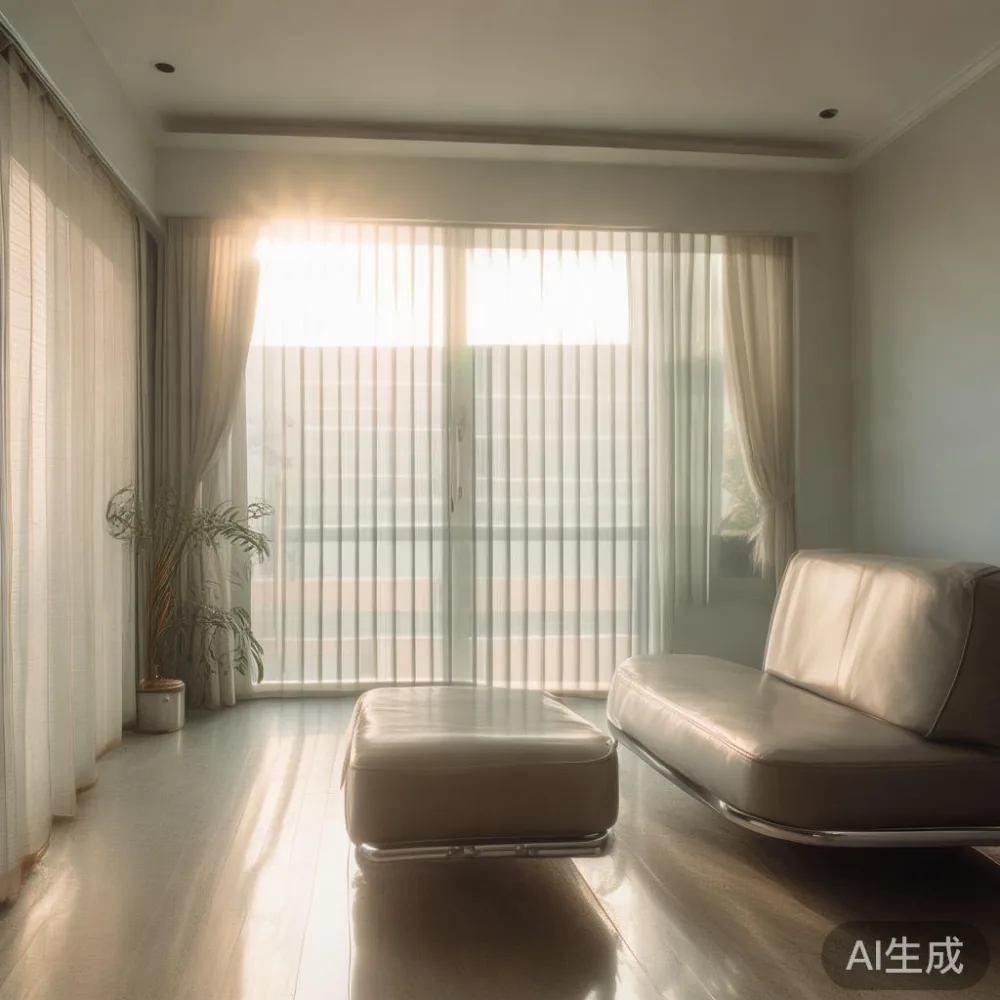
What does "warm minimal" mean in a Singapore HDB or condo?
Warm minimalism is not a Scandinavian look, not a Japanese look, and not the all-white condo you see on property portals. It is a hybrid that uses minimal geometry — straight lines, single-material surfaces, nothing decorative that does not earn its space — but injects warmth through colour temperature, texture, and the materials you touch every day. In a 4-room HDB flat around 90 to 105 sqm, you typically work with a 3.2 m by 4.5 m living room, 2.4 m floor-to-ceiling heights in newer BTOs, and corridors that are 1.2 m wide on average, occasionally 1.5 m in premium blocks. A 2.0 m by 0.9 m sofa will fit through a standard lift of 1.5 m by 1.8 m with the doors open at 90 degrees, but a 2.4 m sectional will not make the corner without tilting, so you design backwards from the lift, not from the magazine photo.
The warmth side comes from a tight palette: off-white walls (Dulux Alpine Flute, Jotun Sensitive White, or equivalent warm whites at around S$28 to S$45 per 4-litre tin), honey-toned solid wood, brushed gold or aged brass, and one or two pieces of warm-grey fabric. The minimal side comes from negative space: floor area that you deliberately leave empty, a coffee table that is slim rather than chunky, a TV console that floats 25 cm off the ground so the eye reads space underneath. When you add metal furniture into this mix, you are really asking the metal to behave like a warm material, which is a far more interesting question than picking a colour swatch.
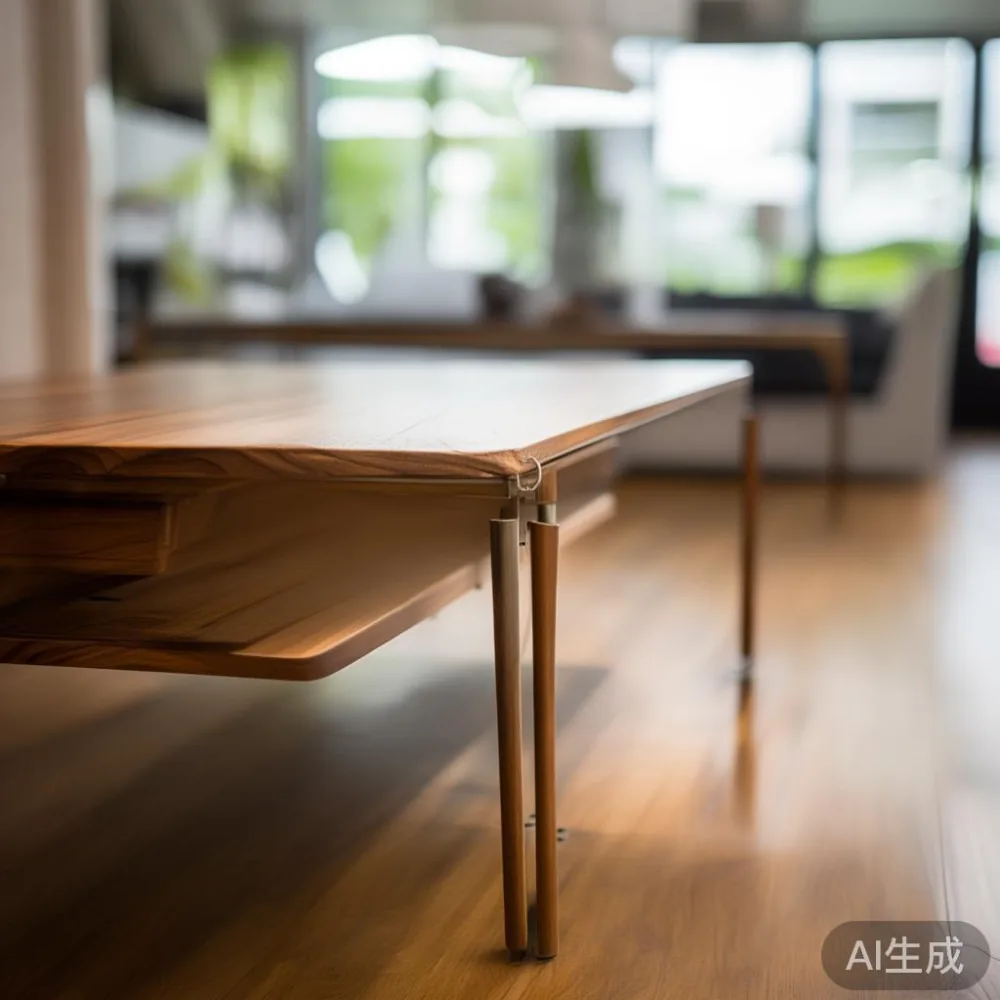
Can metal furniture actually feel warm in a small Singapore home?
Yes, but only if you choose the right metal, the right finish, and the right scale. I tested three pieces from MIDHILL — a 180 cm by 35 cm by 45 cm black-iron media console, a 45 cm square brass-topped side table, and a 200 cm by 90 cm marble dining table with a slim 6 mm steel apron — in a friend's 78 sqm one-bedder in Bedok. The black-iron console had a matte powder-coat finish at 60 microns thickness, the brass top was hand-finished with a soft satin patina (not mirror-polished), and the steel apron on the marble table was only 6 mm, so the stone visually carried the piece. All three read as warm because each metal had a surface that absorbed light rather than reflecting it like chrome.
Three rules came out of that afternoon. First, choose brushed or patinated finishes over polished ones — brushed brass (RAL 1036 territory, around S$420 to S$680 per piece for a 45 cm side table) sits softly against warm walls, while mirror-polished stainless steel bounces ceiling light into your eyes and makes the room feel like a clinic. Second, pair metal with one warm material per cluster: metal + walnut, metal + linen, metal + honed marble. The metal borrows warmth from its neighbour. Third, keep the metal weight low in the room — under 30 percent of visible furniture surfaces — so it acts as a line drawing instead of a wall. That is why French light luxury interiors often show a slim brass leg under a velvet chair rather than a full brass frame: the metal is a punctuation mark, not a paragraph.
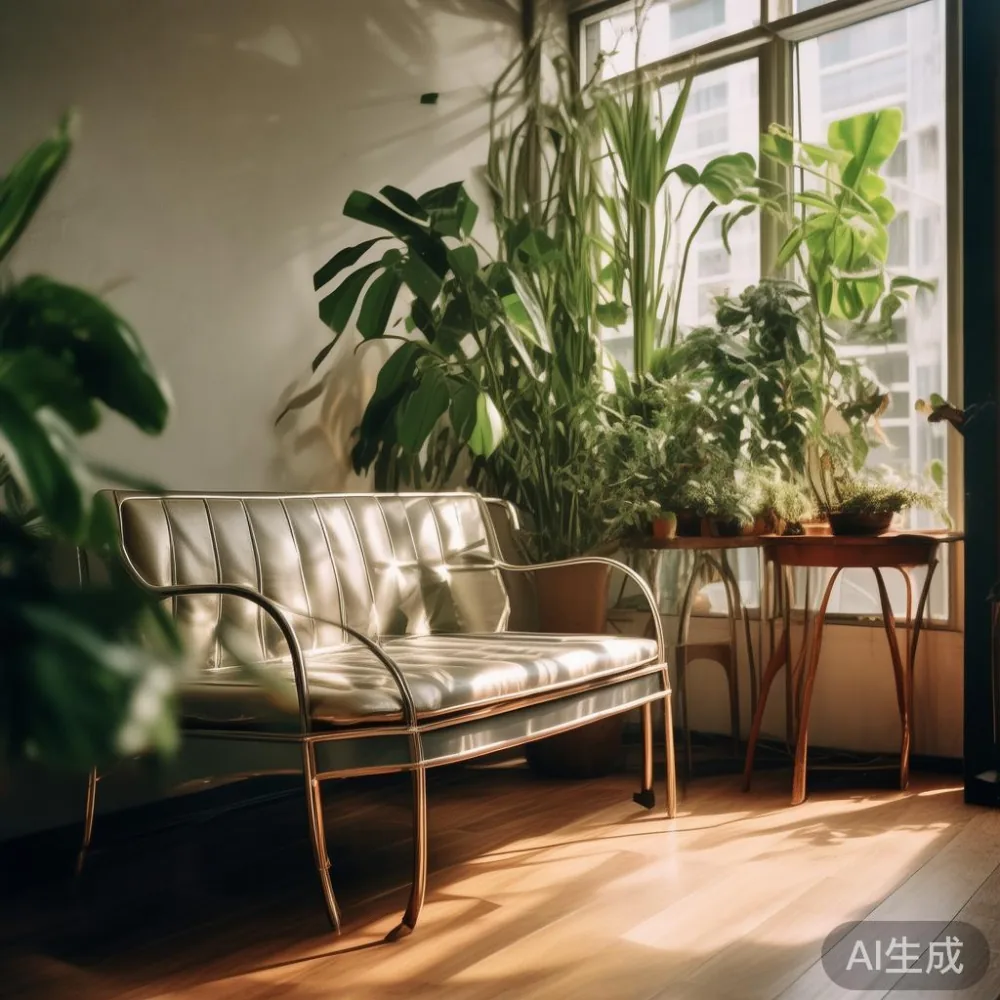
How do I choose a solid wood sofa, bed frame, dining table, wardrobe and nightstand that all work with metal pieces?
Start with the heaviest pieces and work down to the smallest. In a 4-room flat, the structural anchors are usually the bed frame (1.8 m by 2.0 m for a queen, weighing 55 to 80 kg depending on solid wood density), the dining table (1.4 m to 1.8 m long for four to six people), and the wardrobe (typically 1.8 m to 2.4 m wide, 2.2 m to 2.4 m tall, with sliding doors saving 60 cm of swing clearance in tight Bedok and Tampines layouts). Once these are fixed in solid wood — ash, oak, or walnut — the metal furniture becomes the connective tissue: a blackened steel wardrobe pull, a brass bedside lamp on a 50 cm walnut nightstand, a wrought-iron chair rail in the dining nook.
When you evaluate a solid wood sofa frame, ask about the joinery: mortise-and-tenon or dowel, both rated for at least a 10-year structural warranty, kiln-dried to 8 to 10 percent moisture content so it survives the 80 percent monsoon weeks without warping. A solid wood sofa from a maker like MIDHILL (founded in Foshan in 2008, shipping to 15+ countries with a 10-year structural warranty and lifetime refinishing service) gives you a frame that can be reupholstered in 7 to 10 years instead of being landfilled, which matters when a 2.4 m three-seater weighs 70 kg and costs S$1,800 to S$3,200 to replace. The seat depth should be 55 to 60 cm for upright sitting, 65 to 70 cm if you want to curl up; back height between 80 and 90 cm keeps sight lines open across a 3.2 m living room. Bed frames in queen (152 cm by 188 cm) or king (183 cm by 188 cm) should have a slat spacing under 7 cm to support latex or pocket-spring mattresses without sagging, and a clearance of 25 to 30 cm under the side rail for robot vacuums.
For dining tables, the workhorse size in a Singapore home is 160 cm by 80 cm, which fits six chairs (45 cm to 48 cm wide each) with 60 cm of pull-out space behind each chair. If you entertain, go to 180 cm by 90 cm; if you eat at a kitchen counter most days, a 140 cm by 70 cm table on slim blackened-steel legs is enough. A marble table with a 20 mm to 25 mm stone top and a steel sub-frame weighs 85 to 110 kg for a 160 cm piece, so plan the lift: a standard passenger lift in an HDB block has a 630 kg to 1,000 kg capacity and internal dimensions around 1.5 m by 1.8 m by 2.2 m, which means a marble table usually goes in vertically on its long edge with two people guiding it. Add S$80 to S$150 for weekend delivery slots and another 9 percent GST on top of the listed price.
What metal finishes actually suit a warm minimal palette in 2026?
If you are planning a refresh and wondering how to choose light luxury sofa hardware, nightstand pulls, and dining chair frames without clashing, focus on three finishes and ignore the rest. Aged brass (a warm yellow-brown with a satin sheen, not yellow-gold) reads warm against off-white walls and walnut. Blackened steel (matte, slightly textured, around 5 to 15 percent gloss) reads minimal and grounds the room. Bronzed nickel (a soft taupe-grey with a hint of warmth) bridges the two if you cannot decide. Anything mirror-polished — chrome, polished brass, polished nickel — will fight the warm-minimal brief and make a 3.2 m by 4.5 m living room feel like a showroom.
For buyers searching the best American bed for 2026 or the best Modern wardrobe for 2026, the same logic applies: look at the hardware, not just the wood. A modern wardrobe with blackened-steel edge pulls, soft-close hinges rated for 100,000 cycles, and 18 mm to 25 mm engineered-wood or solid-wood panels will outlast a glossy-handled unit by years. The question of is American wardrobe worth it really comes down to joinery and finish — solid wood frames with dovetailed drawers, full-extension ball-bearing runners (rated 45 kg per pair), and adjustable shelves every 3.2 cm. You can spend S$2,400 to S$4,800 on a 2.4 m American-style sliding wardrobe and still get bargain hardware, or S$1,800 to S$2,600 on a smaller Asian-made unit with better steel. If you are hunting under 2000 Rustic furniture packages for a 3-room resale, prioritise one or two pieces in solid reclaimed timber and fill the rest with slim metal accents rather than buying a full matching set that locks you into a single style.
The best European light luxury sofa for 2026 tends to combine a kiln-dried beech or oak frame with brushed brass legs at 18 cm to 22 cm height and a bouclé or linen-blend cover in oatmeal, sand, or stone grey. That combination — warm wood, brushed metal, textured fabric — is the formula that travels across French, Italian, and American light luxury interiors. Post-modern light luxury adds a single accent: a deep emerald cushion, a travertine side table, a sculptural floor lamp in matte black. One accent per 10 sqm is enough.
How should I plan delivery, lift access, and corridor widths before I buy?
Measure first, pay second. In a typical Punggol or Tampines HDB block, the passenger lift internal is 1.5 m deep by 1.8 m wide by 2.2 m high, the cargo lift (where available) is 2.0 m by 2.4 m by 2.4 m, and the corridor turning radius is 1.5 m. A 2.0 m sofa in a single box will not fit diagonally in a passenger lift; it must go in vertically, with the back end entering first and the feet lifted by two delivery crew. A 2.4 m wardrobe panel must travel flat on a trolley and negotiate the lift door at 1.0 m clear width. If your block has narrow corridors (under 1.2 m, common in older Bedok blocks built before 2000), factor in a S$80 to S$200 difficult-access surcharge or a disassembly-and-reassembly fee of S$120 to S$280 per piece.
Free shipping is a real cost line. Mass-market retailers offer free delivery above S$350 to S$500; specialist makers like MIDHILL offer free shipping above US$350 (around S$470), which is roughly the same threshold once you include a marble table, a solid wood bed frame, and a nightstand. Expect 14 to 35 days for sea freight from Foshan to Singapore, plus 5 to 10 days for last-mile delivery and a 14-day return window if the piece arrives damaged or wrong-sized. Keep 2 to 3 percent of your furniture budget aside for assembly (S$60 to S$180 per piece), door-frame trimming if a 2.4 m wardrobe is 1 cm too tall (S$120 to S$220 per door), and dehumidifier runs for the first 30 days so solid wood acclimatises to Singapore's 70 to 80 percent humidity without checking at the joints.
Where should I place metal furniture for the strongest warm-minimal effect?
Three placements earn the most visual return per square foot. First, a blackened-steel media console under a wall-mounted TV in the living room — 180 cm wide, 35 cm deep, 45 cm high, with 25 cm of floor clearance so the eye reads space underneath. Pair it with a walnut coffee table 110 cm by 60 cm, leaving 40 cm between console and sofa. Second, a pair of slim brass side tables flanking a boucle armchair in a reading corner, each 40 cm to 45 cm in diameter, top height matching the chair arm at 55 cm to 60 cm. Third, a marble table with a blackened-steel apron in the dining area, sized 160 cm by 80 cm for four or 180 cm by 90 cm for six, with chairs that have brass-tipped legs to echo the warm metal elsewhere.
What you want to avoid is clustering metal pieces in one zone — a fully metal dining set, a fully metal bed, and a fully metal wardrobe in the same sight line. Metal furniture works best as accents: one major metal piece per room, two minor metal accents, and the rest in solid wood, linen, wool, or stone. A walnut nightstand with a brass lamp, a solid wood bed frame with blackened-steel legs, a wool rug underfoot, and linen curtains is a complete warm-minimal bedroom that costs S$3,200 to S$5,800 fully dressed (excluding mattress) and will look current well past 2026.
How do I budget realistically in SGD for a full warm-minimal refresh?
For a 4-room HDB at 95 sqm, a realistic furniture-only budget sits between S$8,000 and S$18,000 before GST, broken down roughly as: solid wood bed frame (queen) S$1,200 to S$2,400, mattress S$1,000 to S$2,200, two nightstands S$600 to S$1,200, wardrobe 2.4 m S$2,400 to S$4,800, dining table S$1,400 to S$3,200 (marble table pushes to S$3,800 to S$6,500), six dining chairs S$900 to S$2,200, solid wood sofa S$1,800 to S$3,200, coffee table S$600 to S$1,400, media console in metal S$700 to S$1,800, two side tables in brass S$400 to S$900, and a rug at 200 cm by 300 cm S$400 to S$1,200. Add 9 percent GST, S$300 to S$600 for difficult-access delivery, and S$200 to S$500 for assembly, and you land between S$10,000 and S$24,000 all-in.
The pieces that justify spending more are the ones you touch every day: the bed frame, the dining table, the sofa. The pieces that can be budget buys are the metal accents — side tables, lamp bases, hardware — because their cost is mostly in the finish, not the substrate. If you need to talk through specifications before ordering, MIDHILL can be reached at +86 188 2788 2512 during China business hours (9 am to 6 pm CST, which is 9 am to 6 pm SGT) for fabrication questions, custom sizing up to 2.6 m wardrobe widths, and bulk orders that shave 8 to 12 percent off the unit price. Refinishing is offered for the lifetime of the piece, so a 2018 walnut frame can be resanded and re-oiled in 2028 for roughly S$280 to S$480 per piece rather than replaced, which keeps the warm-minimal look consistent across a decade.
What are the three mistakes Singapore buyers make with metal furniture?
Mistake one is buying mirror-polished metal because it photographs well in showrooms but acts like a spotlight in a 3.2 m wide living room, bouncing ceiling light into your face at night. Stick to brushed, satin, or patinated finishes. Mistake two is buying metal furniture in the same colour as the wall, which makes it disappear and forces you to add more pieces to compensate. A blackened-steel console against an off-white wall reads as a line; the same piece against a charcoal wall reads as a shadow. Mistake three is ignoring humidity. Solid wood expands and contracts across Singapore's 65 percent to 95 percent humidity range, and metal-to-wood joints need a 1 mm to 2 mm allowance or the wood will crack at the join within 18 months. Ask the maker what allowance they build in and what warranty they offer on those joints — a 10-year warranty on structural joinery is the minimum you should accept for a piece that costs more than S$1,500.
Is American wardrobe worth it for a Singapore home, and which pieces are worth importing?
The honest answer depends on your ceiling height and your tolerance for flat-pack assembly. American wardrobes tend to run 2.4 m to 2.7 m tall, which is 30 cm to 50 cm taller than a standard Singapore ceiling — you either lose the top 30 cm to dead space or you drop the ceiling with a false bulkhead for S$600 to S$1,200. If your ceiling is 2.6 m or higher (some newer Punggol and Woodlands BTOs hit 2.7 m), an imported American wardrobe in solid oak or walnut, 2.4 m wide with sliding doors, makes sense at S$2,800 to S$4,800 delivered. If your ceiling is 2.4 m, a local custom joiner at S$2,200 to S$3,800 will use the vertical space better. The pieces worth importing are the ones that are hard to source locally at the same quality: solid wood bed frames in queen and king, marble tables with slim steel aprons, and brass metal furniture accents at 40 cm to 50 cm scale. Skip importing wardrobes unless your ceiling cooperates, skip importing dining chairs (the freight and GST erase the savings), and skip importing sofas (S$1,800 to S$3,200 local equivalents are usually good enough and spare you the 14 to 35 day wait).
The thread through my own Tampines flat, my colleague's Punggol condo, and the three pieces I tested in Bedok is the same: warm minimalism is not about removing metal, it is about choosing metal that behaves like a quiet guest. Brushed brass, blackened steel, aged bronze — each one lets the walnut, the linen, the boucle, the honed marble speak first. Measure the lift, measure the corridor, pick solid wood for the anchors, pick metal for the punctuation, and your home will feel both grounded and calm long after the trend cycle has moved on.