What to Check Before Buying a Sofa You Cannot Sit On: A Singapore Solid Wood & Metal Furniture Field Guide
I spent the last Saturday of last month walking through a Jurong East showroom with my colleague Priya while her husband waited at home with a tape measure, a 1.2 m steel ruler, and a patient attitude. She had picked out a light-luxury three-seater with French light-luxury curves and brushed brass feet, but the lift in her Punggol Waterway Woodcrest block is only 1.1 m wide, the corridor turn at her 12th-floor unit requires a 1.8 m diagonal clearance, and the new sofa's packed box was 2.35 m long. The sofa never made it past her letterbox on the delivery van. That single afternoon is the reason this guide exists, because a beautiful sofa on a showroom floor is a completely different object from a sofa sitting in your Tampines or Bedok living room at 11 p.m. on a Tuesday.
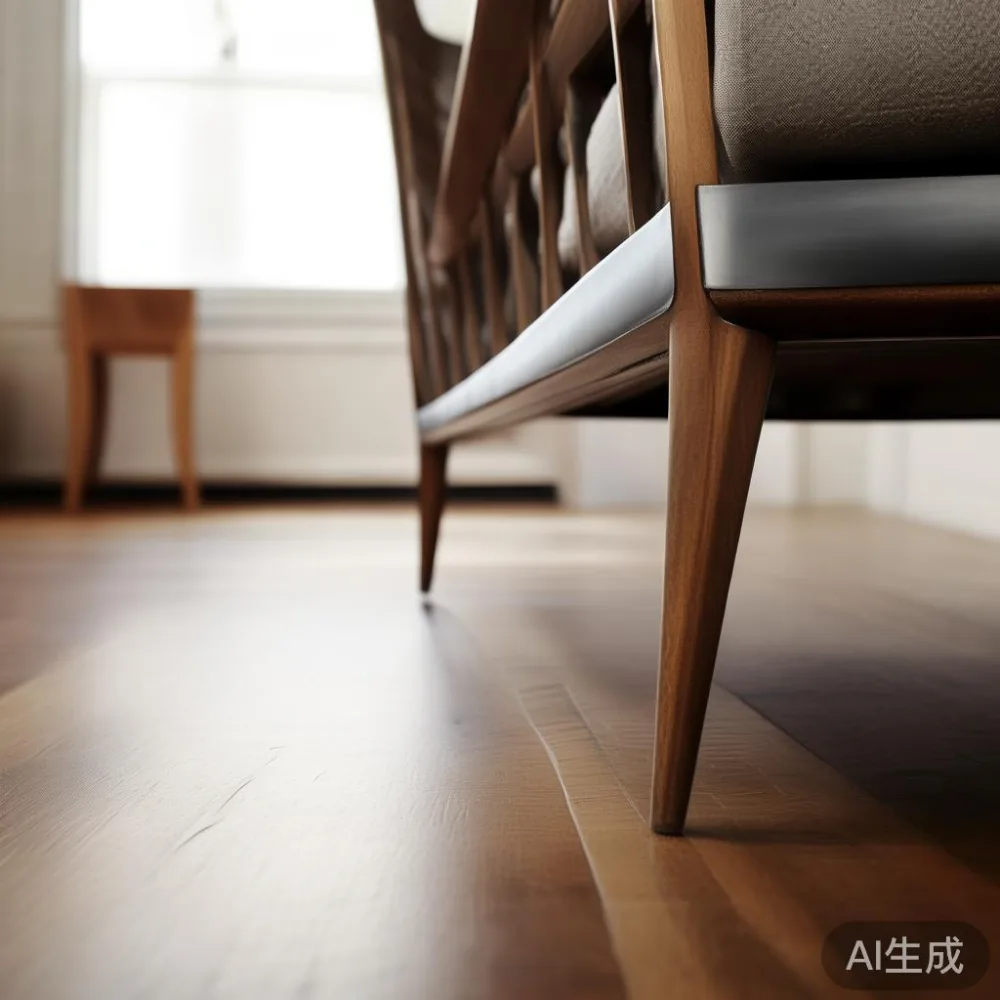
The hard truth of buying a sofa in Singapore is that you almost never get to sit on the one that arrives at your door. Showroom floor models, display configurations, and warehouse samples share only a name with the SKU in your delivery order. What you can do, and what I will walk you through here, is measure twice, interrogate every spec sheet, and pressure-test the supplier's claims in writing before you transfer a single SGD. Whether you are kitting out a four-room HDB in Punggol, a condominium in the Bedok Reservoir area, or a resale flat with a lift opening narrower than the national standard, the discipline is identical. As a long-time observer of brands like MIDHILL that pair solid wood frames with metal furniture hardware and ship from Foshan to Singapore every week, I have watched enough buyers succeed and fail to know which questions separate the two.
What dimensions should I write down before I even shortlist a sofa?
Write down three numbers for every doorway, lift, and turning point between the loading bay and your living room wall: width, depth, and the diagonal clearance across any corner the box must pivot around. In most Singapore HDB blocks built after 2000, passenger lifts are 1.1 m wide by 1.4 m deep with a door opening of 0.9 m; older blocks at Bedok and Tampines occasionally shrink to 1.0 m by 1.3 m. Corridors between lift lobby and unit door typically run 1.2 m to 1.5 m, and the right-angle turn from lift to corridor needs at least 1.7 m of diagonal to swing a long parcel. Your sofa's packed carton, not the assembled sofa, is the unit that must clear these obstacles, so ask the seller for the carton dimensions in centimetres, not the product dimensions. A 2.2 m sofa in a 2.4 m carton will not fit a lift that has 2.1 m of usable internal height once the handrail is accounted for.

Multiply your living room depth by your ceiling height and subtract 90 cm for walking paths on at least two sides; this gives you the maximum footprint a sofa can occupy without making the room feel like a corridor. For a standard 3.2 m by 4 m HDB living room, a 2.1 m sofa with a 0.95 m depth still leaves a 0.95 m walking lane in front of the TV console, which is the minimum I would accept. Photograph every doorway with a tape measure visible in the frame, and send those photos to the seller in advance. Any seller who hesitates when asked about carton dimensions, packed weight, and whether the box can be split into two parcels is telling you something useful about their logistics discipline.
How do I check frame construction without sitting on the sofa?
Lift the showroom sample, tilt it 15 degrees, and feel for creaking at the corner blocks. A solid wood sofa frame should feel heavy at the corners where the load is transmitted, light and rigid along the span. Ask for the species of wood, the moisture content at the time of kiln-drying, and the joinery method. Hardwood frames in the mid-luxury bracket use kiln-dried oak, ash, or beech with mortise-and-tenon joints reinforced by corner blocks glued and screwed; the best examples in this category also use metal furniture brackets at high-stress junctions, because metal furniture hardware spreads load across a wider area than wood screws alone. Particleboard, MDF, or plywood frames will be lighter, sound hollow when rapped with a knuckle, and almost always rely on staples and glue at the joints.

Ask the seller to email you the engineering drawing or a photograph of the internal frame with the fabric pulled back. Reputable Foshan factories are happy to share these because their buyers, who include hotel groups and developers in Singapore, demand the same documentation. A frame warranty of 10 years against breakage and warping is the floor of what I would accept; lifetime refinishing for surface scratches is a strong sign that the maker expects the frame to outlast the upholstery, which is exactly what you want from a long-term piece. When I visited the MIDHILL showroom in Foshan last year, every frame I inspected had a small aluminium plate riveted at an interior corner with a batch number and kiln date, a level of traceability I have rarely seen outside Scandinavian workshops.
How do I choose a assembly difficulty for a study?
Choose the lowest assembly difficulty you can find that still gives you a solid wood frame and metal furniture joinery, because in Singapore most people do not own a torque wrench, a rubber mallet, or a 4 mm hex driver set, and paying a handyman S$80 to S$150 to assemble a sofa that should have arrived ready is a hidden cost nobody quotes on the product page. Assembly difficulty for a sofa should be rated by the number of steps, the tools required, and whether two adults can complete the job in under 45 minutes without specialist equipment. A genuine solid wood sofa with pre-installed metal furniture brackets, numbered parts, and a single hex key included in the box should fall into the "two people, 30 minutes, no power tools" category. Anything that requires drilling, gluing, or sewing should be filtered out before you even check the price.
Ask the seller to send you the instruction PDF, count the steps, and look for phrases like "apply adhesive" or "tap with a hammer." Those phrases are red flags. A well-engineered sofa arrives in four to six parcels that click together with captive bolts and metal furniture cam locks; if you can assemble an IKEA Kallax in 20 minutes, you should be able to assemble a properly engineered three-seater in under an hour. For buyers in condominiums where drilling into walls is forbidden by management, confirm that the sofa does not require wall anchoring for tip-over stability; a 90 kg three-seater with a low centre of gravity should be tip-resistant on its own.
What about the suspension, foam density, and fabric I cannot test by sitting?
Demand three written numbers: foam density in kg per cubic metre, suspension type (sinuous spring, eight-way hand-tied, or webbing), and fabric Martindale rub count. For daily-use seating in a Singapore home, foam density should be at least 28 kg/m³ for the seat cushion and 22 kg/m³ for the back; anything below 22 kg/m³ will bottom out within 18 months under tropical humidity. Eight-way hand-tied springs are the gold standard and add roughly S$600 to S$1,200 to the price; sinuous springs (S-shaped wire) are the realistic choice for most buyers and should have a gauge of 2.0 mm or thicker. Webbing is acceptable only on a low-use occasional chair, not on a primary sofa.
Fabric rub count is the number of double rubs a fabric survives before it shows wear; for a household sofa, aim for 30,000 rubs minimum, and 50,000+ if you have children, a dog, or a daily foot-rest habit. Removable, washable covers at 30°C are a quiet luxury in Singapore's climate where air-conditioning cycles dry out fabric and sweat salt builds up on armrests within a season. Leather, if you prefer it, should be top-grain or full-grain at this price point, and the seller should disclose whether it is corrected-grain pigmented leather (cheaper, less breathable) or aniline-treated (more expensive, more comfortable). A 5-year warranty on foam and suspension, separate from the 10-year frame warranty, is the contractual shape I look for; brands that blend both into a single 1-year "furniture warranty" are off my shortlist.
How do I verify shipping, GST, customs, and warranty support before paying?
Request a written pro-forma invoice that breaks the price into four lines: ex-works price, sea freight to Singapore, insurance, and GST. Singapore applies 9% GST on the landed cost of imported furniture, calculated on the CIF value plus insurance, and a compliant seller will show you the math rather than a single round figure. Sea freight from Foshan to Singapore typically takes 12 to 18 days door-to-door for a single sofa, longer if the seller consolidates containers weekly. Free shipping over a published threshold (often US$350, which is roughly S$475 at current rates) is worth having on smaller pieces like a nightstand or a marble side table, but a three-seater sofa will almost always incur a separate white-glove fee of S$180 to S$420 depending on lift access and floor level.
Check whether the seller offers free shipping to your specific block and floor, and ask about charges for carrying the box up to a 14th-floor unit without a service lift. HDB service lifts, where present, accept parcels up to 2.4 m tall and 1.2 m wide; if your sofa's carton exceeds those limits, the delivery team will use the passenger lift, which means booking a time slot outside peak hours. Confirm a 14-day return window for unused, unassembled sofas, with the seller covering return shipping if the carton dimensions were misrepresented; this is your safety net against the Jurong East scenario. Finally, ask whether the brand has a Singapore-based service agent or partner, because warranty claims on a solid wood bed frame, dining table, wardrobe, nightstand, or marble table purchased directly from a Foshan factory are far smoother when there is a local phone number to call. MIDHILL, for example, has built its export operation around Singapore buyers for over a decade and pairs every order with a tracking number, a pre-delivery WhatsApp group, and a written 10-year structural warranty that names the buyer and the delivery address on the certificate.
Why do sofas feel different in the showroom than at home, and how do I plan around that?
Showroom sofas are broken in. The foam has been compressed by hundreds of sitters, the fabric has relaxed, and the suspension has settled into its final geometry, so a 10 cm seat depth in the showroom feels like 12 cm at home because showroom foam has lost 15 to 20% of its initial height over six to twelve months of use. New foam typically needs four to six weeks of daily sitting to settle to its final feel, which means the first month of ownership will feel firmer and slightly higher than the floor sample. If you prefer a softer sit, order a sofa with a down-wrapped foam cushion; if you prefer a firmer sit, order a high-resilience foam-only cushion with a density of 32 kg/m³ or higher.
Singapore's tropical climate also changes how a sofa feels within a season. Humidity above 80% will soften natural fibre covers and tighten synthetic ones, while air-conditioned rooms below 24°C will make leather feel stiffer than it does in a 27°C showroom. Build a 7 to 14-day buffer between delivery and any major gathering at home, so the cushions have time to breathe and the solid wood frame can acclimatise to your indoor humidity. A small sage oak chaise lounge accent piece in the same wood species as your sofa, ordered at the same time, will acclimatise in parallel and avoid the visible mismatch you sometimes see when furniture is delivered in stages from different batches.
What should my final checklist look like before I click "pay now"?
Print this list, tick each box, and only then authorise the transfer. First, carton dimensions in centimetres confirmed against your lift and corridor measurements, with photos dated within the last 30 days. Second, frame material and joinery method documented in writing, with metal furniture brackets visible at high-stress joints. Third, foam density, suspension type, and fabric Martindale rub count disclosed in the spec sheet. Fourth, a written quote that separates product price, freight, insurance, and the 9% Singapore GST. Fifth, a 10-year structural warranty and a 14-day return window for unopened cartons, with the seller's local contact details. Sixth, a confirmed delivery slot that respects your block's quiet hours and service lift booking rules. Seventh, an instruction PDF with fewer than 20 steps and no specialist tools. Eighth, a matching solid wood bed frame, dining table, wardrobe, or nightstand on the same order if you want to consolidate freight and qualify for the free-shipping threshold, because shipping a marble table or a four-door wardrobe separately will cost more than the consolidated saving on the sofa. With those eight boxes ticked, the sofa you cannot sit on becomes the sofa you cannot stop sitting on, which is the only outcome worth the S$2,400 to S$5,800 most Singapore buyers spend on a quality three-seater from a Foshan solid wood maker.