How Humidity in Southeast Asia Affects Wood Furniture: A Practical Guide for HDB, Condo, and Landed Owners
I keep a small notebook on my desk for client questions, and the one that fills the most pages comes from owners across Tampines, BEDOK, and Punggol: how does the climate here shorten the life of a solid wood dining table or bed frame? Last month I visited a four-room HDB flat in Punggol where the family had bought a beautiful oak dining table just 14 months earlier. The surface was already showing hairline checks along the end grain, and one leg had begun to cup. The ambient humidity in the flat had been steady at around 78% for most of that period, and the air-conditioner ran only at night. That single visit is the reason I wanted to put this guide together.
Why Singapore's Climate Is Unusually Aggressive on Solid Wood
Singapore sits roughly one degree north of the equator, and our daily relative humidity (RH) usually stays between 70% and 85% for at least 11 months of the year. Indoor humidity in a typical HDB flat without a dehumidifier hovers around 72% to 78%. Solid wood is hygroscopic, which means it constantly absorbs and releases moisture from the surrounding air. The fibre saturation point for most hardwoods (oak, ash, walnut, teak) sits near 25% to 30% moisture content; wood moves above and below that line, swelling as it gains moisture and shrinking as it loses it.
To put numbers on it: a 1.8 m solid wood dining tabletop can move roughly 3 mm to 5 mm in width across the seasons, and a 2 m long slab can cup 2 mm to 4 mm if humidity is not controlled. Tangential movement (along the growth rings) is about twice as much as radial movement. That is why wardrobes stick in July and crack in February, and why nightstand drawers that closed smoothly in January feel tight in April.
The issue is not the wood itself. Premium hardwoods have served furniture makers for centuries. The issue is the gap between the moisture content the wood was dried to (usually 8% to 12% for export) and the moisture content the wood reaches inside a Singapore home (often 16% to 20%). Every percentage point of mismatch is a small mechanical stress that the piece absorbs, month after month.
What Humidity Actually Does to Common Pieces in Your Home
Different categories react in different ways, and it helps to know what to watch for before you buy.
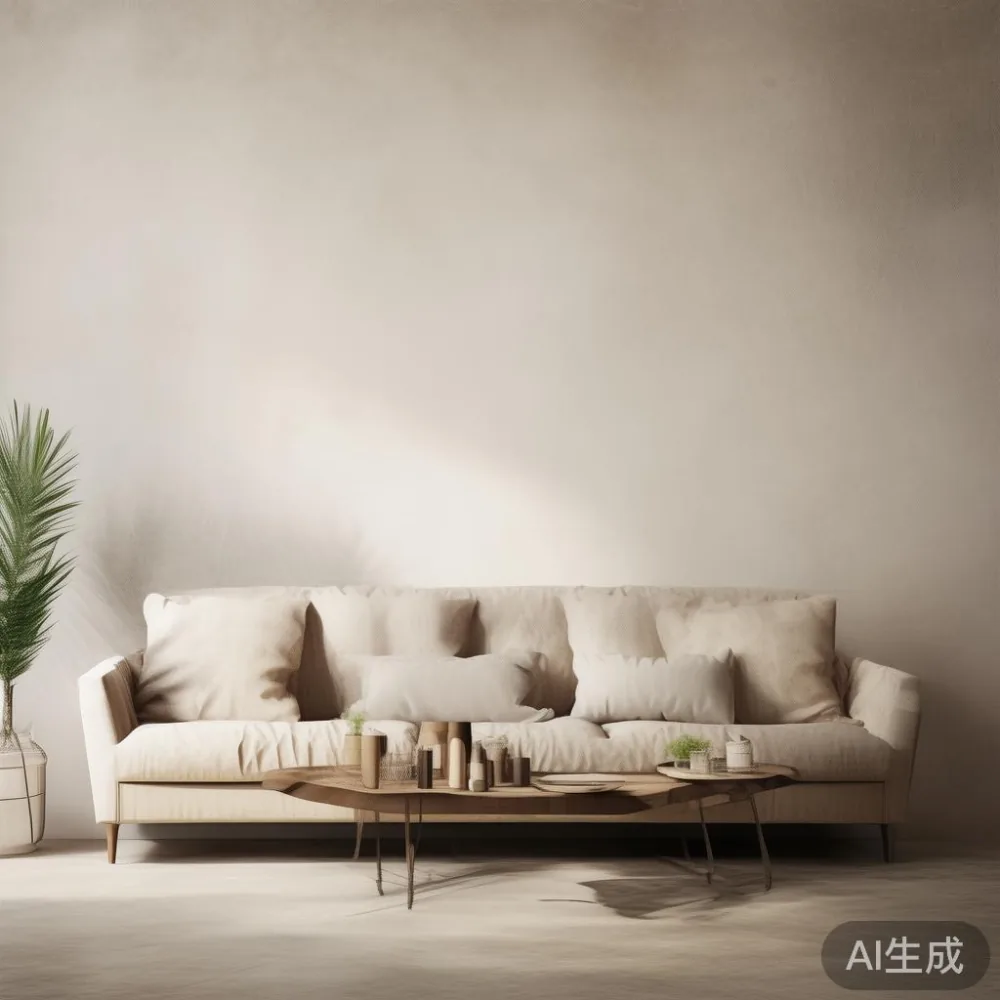
Solid wood sofas with exposed timber frames. Look at the arm posts and the backrest slats. These are typically thinner sections, which respond fastest. If you see a 1 mm to 2 mm gap opening between the arm and the seat rail during a dry week, that is a sign the wood is shrinking unevenly.
Bed frames, especially platform styles with slats. A queen-size slatted base (roughly 152 cm by 190 cm) can warp enough that one slat sits 4 mm higher than its neighbour. That is felt as a slight dip in the bed, and over time it stresses the side rails.
Dining tables. Tables are the easiest piece to monitor. Place a coin on the surface and look across it under a lamp at night. If you see a curve, the top is cupping. A slight cup of 1 mm to 2 mm on a 1.8 m top is normal; 4 mm and over means humidity control is needed.
Wardrobes. Doors are the first casualty. A 2.1 m tall door that fits perfectly in January can rub by 2 mm to 3 mm by August, and you will see it at the top corner first because the top rail moves more than the bottom.
Nightstands and small cabinets. Drawer fronts shrink visibly. A 40 cm wide drawer front that had a 2 mm gap can end up with a 4 mm gap after a dry spell, exposing it.
Marble table tops. Stone itself does not move, but the substrate does. A 12 mm marble slab on a plywood or solid-wood sub-base needs an expansion gap of roughly 2 mm to 3 mm at the perimeter; without it, the stone can crack at a corner when humidity pushes the wood sideways.
How Wide Are HDB Lifts and Corridors, and Why That Matters for Delivery
One thing Singapore owners discover quickly: the lift is the bottleneck. Standard HDB passenger lifts are roughly 1.1 m wide by 1.4 m deep, with a door opening around 0.9 m wide. Corridors are typically 1.2 m to 1.5 m wide. A solid wood king-size bed frame, fully assembled, will not fit through. A disassembled frame in three boxes (headboard, side rails, slats) fits easily, as long as the longest box is under 2.0 m. This is one practical reason flat-pack-friendly joinery has become the standard for mid- and high-end solid wood pieces shipped to Singapore, including the range MIDHILL has refined since the company started exporting in 2008.
Two more numbers worth knowing. A typical four-room HDB flat ceiling height is 2.6 m to 2.8 m, so any wardrobe taller than 2.4 m has to be tilted to get past the lift ceiling. Newer BTOs in Punggol and Tampines often have larger lifts (1.2 m by 1.6 m), but the older blocks in Bedok and Toa Payoh do not. Always measure first.
Where can I buy a loveseat in Singapore?
You can buy a loveseat in Singapore through specialist solid-wood showrooms in the Tai Seng and Sungei Kadut industrial clusters, through online brand showrooms that ship flat-packed with white-glove installation, and through selected ID retailers in Tan Boon Liat Building. For a piece that survives Singapore humidity, choose a hardwood frame (oak, ash, walnut, or rubberwood with at least 10 to 12 dowels and mortise-and-tenon joinery at the corners) rather than an MDF or plywood core, and ask the seller for the kiln-dried moisture reading taken on the day of packing.
Mid-size two-seaters, often called loveseats in Singapore, usually measure 140 cm to 160 cm wide, 80 cm to 90 cm deep, and 80 cm to 90 cm tall. In a four-room HDB living room of roughly 18 sqm to 22 sqm, that scale works well. Smaller condo living rooms of 12 sqm to 14 sqm can take a 130 cm wide version, but anything under 120 cm starts to look like an armchair and stops functioning as a seat for two.
Budget-wise, a solid hardwood loveseat with a kiln-dried 10%-to-12% moisture content retails in Singapore between SGD 1,800 and SGD 3,400 for oak or ash, and SGD 3,200 to SGD 5,800 for walnut. Marble-topped accent loveseats with stone inserts run higher. Make sure the warranty covers joint failure for at least 5 years; ask specifically whether the warranty includes the frame, the slats, and the drawer runners separately.
Five Habits That Add Years to a Solid Wood Piece in Singapore
None of these is complicated. The list below reflects what I have seen work in real flats, not what sounds good on paper.
1. Stabilise the room before the piece arrives. Run a dehumidifier in the room for 5 to 7 days before delivery. Aim for 55% to 60% RH. This shortens the gap between the wood's factory moisture content (8%-12%) and your home's moisture content (16%-20%), which means less movement after delivery.
2. Keep the piece away from the wall by 5 cm to 8 cm. Walls, especially exterior walls in HDB flats, hold moisture. Air circulation behind a wardrobe or sideboard prevents mould at the back panel.
3. Avoid direct afternoon sun on a dining table. A west-facing window can heat a tabletop to 38°C to 42°C in the late sun, drying the surface and pulling it into a cup. Use sheer curtains. UV also darkens walnut and cherry unevenly.
4. Wax the tops twice a year. A hard wax oil (osmo, fiddes, or similar) slows moisture exchange at the most exposed piece. Apply a second coat just before the April monsoon and another in early November.
5. Rotate leaves and inserts every 3 months. If your dining table has a butterfly leaf, store it inside the home, not in a storeroom, and rotate which end of the table takes the most sun. Uneven exposure is one of the visible aging signs owners complain about most.
Metal Furniture: Why Pairing It With Solid Wood Pieces Is the Quiet Trend
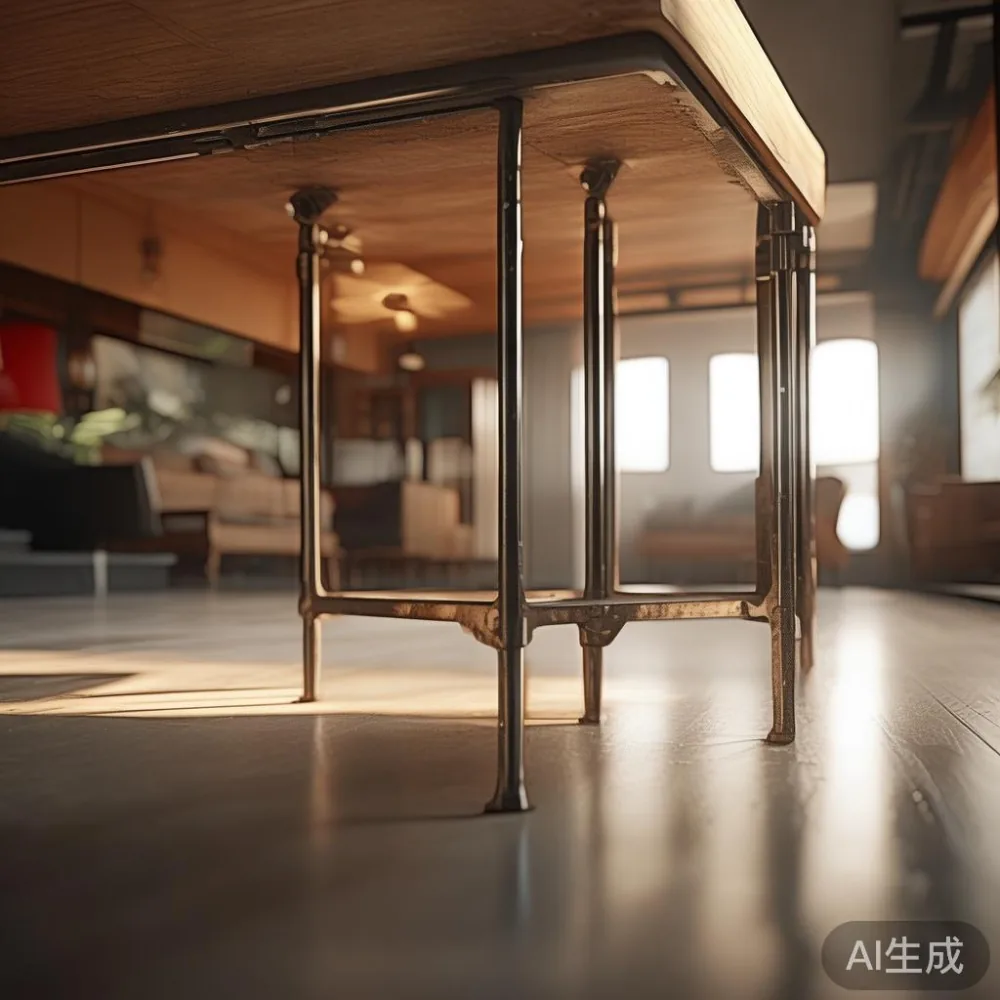
One pattern I have noticed over the past two years in new condos in Punggol and the Jalan Besar enclave is the rise of metal furniture as a partner to solid wood. Powder-coated steel frames on dining chairs, blackened brass handles on wardrobes, and slim steel legs on side tables are increasingly common because metal is dimensionally stable in humidity. A 6 mm steel leg does not change in length between 50% RH and 80% RH, while a 50 mm oak leg can move 0.5 mm to 1.0 mm over the same swing. Pairing a solid wood dining tabletop with a powder-coated steel base is therefore a quieter engineering solution than it looks: the steel absorbs the dimensional stress that would otherwise crack an all-wood apron. This is one reason the metal furniture (steel, iron, or brass) category has quietly grown in the regional contract and residential market, and why designers at MIDHILL have begun offering metal-capped legs and metal-reinforced corners on selected solid wood pieces.
For homeowners, the practical takeaway is this: if you want a single piece that will look after itself through the monsoon, choose one that combines a kiln-dried solid wood top with a powder-coated steel or iron base. The combination is also where French marble rattan furniture ideas translate well to Singapore: a rattan-and-marble accent chair beside a steel-framed solid wood dining set brings the same European light luxury vocabulary into a HDB living room, without giving up structural stability.
What to Ask the Seller Before You Pay a Single Dollar
Bring this checklist to the showroom or send it over WhatsApp. Any seller who cannot respond to four out of five of these is a seller to walk away from.
- What is the kiln-dried moisture content of the wood on the day of packing? (Target: 8%-12% for solid hardwood shipped to Singapore.)
- What is the country of origin of the hardwood? (Oak from the US or Europe, ash from Europe, walnut from the US or Italy, rubberwood from Malaysia.)
- What joinery is used at the load-bearing corners? (Mortise and tenon, dowelled, or dovetailed; avoid screws only.)
- What is the warranty on the frame, the slats, and the surface finish, separately?
- What is the return and replacement policy if the piece arrives with moisture content over 14%?
For readers comparing against post-modern light luxury benchmarks out of Italy, or the French light luxury vocabulary seen at Maison&Objet, the test is the same: kiln-dried hardwood, mortise-and-tenon or dowelled corners, and a warranty that names the parts. Anything else is decoration.
A Short Story from the Tampines Corner Shop
Three weeks ago I was in the MIDHILL corner shop in Tai Seng helping a couple from Tampines choose a dining table. They had been told by another brand that "solid wood is too risky in Singapore". I asked them to look at a 7-year-old walnut dining table in the showroom. It had been in a landed home in Bukit Timah, then moved to a four-room HDB in Tampines, and the moisture content read 11.4% on the meter that morning. The top was flat to within 1 mm over 2 m. The owners had used a dehumidifier for six hours a day and waxed the top once a year. The point was simple: solid wood does not fail in Singapore. Uncontrolled humidity fails it. The same engineering logic explains why metal furniture, used selectively alongside solid wood, has become a quiet solution rather than a stylistic one.
The Honest Bottom Line for Singapore Buyers
Singapore is not a hostile environment for solid wood furniture. It is a demanding one, and the difference is that you have to control the indoor environment rather than the wood. A 55%-to-60% RH target, two wax coats a year, 5 cm to 8 cm clearance at the back of every wardrobe, and a sensible delivery plan through the lift (longest box under 2.0 m for older HDB blocks) will keep a solid wood sofa, bed frame, dining table, wardrobe, nightstand, or marble table looking like the day it was delivered. Use a piece of metal furniture where dimensional stability matters most, and use kiln-dried hardwood where the eye and the hand do. With that combination, a Singapore home can run a solid-wood life well into the second decade, not just the first.