Lacquered Metal Furniture in a Tropical Climate: A Singapore Buyer's Care Guide
Singapore is, at the time of writing, sitting around 1.3 degrees north of the equator. The average relative humidity runs between 78% and 88% for most of the year, and afternoon thunderstorms push moisture levels even higher between April and October. If you have just unboxed a new metal furniture piece with a high-gloss lacquer finish, those numbers should matter to you. Lacquer is one of the most forgiving finishes in the modern workshop, but it is also one of the most reactive to moisture and heat. I learned this the slow way. Last month I visited a customer's 4-room HDB flat in Bedok, and within nine months of delivery the side panels of her solid wood sofa had developed a faint whitish bloom along the metal legs. The fix was simpler than she expected, and the prevention is even simpler.
Why Singapore Humidity Is Harder on Lacquer Than Most Buyers Expect
Lacquer is a film finish. It sits on top of the steel or aluminium substrate as a continuous skin, usually 0.04mm to 0.08mm thick on export-grade metal furniture. When humidity swings, the substrate wants to expand or contract, but the lacquer skin resists that movement. The result is micro-checking along welds and joints, or, more commonly in Singapore, a hazy film caused by water vapour sitting on the surface. The lacquer itself is rarely the problem. The problem is what is left on top of it.
I keep a small hygrometer on my workbench in Foshan, and another in a sample room that mimics tropical conditions at 32°C and 85% RH. The same lacquered frame behaves differently in those two rooms after six months. The tropical room shows fingerprints faster, dust adheres more aggressively, and any oily residue from cooking or from cooking oil aerosols in an open-plan HDB kitchen becomes visible within days instead of weeks.
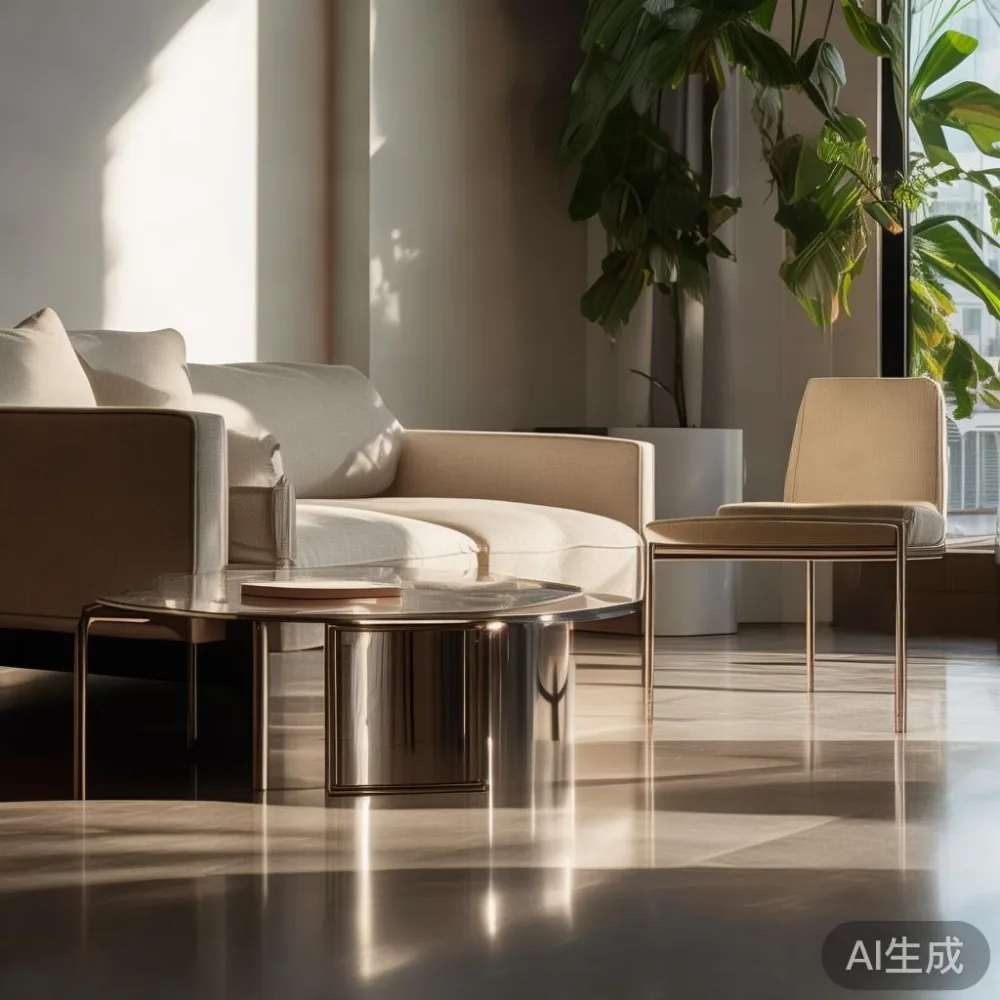
This is one reason many post-modern light luxury pieces use a matte or satin lacquer rather than a mirror gloss. The matte variant scatters light, hides micro-marring, and forgives the small neglects of daily life in a 92 sqm Punggol executive HDB. Gloss lacquer is not wrong, it just asks for a slightly stricter routine.
What Is Light Luxury Lacquer, Exactly?
The term light luxury, whether you read it as French light luxury, American light luxury, or post-modern light luxury, describes a restrained material palette: muted tones, soft gold or brushed nickel accents, and finishes that whisper rather than shout. On a bed frame, a dining table base, or a wardrobe frame, the lacquer is usually a 5% to 15% sheen. Fully mirror finishes (above 85% gloss) are reserved for statement pieces, such as a lacquered MIDHILL coffee table with a grey-cream base and a pale Calacatta vein.
Buyers in Tampines and Punggol often ask me how a S$2,180 lacquered nightstand differs from a S$1,280 melamine equivalent. The honest answer is about 7 to 12 days of additional hand-finishing per piece, plus a 2K polyurethane topcoat that resists household chemicals better than the standard acid-catalyst lacquer used by mass producers. That topcoat is what gives a light luxury bed frame its quiet resistance to finger oils and to the sulphur compounds that drift in from hawker centres on Jurong East weekends.
Your First 30 Days With a New Lacquered Piece
The first month sets the pattern. The single most useful habit is the most boring one: a weekly dry wipe with a clean microfibre cloth, ideally one that has not been washed with fabric softener. Fabric softener leaves a silicone film that, on a hot afternoon in a 25th-floor lift lobby, will appear as an unsightly streak. Use a clean cotton cloth instead, or a microfibre cloth washed three times in plain water before first use.
Beyond that, follow three rules:
1. Keep the piece away from direct afternoon sun for the first 14 days. The lacquer is still off-gassing and softer than it will ever be again. A north-facing wall in a HDB in Punggol Northshore is ideal; an east-facing wall in Bedok Reservoir is workable if you draw the blinds between 1pm and 4pm.
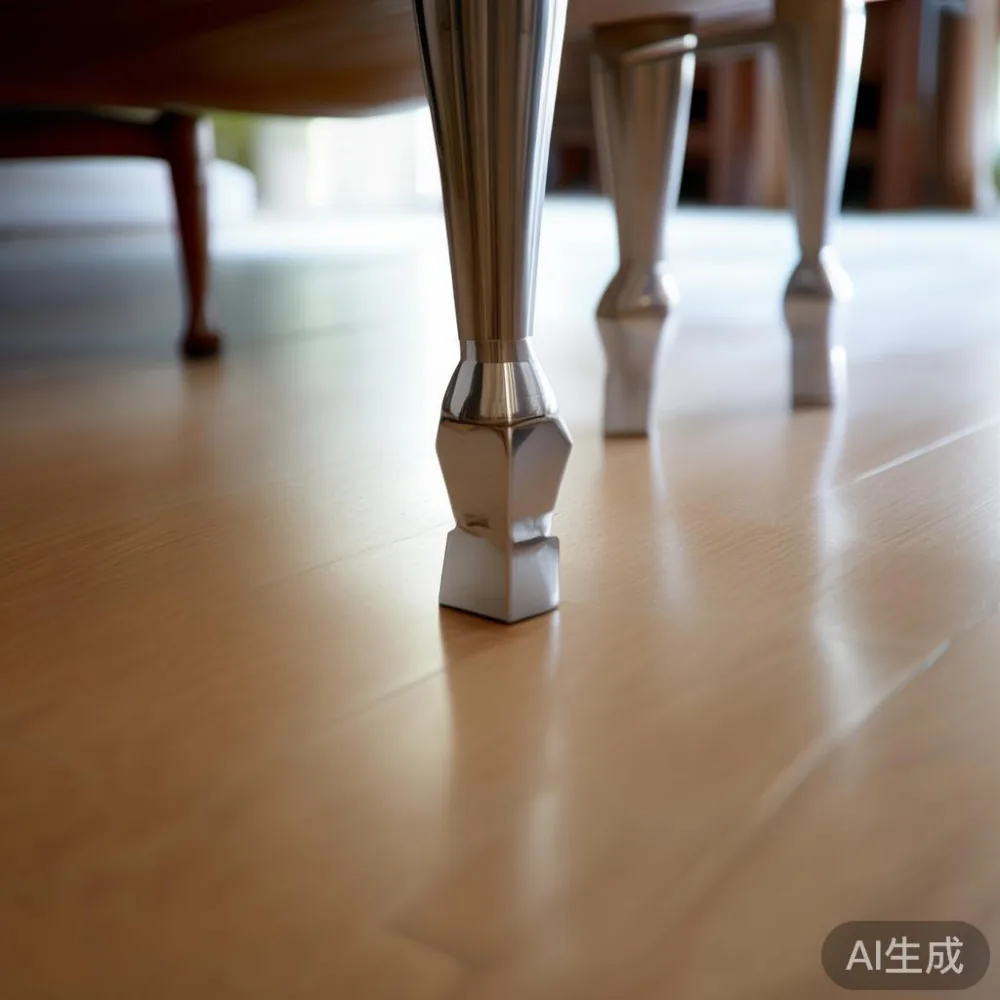
2. Avoid placing rubber feet, rubber mats, or rubber castors directly onto lacquer. The sulphur in cured rubber migrates into the finish and leaves a yellow ghost stain that, on a white-gold wardrobe, becomes impossible to hide within four months.
3. Lift, do not drag. A lacquered marble table base weighs between 18kg and 32kg depending on size. Dragging it across a tile floor will scuff the underside, and once the scuff touches the visible edge, it cannot be polished out.
Cleaning Products That Are Safe, and a Few That Are Not
The shelf in most Singapore household stores is full of products that will void your finish warranty. Avoid anything containing ammonia, bleach, or citrus d-limonene. On a 2K polyurethane lacquer, ammonia will dull the sheen within two applications. Bleach will lift the pigment. Citrus will etch within 30 seconds if left to pool.
What works instead:
- A few drops of pH-neutral dish soap (the kind that comes in clear bottles with a green label, around S$4.50 for 750ml at FairPrice Xtra) diluted in 500ml of cool water.
- Isopropyl alcohol (70%) for sticky residue, used sparingly and never on a daily basis.
- A dedicated lacquer refresher spray, retailing around S$22 to S$35 for 300ml. Apply once every 60 to 90 days.
One of our suppliers in Foshan runs an interesting test. They wipe a finished panel with soapy water 4,000 times with a rotating brush. The good panels (2K polyurethane) show no visible change after 4,000 cycles. The cheaper panels (acid-catalyst or NC lacquer) show swirl marks after roughly 800 cycles. That 5x difference is what you are paying for when you step up from a S$1,400 to a S$2,400 dining table.
"Will My Balcony Damage the Lacquer?" — A Common Question From HDB Buyers
I get a version of this every week. "Will my balcony damage the lacquer?" The honest answer is that no balcony in Singapore is safe for lacquered metal furniture, and no balcony is unsafe for a powder-coated alternative. The reason is salt. Even in non-corrosive-rated balcony positions, the prevailing wind carries fine chloride particles roughly 18% of the year (more during monsoon surges). Lacquer is a barrier coating, not a sacrificial one. Once a chloride ion penetrates a pinhole, it starts working on the metal underneath, and the lacquer above shows the damage only months later as a small raised bubble.
If you must place a piece on the balcony, sweep it down with fresh water once a week and dry it with a clean cloth. If your balcony is enclosed with glass (as most Punggol and Sengkang new launches now are), you can treat it as indoor space for lacquer care, with one exception: ultraviolet. UV breaks the polymer chains in the lacquer topcoat. On a S$3,200 lacquered bed frame by a south-facing window, expect visible yellowing within 24 months. Add a UV-blocking film (around S$18 per sqm installed) and you push that out to 8 to 10 years.
Storage, Move-In Day, and Lift Logistics in Singapore Flats
Most HDB lift cabins in Singapore measure 1.1m wide by 1.4m deep, with a door opening of about 0.9m. Corner desks, large wardrobes over 1.8m tall, and king-size bed frames regularly arrive from Foshan disassembled. MIDHILL ships most pieces in 3 to 5 cartons, with the largest carton usually under 28kg so that a single delivery helper can carry it. Corridor widths in older HDB blocks run between 1.5m and 1.8m, and a 2.4m long headboard will need to be tilted to clear the railing on most landings, so do not throw away the protective felt sleeves.
Move-in day checklist for lacquered pieces:
- Keep cartons flat, never on end, in air-conditioning or in the largest room available.
- Let the piece acclimatise for 24 hours after unboxing in the room where it will live.
- Bring the room temperature down to 23°C to 25°C if you can. Faster acclimatisation reduces the risk of moisture condensing on a cold lacquered surface.
Refinishing, Recoating, and the Real Cost of Restoration
A lacquered surface is not permanent. Even with good care, expect to need a buff and recoat every 5 to 7 years in Singapore conditions. The work is straightforward: a fine scuff with 1500-grit, a tack cloth, a spray pass of 2K clear, and a 48-hour cure. In Foshan we charge roughly RMB 280 (about S$52) per square metre of surface. In Singapore, restoration specialists we work with charge between S$85 and S$140 per square metre, with a minimum call-out of around S$160. That is still well below replacement cost on most pieces.
One detail worth noting: recoating does not fix lacquer that has cracked at the metal joints. Cracks there mean the substrate has moved, and the only lasting repair is to disassemble, re-weld, and start again. We see this about 1.3% of the time on pieces over 6 years old, almost always on balcony units and ground-floor patio pieces.
The Light Luxury Bedroom: A Short Styling Note
If you are working out how to style a light luxury bed in your bedroom, the lacquered frame is the anchor. A pale cashmere-grey bed frame with a brushed champagne trim tends to read calm in a 14 sqm HDB master bedroom, while a deeper ink-blue with brass detailing reads more contemporary. The lacquered nightstand should sit at roughly the same sheen level; mixing a matte frame with a high-gloss nightstand looks like an accident, not a design choice. If you have invested in a French light luxury bed, my colleagues in Foshan will tell you to skip the matching mirror and pick instead an upholstered bench at the foot of the bed. The mirror breaks the calm of the lacquer and creates a focal point the room cannot support.
For anyone comparing a French bed vs Italian light luxury bed at similar price points, lacquer quality is where most of the difference hides. Italian export houses tend to specify a thicker 0.10mm to 0.12mm topcoat; French export houses tend to specify a thinner film with a higher solids content. Both can last 12 to 15 years in Singapore with proper care. Both will fail in 3 to 4 years if you wipe them with bleach.
Dining Room Care, Wardrobes, and What to Buy in 2026
The dining area in most HDBs is eight to twelve feet from the wet kitchen, which means cooking aerosols travel. A lacquered dining table with a satin top is more forgiving than a gloss top in this layout, but lacquered light luxury for dining room settings generally asks the cook to switch on the kitchen extractor and close the sliding door during heavy frying. The investment is small; the saving on refinishing is roughly S$600 to S$900 over ten years.
Wardrobes are the most-asked-about lacquer product in 2026. Buyers want a tall, light, soft-close unit with internal drawers, and they ask after the best light luxury wardrobe for 2026 in nearly every showroom conversation. A 2.0m tall wardrobe at MIDHILL ships with an aluminium frame, a 0.06mm lacquer skin, and adjustable shelves at 32mm pitch. With monthly wiping and a biennial polish, expect 15 years of clean service. The same wardrobe in solid white melamine will mark in 3 to 4 years from belt buckles and bag straps.
For those browsing the 2026 Mid-century modern furniture collections, you will see how a slim tapered metal leg, a 35mm-thick timber edge, and a satin lacquer frame sit together. Modern Mid-century modern furniture still leans on natural materials, but the metal bones are what let the timber tops float so cleanly. That is the engineering reason MIDHILL keeps metal at the centre of the range, and that is why a simple weekly care routine can keep a S$3,800 dining set looking correct in a Tampines condo for well over a decade.
The One Test I Run Before Any Buyer Takes a Piece Home
Before any lacquered piece leaves our Foshan workshop, we run a 20-minute water-spot test on the underside of a back panel, where no one will see it if it marks. A drop of room-temperature water is left for 20 minutes, wiped off, and the panel is inspected under 2,400 lumens of LED light. A good 2K polyurethane finish shows no ring. A second-tier finish shows a faint shadow ring that disappears under polish. Anything more than a shadow ring is rejected and refinished before packing. That is the standard I judge by, and it is the standard I would want any Singapore buyer to ask about. If a brand cannot tell you which lacquer system they use, what the film thickness is, and how the surface behaves after a 4,000-cycle abrasion test, they are not selling light luxury; they are selling finish on the surface and inconsistency underneath.
I have lost count of how many HDB flats I have walked through over the years, but I remember every piece that came back to us for refinishing within 24 months. None of them failed because the lacquer was thin. Every one of them failed because someone wiped with the wrong cloth, or left the piece in the path of an afternoon thunderstorm squall through an open corridor window. The care routine is short, the products are ordinary, and the payoff is a S$2,400 piece that still looks correct when its tenth birthday rolls around.