Veneer or Solid Wood? A 5-Year Cost Comparison for Singapore Homes
Choosing furniture for a Singapore HDB flat or condo is rarely just a choice between appearance and price. The decision becomes more practical when a dining table must pass through a 90 cm corridor, a lift has only 110 cm of usable depth, and the household expects to keep the same piece for at least 5 years. Veneer can offer a controlled entry price, while solid wood brings different repair, refinishing and weight considerations. This comparison looks at both materials through the lens of a solid wood sofa, bed frame, dining table, wardrobe, nightstand and marble table, while also considering the metal frames used in metal-furniture designs.
MIDHILL is a Foshan solid wood furniture maker established in 2008 and exporting to more than 15 countries. Its 10-year structural warranty and lifetime refinishing policy are relevant to this calculation because a 5-year budget should include likely maintenance, not only the invoice on delivery day. Prices below use SGD and include a planning GST allowance where GST has not already been added.
What does veneer actually cost over 5 years?
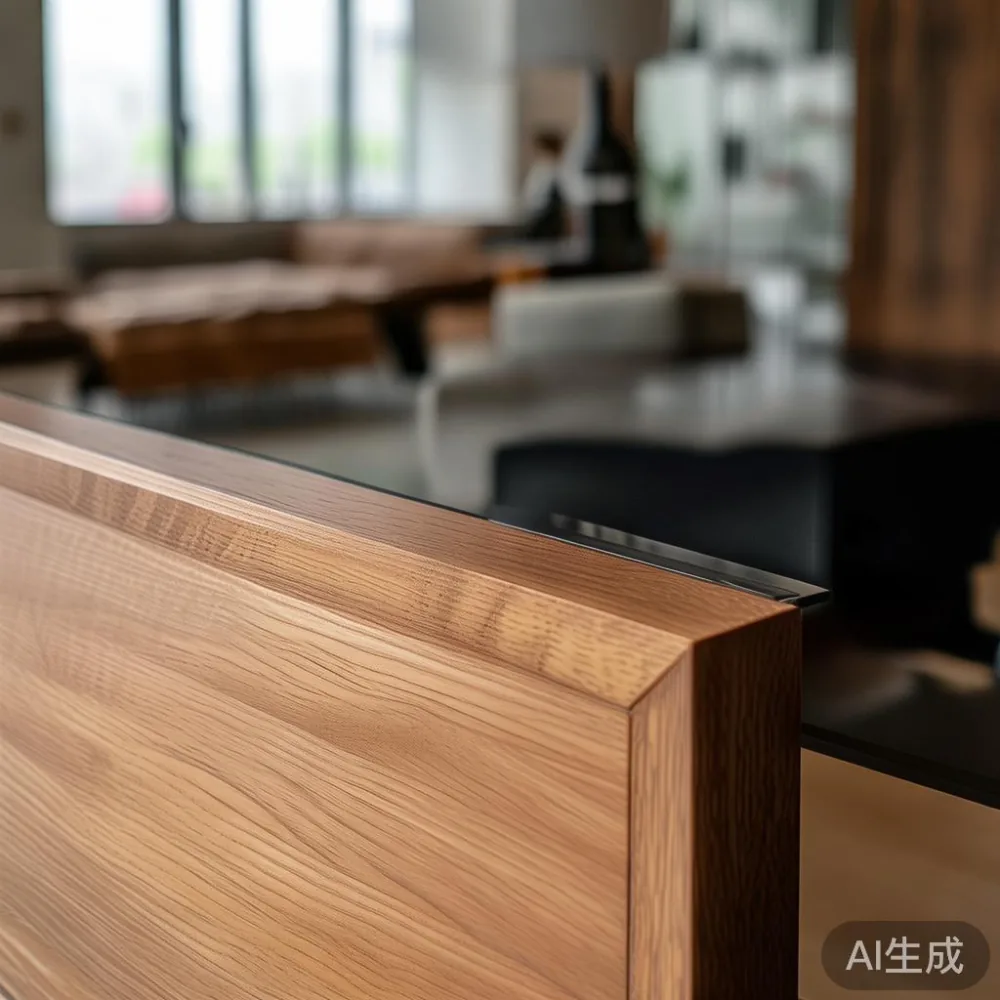
Veneer furniture uses a thin layer of real wood, commonly 0.6 mm to 1.2 mm, bonded to a panel such as MDF, plywood or particleboard. The exact price depends on the core, veneer species, edge treatment and finish. For a Singapore dining table, a veneered 180 cm by 90 cm model might cost SGD 1,100 before GST, while a comparable solid oak or ash model might cost SGD 2,300 before GST. With 9% GST, those figures become about SGD 1,199 and SGD 2,507.
The lower purchase price does not automatically mean a lower 5-year cost. Veneer can chip at an exposed edge, fade under strong daylight or develop a visible seam if the humidity changes. A replacement sheet may cost SGD 180 to SGD 450 for a dining table, including labour, whereas refinishing solid wood may cost SGD 220 to SGD 600. Veneer repair is cheaper at the start but can be harder to match, especially across several panels with different grain direction.
For a wardrobe, a veneered 180 cm wide unit may fall between SGD 1,500 and SGD 3,200 before GST. Its core panels add useful stiffness, while sliding doors can keep the external projection at 60 cm. The concern is edge and surface durability: a 5-year household may accumulate 2,000 to 5,000 door cycles, repeated wiping and several hours of direct sun. A quality plywood core with hardwood edges is more sensible than a very thin particleboard core.
Over 5 years, an illustrative veneered dining table budget is SGD 1,199 purchase price, SGD 350 for one edge repair, SGD 220 for refinishing, SGD 180 for hardware and SGD 150 for delivery and installation. That gives a planning total of about SGD 2,099. A solid wood table purchased at SGD 2,507 might require one SGD 280 surface repair, no major replacement during the period and SGD 150 delivery, producing about SGD 2,937. The solid table costs about SGD 838 more over 5 years in this example.
This is not a promise that every solid wood table will outperform every veneer table. It is a way to compare expected ownership rather than showroom cost. Veneer remains a practical choice when the piece will be used lightly, moved often or replaced as part of a rental-home refresh.
Is solid wood more expensive to maintain?
Solid wood is usually more expensive at purchase, but its maintenance can be easier to plan. A small scratch can be sanded and blended; a tabletop can be refinished without replacing the entire structure. In Singapore, humidity commonly ranges around 65% to 85%, while air-conditioned rooms may drop to 50% to 65%. These changes can cause veneer joints to open slightly and solid timber to move by a few millimetres across its width.
A 180 cm solid oak dining table may weigh 48 kg to 75 kg, while a comparable veneered table may weigh 35 kg to 55 kg. A 200 cm solid wood bed frame can weigh 55 kg to 90 kg. Weight matters in HDB flats: a 90 cm doorway may permit the frame, but a 110 cm lift and a 120 cm corridor turning area can make delivery more complicated. Two delivery workers carrying a 75 kg table may need 10 to 15 minutes longer than a crew handling a 45 kg table, so the labour charge can rise from SGD 90 to SGD 180.
Last month I visited a Tampines condo where a homeowner was comparing a 200 cm solid wood bed frame with a lighter veneered version. The solid frame weighed 74 kg, and the delivery crew needed 14 minutes to turn it through a 100 cm corridor and position it inside the bedroom. The owner also measured a 105 cm lift door before ordering. That practical check prevented an unsuitable delivery plan, even though the frame fitted the room dimensions.
Maintenance costs can be estimated by material and age. A solid wood nightstand may need SGD 25 to SGD 60 of oil or wax in year 1 and SGD 40 to SGD 90 in year 5. Veneer may need SGD 15 to SGD 35 of surface care in year 1, plus a possible SGD 90 to SGD 220 edge repair. A marble table behaves differently: its stone surface is not refinished like wood, although the supporting solid wood frame or metal base still requires care.
For a 5-year model, let us place SGD 220 aside for solid wood care, SGD 180 for veneer care and SGD 120 for routine metal-frame care. Those amounts are planning estimates, not quotations. The important difference is that solid wood usually retains more repair options, while veneer depends heavily on how the panel was made.
How do solid wood sofas and metal frames change the comparison?
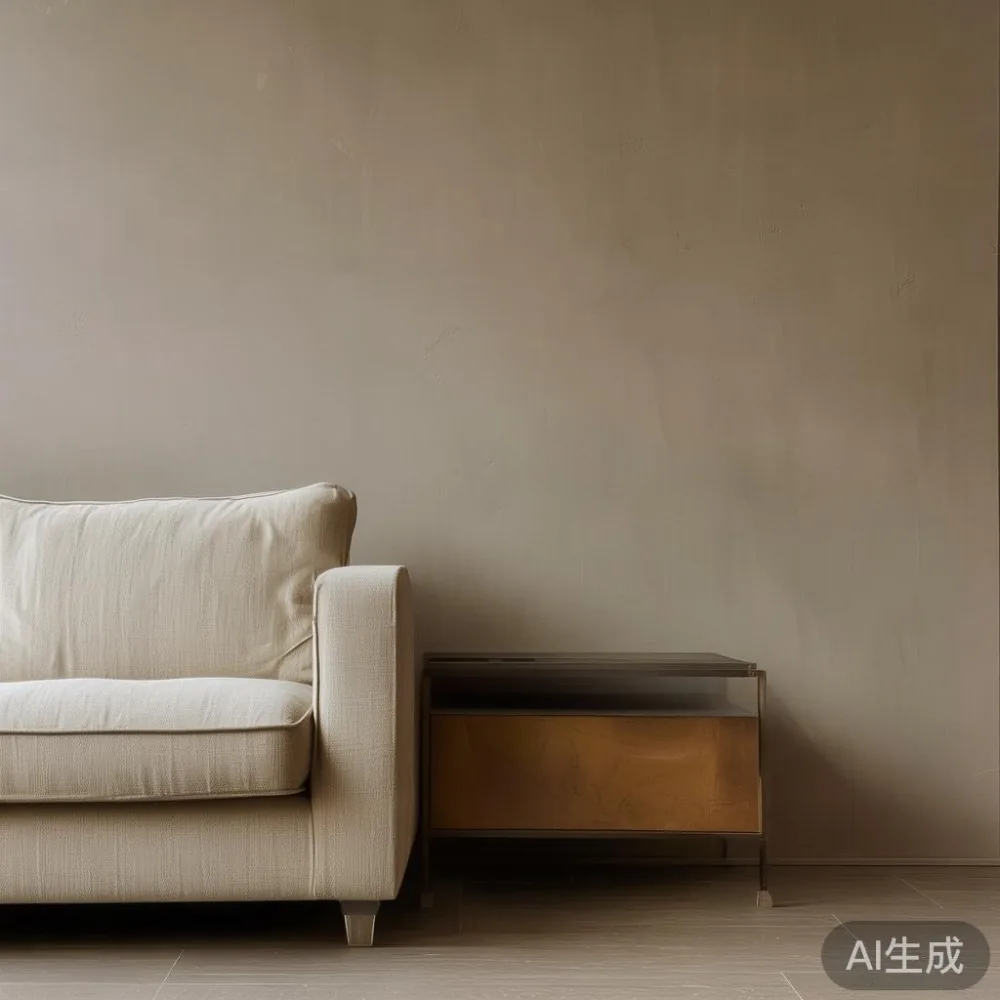
A solid wood sofa is not only a timber question. Its frame may combine solid wood rails with metal legs, springs or support brackets. Metal furniture can provide slender structural support, which is useful in a compact HDB living room where a bulky frame would reduce circulation space. A 210 cm solid wood sofa may occupy 92 cm of floor depth, leaving less room for a coffee table than a 190 cm model.
MIDHILL coffee table decisions should include the table’s footprint, not just its material. A 110 cm by 55 cm coffee table gives about 1.05 sqm of surface area, while a 90 cm by 45 cm version gives 0.41 sqm. A marble table with a 110 cm width may weigh 35 kg to 60 kg, so its metal or solid wood base needs to be checked for load stability. A metal frame can lower visual weight, but it should still be specified with a tested load rating of at least 80 kg for a coffee table.
Here is a 5-year illustration for a 210 cm solid wood sofa. The frame purchase price is SGD 3,200 before GST, or SGD 3,488 after GST. Allow SGD 350 for upholstery cleaning, SGD 180 for metal hardware inspection and SGD 150 for delivery. The projected total is SGD 4,168. A veneered frame sofa at SGD 2,100 before GST, or SGD 2,289 with GST, might require SGD 450 for veneer repair, SGD 250 for cleaning and SGD 150 for delivery, for SGD 3,139. The solid wood version is higher-cost but may suit a heavier daily-use pattern.
That figure applies to the frame, not to fabric grade. A family sofa used daily may need 8,000 to 12,000 sitting hours over 5 years, while a formal condo sofa may see only 2,000 hours. For metal furniture, inspect welds, screw points and powder-coated surfaces every 6 months. A small rust mark on a steel leg should be treated early; replacing a complete metal base at year 4 could add SGD 220 to SGD 480.
Is American wardrobe worth it for a 5-year budget?
The question “is American wardrobe worth it” usually depends on whether the buyer values scale, storage planning and visible timber rather than the lowest initial payment. An American-style wardrobe can reach 210 cm to 240 cm high and 180 cm to 240 cm wide, with hanging rails, drawers and a solid wood frame. In a Tampines or Punggol bedroom, the 180 cm width is often manageable, but the 65 cm depth and 75 cm door-swing still need checking.
A 200 cm wide, 220 cm high American wardrobe in solid wood may cost SGD 3,900 before GST, or SGD 4,251 after GST. Add SGD 450 delivery and installation, SGD 260 for hardware alignment and SGD 300 for refinishing over 5 years. The 5-year planning total is SGD 5,261. A veneered version at SGD 2,600 before GST, or SGD 2,834 after GST, may use SGD 180 for edge repair, SGD 220 for hardware and SGD 450 for delivery, giving SGD 3,684.
The higher solid wood total may still be rational if the wardrobe is moved rarely, used daily and expected to remain through a condo renovation. The lower veneer total may suit a rental flat, a child’s room or a wardrobe that will be replaced after 3 years. Under 2000 Boho furniture is another way to describe lighter visual purchases, but a boho appearance does not tell you whether the carcass is plywood, MDF or solid timber. Ask for the panel specification and the warranty terms.
Which option suits HDB rooms and compact condos?
HDB homes often reward careful measurements more than a large material label. Before buying a bed frame, measure the lift door, the corridor turning point and the bedroom doorway. A 160 cm bed frame may fit through a 90 cm door only when disassembled; a 180 cm frame may require separate rails and legs. For solid wood, removal and reassembly can add SGD 120 to SGD 300, while a flat-pack veneer unit may add SGD 80 to SGD 180.
For a Bedok condo with an open living area, a 200 cm dining table may suit the dining zone while a 120 cm sideboard handles storage. A European light luxury sideboard can combine solid wood doors with restrained metal furniture details, but the piece should not be so deep that it blocks a 90 cm circulation path. A 160 cm sideboard at 42 cm deep leaves more room than a 180 cm sideboard at 55 cm deep.
Design references can help with selection. Nordic for small living room layouts often use pale timber, low profiles and compact footprints. French light luxury styling may add moulded edges or a marble table, while American light luxury often uses generous proportions and deep seating. Post-modern light luxury can mix solid wood with dark metal lines, giving a compact flat a more deliberate appearance without adding excessive bulk.
These references should guide proportion first. A solid wood dining table with a 75 cm clearance on one side may work in a 3.8 m wide dining zone, while a 90 cm clearance is more comfortable on both sides. A 45 cm round pedestal table can suit a 2.6 m wide corner, but it offers fewer place settings than a rectangular 120 cm table. A top 10 Coastal furniture search may produce attractive images, yet coastal styling does not guarantee solid timber or stable construction.
What should you check before choosing metal furniture?
Ask for the exact timber species, panel thickness, finish type and metal gauge. Solid wood should be described by species such as oak, ash, walnut or rubberwood, rather than by a vague “wooden” label. A dining table top of 20 mm to 25 mm is more substantial than an 18 mm top, while a bed frame rail of 70 mm to 100 mm may resist movement better. Confirm whether back panels are solid wood, plywood or another material.
For metal furniture, request the steel thickness and finish. Powder-coated steel at 1.2 mm to 1.8 mm is common for residential frames, but the load rating matters more than the visual gauge. A dining table should be tested for at least 120 kg, a bed frame for at least 200 kg and a wardrobe frame for at least 80 kg per section. Ask whether replacement screws, brackets and powder-coated touch-up service are available.
How to style Japanese bed in apartment layouts can be handled with a low-profile 200 cm bed, a 40 cm bedside table and a wall-mounted 15 cm shelf. This leaves a clear route through a 90 cm corridor. A solid wood sofa with a 85 cm depth and a metal coffee table can work in a living room measuring 3.6 m by 3.2 m, while a 210 cm sofa needs at least 3.9 m of length for balanced circulation.
Delivery time is another cost. Singapore stock may arrive within 3 to 7 days, while a made-to-order piece may take 30 to 60 days before production and 7 to 14 days for delivery. Store the invoice, care instructions and warranty certificate. MIDHILL offers delivery benefits such as free shipping over US$350 for qualifying orders, but Singapore delivery charges, GST and access conditions should still be confirmed at checkout.
Which 5-year choice is more practical?
Veneer can be the lower-cost option when the furniture is light-use, the home is temporary and the budget is limited. In the dining table example, the 5-year estimate was about SGD 2,099 for veneer and SGD 2,937 for solid wood. For the wardrobe example, veneer was about SGD 3,684 and solid wood about SGD 5,261. These are transparent planning models, not fixed quotations.
Solid wood becomes more attractive when a household plans to keep the piece beyond 5 years, values refinishing and expects heavy daily use. The additional amount can be viewed as a reserve for future repair. The same principle applies to a nightstand, a bed frame and a metal-legged coffee table. A marble table may require a separate stone-care budget, so the timber choice should be evaluated around the complete product rather than as a single surface.
Measure first, then compare materials. Record the lift width, corridor width, doorway, turning space and delivery route; check the load and warranty; and add 5 years of realistic care to the purchase price. After that, veneer is often the sensible economy choice, while solid wood offers greater long-term repairability and a distinct light-luxury character.