Choosing the Right Size for a Singapore HDB Living Room: A Practical Sizing Guide
I measured three HDB flats in Tampines last month while helping a client furnish a 4-room unit, and the same problem showed up in every home: the living room is generous on paper but ruthless in reality. A 4-room BTO in Punggol typically gives you about 3.2 m by 3.5 m of usable wall length once you subtract the air-con trunking, the DB box, and the 25 cm skirting. Pick a sofa that looks "medium" on a showroom floor and you will block the corridor to the bedrooms. Pick a dining table without checking the corridor width and the movers will refuse to carry it up. Sizing is the single decision that determines whether your home feels calm or cramped, and the numbers below are the ones I now check before I recommend a single piece.
Why HDB living rooms break showroom-floor assumptions
Showrooms in Foshan or Kuala Lumpur sit on flat ground with 1.2 m-wide entrances. Your HDB in Bedok or Sengkang does not. The standard HDB corridor is roughly 1.2 m wide, and the lift opening on most refitted blocks is about 0.9 m by 2.1 m. A solid wood sofa with a 2.4 m length is a real problem: the backrest alone is often 95 cm tall, and tilting it through the door takes two movers plus a blanket. I watched movers refuse a 2.6 m L-shape in a Punggol BTO last quarter; the client ended up keeping the L-shape but ordering a 2.1 m version instead, which arrived through the service lift with 8 cm to spare on each side.
This is why metal furniture has quietly become popular in local showrooms. Aluminium sofa frames and powder-coated steel legs weigh 35-50 kg for a three-seater, against 80-110 kg for a comparable solid timber frame. The weight saving matters less than the fact that metal sections are modular: a metal furniture three-seater often ships in two boxes, each under 1.8 m long, which clears the lift. Solid wood still wins for bed frames and dining tables, but for the living room, a hybrid approach is now standard practice among Singapore designers.
Start with the wall, not the sofa
Take a tape measure and write down three numbers before you fall in love with anything:
Now add the depth of your planned sofa. A 95 cm-deep three-seater placed against the long wall leaves a walking lane of 90 cm if your room is 3.5 m deep. That is the minimum. Anything under 80 cm and two adults cannot pass each other. Last month I visited a Bedok resale where the owner had squeezed a 1.05 m-deep American-style sectional into a 3.3 m room; the walking lane was 65 cm and the air-con service hatch would not open. We replaced it with a 90 cm-deep piece and the room immediately felt 20% bigger.
How big should the sofa really be?
For a 4-room HDB living room (typical plan size 4.0 m x 3.5 m usable), I now recommend a three-seater between 200 cm and 230 cm long, with a depth of 88 to 95 cm. A two-seater should sit at 150-170 cm. These numbers come from five years of measuring what actually fits, not what looks balanced in a 6,000 sq ft catalogue spread.
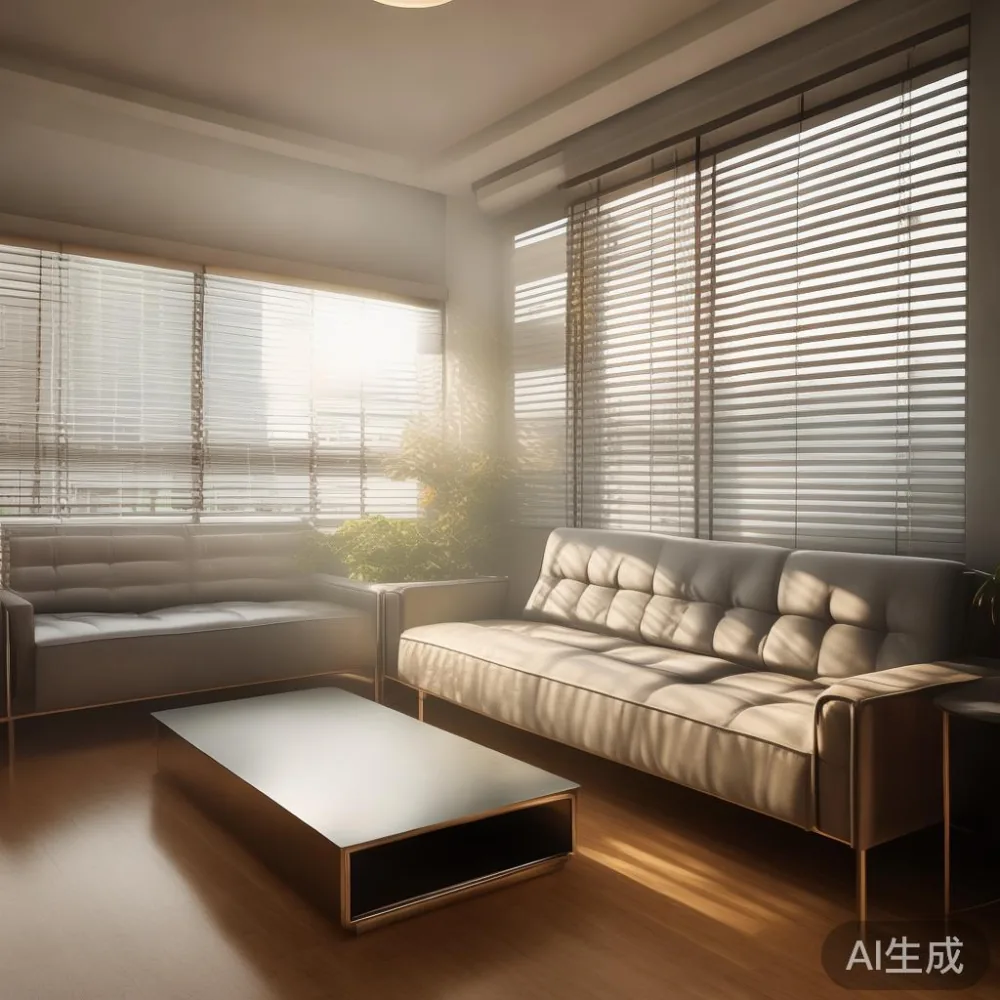
The style argument is separate. French light luxury tends to use lower seat heights (around 42 cm), rolled arms, and deeper cushions in the 95-100 cm range; the silhouettes are wider and rounder, which makes a 220 cm French-style piece read as a "big" sofa. American light luxury runs taller (seat height 45-48 cm), with firmer cushions and cleaner lines, so a 210 cm American piece can look the same size on a sales plan but feels more compact in your room. If your HDB ceiling is the usual 2.7 m and your floor plan is tight, lean American. If you have a 3.5 m by 4.0 m living-dining and a high window, French styling reads better. Post-modern light luxury, the third common direction, sits between the two and is the easiest to size because the proportions are already room-friendly: 90 cm depth, 215 cm length, square arms. For clients who want a solid wood sofa frame with metal legs, post-modern dimensions are also the safest match.
What is the difference between French provincial sectional sofa and modern furniture?
French provincial sectional sofas use carved or shaped solid wood frames (often rubberwood or ash), deeper seats of 95-105 cm, lower back heights of 75-82 cm, and decorative turned legs; modern furniture uses thinner metal or plywood frames, seats of 45-50 cm, straighter lines, and exposed or hidden legs.
The practical consequence in an HDB is bigger than people expect. A French provincial sectional in a 200 cm x 160 cm L-shape needs at least 3.6 m of wall to feel settled, and the carved frame will not fit a standard 0.9 m lift door when assembled. Modern modular pieces, by contrast, break into modules under 95 cm wide, which is why so many HDB owners now choose them. If you want the French aesthetic in a smaller package, look at makers offering a 180 cm x 150 cm version with removable arms, or pair a French-style accent chair with a modern three-seater.
Dining table size when the dining area shares the living room
In most 4-room HDBs, the dining area is the 1.5 m strip between the kitchen entrance and the living room sofa. A rectangular 140 cm x 80 cm table fits four people with 60 cm per chair, which is the minimum comfortable spacing. Six people need 160 cm x 90 cm. Round tables save space: a 120 cm round fits four, a 135 cm round fits five with a little squeezing. Marble tables look stunning but check the weight: a 140 cm x 80 cm marble top is 80-95 kg, against 35-45 kg for solid wood of the same size. For a HDB with a 1.2 m corridor, that extra 50 kg matters.
Extension leaves also matter. If you entertain twice a year, an extendable bed for dining room use (yes, the same drop-leaf hardware used on beds works on dining tables) gives you a 140 cm daily footprint and a 200 cm footprint when extended. I recommended one for a Tampines family last month; the extension stored under the tabletop, weighed under 14 kg, and pulled out in under three minutes. Cost in SGD runs SGD 1,850 to SGD 4,200 depending on top material.
Bed frame, wardrobe and nightstand sizing for the master bedroom
Standard HDB master bedroom is 3.2 m x 3.0 m. A queen bed frame (152 cm x 188 cm) needs 65 cm clearance on each side for nightstands and walking. A king (183 cm x 198 cm) needs 70 cm. If your room is under 3.0 m on the short side, the king will not work. A super-king is right out for almost every HDB plan.
Wardrobes run the long wall, usually 2.4 m to 3.0 m of clear run. A 2-door unit (1.2 m wide, 60 cm deep) suits a smaller bedroom; a 3-door (1.8 m wide) suits a master. Anything over 2.4 m wide ships in two cartons, which is fine for HDB lifts. Solid wood wardrobes weigh 90-140 kg assembled, so check whether your floor is screeded or chipboard; some clients in Punggol Waterway have had to add plywood under the wardrobe feet to spread the load.
For the nightstand, 45 cm to 55 cm wide is the HDB standard. Anything narrower falls over when you put a laptop on it. I like 50 cm wide x 40 cm deep with two drawers; it clears the bed frame by exactly the 5 cm needed to open the drawer fully.
Delivery, GST, and what the numbers actually cost
For a typical HDB purchase of a sofa, dining table, bed frame, wardrobe and two nightstands, the all-in landed cost in Singapore is the price plus 9% GST plus delivery. A common package from a Foshan supplier like MIDHILL lands at roughly SGD 6,800 to SGD 11,500 for solid wood across these five categories, including GST and door-to-door delivery in 18-26 days. The company, founded in 2008 and exporting to 15+ countries, ships from Foshan with consolidated cartons that fit HDB service lifts, and offers a 10-year structural warranty plus lifetime refinishing on solid wood frames.
Free shipping usually applies above US$350 (around SGD 480), which a sofa and dining set clears easily. Below that threshold, expect SGD 80 to SGD 180 for delivery within mainland Singapore. Returns within 14 days are standard, although custom orders (specific fabric, custom size) are usually final sale. Check whether the seller quotes GST-inclusive; some Foshan factories quote ex-GST, which adds 9% on top.
One last check before you confirm any order: measure the service lift in your block. Newer BTOs in Punggol and Sengkang often have lifts with 1.1 m wide x 1.4 m deep doors and 2.1 m internal height. Older flats in Bedok and Toa Payoh sometimes have 0.9 m wide doors, which rules out any pre-assembled piece over 0.85 m wide. Write the lift dimensions in the order notes; the factory will re-check before production.
Frequently asked sizing questions from HDB owners
"Will a 2.4 m sofa fit my 4-room HDB?" Usually no, because the lift or door restricts it. A 2.2 m version with the same seat depth fits.
"Can I fit a king bed in a 3 m x 3.2 m HDB bedroom?" Technically yes, but you lose both nightstands. A queen with one wider nightstand reads as more usable.
"Is metal furniture strong enough for daily use?" For sofa frames and table legs, yes. Aluminium and powder-coated steel carry 150-300 kg static weight per module. For bed frames, I still specify solid wood for the slats; metal bed frames exist and many ship flat-packed at under 25 kg, but the feel is different.
"Do I need a marble table if my dining area is small?" A marble table makes a small dining area feel heavy. A solid wood dining table in light oak or ash will visually lighten the same footprint and weigh 40-50 kg less, which the lift and your floor will both appreciate.
Measure three times, send the lift dimensions with the order, and pick furniture that fits the room before you pick the style. The right size is the style that actually lives in your home.