Humidity and Wood Furniture in Southeast Asia: A Practical Guide for Singapore Homes
Last month I visited a customer in Tampines, a third-floor HDB unit with a north-facing living room. Her solid wood sofa, imported from overseas six months earlier, had begun to develop a faint hairline crack along the armrest. The crack measured roughly 4 cm and sat right where her hand rested every evening. The apartment had no special ventilation, no dehumidifier, and the indoor humidity during the previous wet season had hovered around 82 percent. That single visit reminded me why I keep a hygrometer in my own living room, and why buyers in Singapore, Kuala Lumpur and Bangkok need to think very differently about solid wood pieces than buyers in London or Toronto.
Singapore sits in a climate where the average relative humidity ranges between 70 and 85 percent for most of the year. During the monsoon months from November to January, it can climb even higher at night. When wood absorbs that ambient moisture, the cells inside the timber swell. When the air dries out under air-conditioning, those same cells shrink. Each cycle of swelling and shrinking places internal stress on every glue joint, every dowel, and every panel of a bed frame, dining table or wardrobe. Over twelve to twenty-four months, this movement shows up as cracking, warping, cupping on tabletops, and loose mortise joints in nightstands.
MIDHILL has been making solid wood pieces in Foshan since 2008, and the company now ships to more than fifteen countries, including Singapore, Malaysia and Indonesia. Our craftspeople have spent years tuning joinery, panel construction and finishing systems for tropical humidity. The guidance below reflects what our team has learned on the factory floor, in shipping containers, and in real customer homes from Punggol to Penang.
How much does Singapore humidity actually move solid wood?
Wood is hygroscopic, which means it constantly exchanges moisture with the air around it. A kiln-dried oak board at 8 percent moisture content, moved into a Singapore bedroom at 82 percent relative humidity, will absorb moisture until it reaches an equilibrium of roughly 18 to 20 percent. That jump from 8 percent to 20 percent is enough to make a 180 cm long dining table top expand by about 6 to 8 mm across its width. For a 200 cm wardrobe side panel, the same shift can push the panel outward by 4 to 5 mm, which is often the amount needed to make a door rub or refuse to close.
Three measurements matter most when you evaluate a piece:
- Moisture content of the wood at delivery. Request a reading between 8 and 12 percent. Anything above 14 percent is a red flag for tropical homes.
- Movement allowance built into the design. Look for floating tops on dining tables, breadboard ends, and side panels that sit in grooves rather than being glued on all four edges.
- Joinery type. Mortise-and-tenon, dowel, and dovetail joints tolerate movement better than simple butt joints held only by screws.
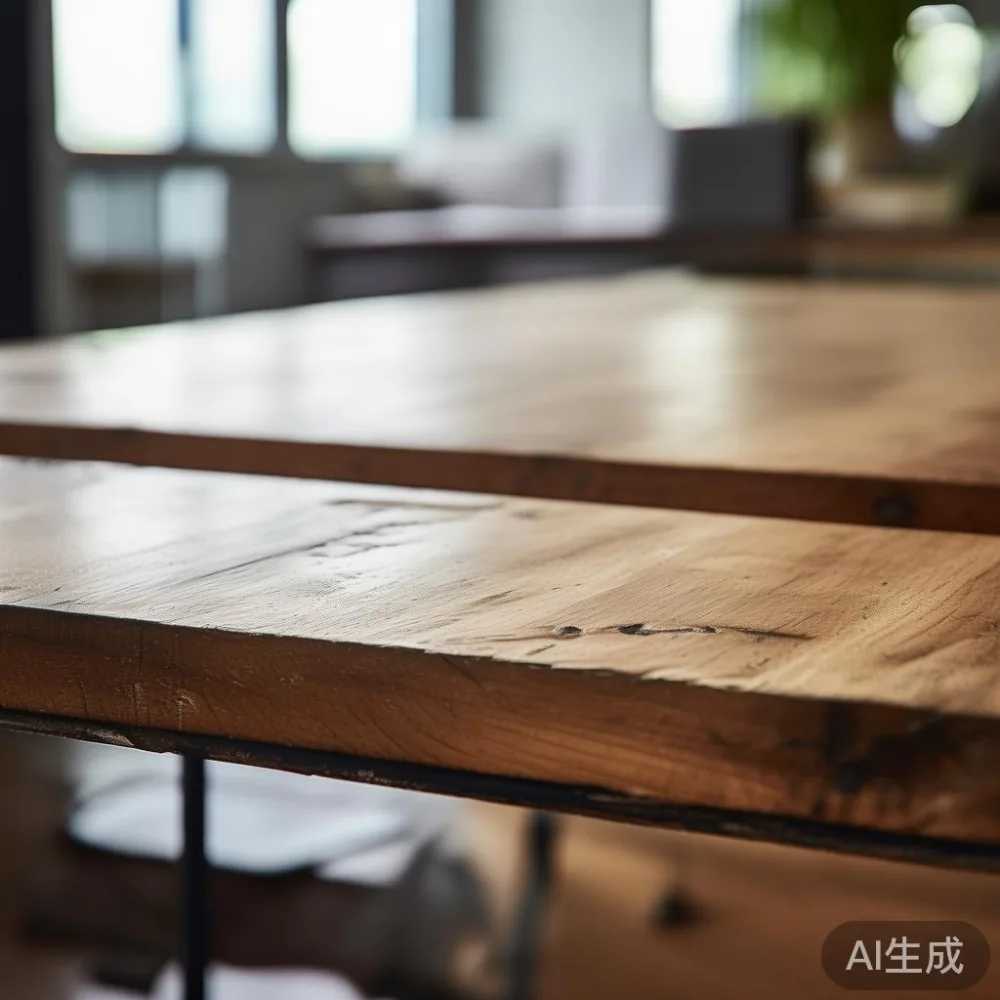
On a recent test bench, a 220 cm dining table with a floating top and breadboard ends survived sixty wet-dry cycles with less than 1 mm of permanent cupping. A glued-down top of the same size cupped by 3.5 mm in the same period.
Is a headboard worth the price?
Yes, a headboard is worth the price in a humid Singapore bedroom, because it protects the wall behind your mattress from moisture wicking up through the plaster, and it gives your bed frame a stable vertical anchor that reduces side-to-side racking when humidity swings. A solid wood headboard acts as a buffer between the cool air-conditioning zone where you sleep and the warmer, more humid wall surface, which is the area most prone to damp patches during the December monsoon.
The price question usually comes down to three things: size, timber, and upholstery. An upholstered headboard in ash or rubberwood with linen or microfibre covering generally runs from SGD 480 to SGD 1,250 for queen size, while solid hardwood versions in oak or walnut start around SGD 1,400 and can reach SGD 2,800 for king size with full padding. A taller headboard at 110 to 130 cm costs more than a low 70 cm version because the panel is wider and the internal frame needs extra reinforcement.
If your bedroom runs an air-conditioner at 24 degrees Celsius for seven to eight hours a night, a well-built headboard will hold its shape for a decade or longer with very little maintenance. Skip MDF or particleboard cores; they swell visibly when humidity climbs and they will not return to their original dimensions. Our recommendation for Singapore is a solid rubberwood or ash frame with a breathable fabric cover, leaving a 2 to 3 cm air gap behind the headboard so air can circulate and dry any condensation that forms on the wall.
What humidity range is safe for a solid wood sofa in a HDB or condo?
For a solid wood sofa in a Singapore HDB flat or condo, the safest indoor humidity range is 45 to 60 percent, which is achievable with a small dehumidifier and basic air-conditioning habits. Anything above 65 percent for prolonged periods will start to stress the frame, especially the corner blocks and the seat platform beneath the cushions.
HDB living rooms in Tampines and Bedok tend to sit at 70 to 78 percent when the windows stay closed and air-conditioning runs only in the bedrooms. Corridor ventilation in older blocks is limited, and lift lobbies often trap warm, humid air that drifts into the unit when the front door opens. In newer Punggol condos with cross-ventilation, you can drop the living room humidity to 55 to 60 percent simply by opening opposite windows for an hour a day and running a ceiling fan. Combined with a 12-litre dehumidifier, you will rarely see the hygrometer climb above 62 percent.
For the sofa itself, two construction details matter more than the brand name:
- A kiln-dried hardwood frame, ideally rubberwood, ash, or beech, with a moisture content between 8 and 12 percent at delivery.
- Corner blocks glued and screwed at each seat junction, not just stapled. Cheap sofas skip this step and the seats sag within a year in our climate.
Budget a sensible SGD 950 to SGD 2,400 for a three-seater solid wood sofa built for tropical conditions. Anything under SGD 600 is almost certainly using engineered wood or soft pine that will not cope well above 70 percent humidity.
Can marble tables and metal furniture survive the same humidity?
Yes, marble tables and metal furniture are generally far more tolerant of Singapore humidity than solid wood, but each material has its own specific weak points that you should know before placing an order. Marble does not swell or shrink with humidity the way wood does, but it can absorb oils and liquids through its pores, and metal furniture will oxidise if its protective coating is scratched.
Our collection includes a French provincial coffee table malaysia option with a marble top and a hand-finished solid wood base, which combines both materials in one piece. The marble slab is sealed at the factory with a penetrating sealer that lasts three to five years before a refresh is needed. A 110 cm round version typically costs between SGD 780 and SGD 1,450 depending on the marble grade and the base material.
For metal furniture, the powder-coated finish used on most outdoor-grade pieces handles our humidity well, but any cut edge or weld point can begin to flash-rust within six months if the coating is damaged. Wipe down the frame monthly with a dry microfibre cloth and inspect joints twice a year. Stainless steel 304 grades cope better than 201 grades, and aluminium does not rust but it can pit if salt accumulates from sea air, which is a real concern for homes in Sentosa Cove or Marine Parade. A small 60 cm metal side table with a marble top in our catalogue runs around SGD 420 to SGD 680, which is a reasonable entry point if you want a piece that will hold up in a balcony setting.
One word of caution: do not place a marble table directly on a solid wood floor without felt pads or a tray underneath. The marble can trap moisture against the wood and leave a dark ring that is difficult to remove, especially on rubberwood and beech floors finished with a matte lacquer.
How should I acclimatise a bed frame, wardrobe or dining table after delivery?
You should acclimatise a new solid wood bed frame, wardrobe or dining table for at least 7 to 14 days in the room where it will live, with the packaging opened but the protective foam left in place on flat surfaces. Skipping this step is the single most common reason for cracked panels and twisted rails in the first month.
Our delivery team in Singapore aims to reach every HDB block and condo within 5 to 9 working days after an order is confirmed, and we ship free for orders above US$350, which equates to roughly SGD 480 at current exchange rates. On arrival, the cartons are typically 18 to 25 kg for a nightstand, 35 to 55 kg for a dining table, and 70 to 110 kg for a full wardrobe. Lift access is part of the equation: most HDB lifts in Tampines and Bedok have interior dimensions around 1.1 m wide by 1.4 m deep, which fits a flat-packed wardrobe panel of 2.4 m length once tilted. Older lifts in some blocks are tighter at 0.95 m, and our customer service team will check the dimensions before shipping anything over 2 m in length.
Follow this acclimatisation routine:
- Open all cartons on the same day and remove the plastic wrap, but leave foam pads and corner protectors in place.
- Stand major panels upright or lean them at an angle so air can move around both faces.
- Run a dehumidifier to keep the room between 50 and 60 percent during the 14 days.
- Do not place the piece directly against an external wall; leave at least 8 cm of gap for airflow.
After assembly, give the wood a final wipe with a dry cloth and apply a thin coat of beeswax or hard wax oil if the surface feels dry. Reapply every six months in our climate. Skipping this step lets the surface dry out under air-conditioning and develop micro-cracks along the grain.
What does the MIDHILL warranty actually cover in Singapore?
The MIDHILL warranty covers the structural integrity of every solid wood piece for ten years, which includes frame joints, drawer runners, and the bonding between marble inserts and wooden bases. It does not cover surface wear, colour fading from sunlight, or damage caused by prolonged exposure to humidity above 70 percent without any dehumidification.
Our lifetime refinishing service is the second layer of protection, available to customers in Singapore and Malaysia. If your dining table top develops light scratches or loses its sheen after five to seven years, you can ship the top back to our Foshan workshop or arrange a local refinisher visit, and we will sand and re-oil the surface at the cost of materials only. Customers typically pay between SGD 180 and SGD 420 for a full refinish depending on the piece.
Returns follow a 14-day window for unused pieces in their original packaging. Because most of our furniture is made to order with specific fabric and timber choices, we recommend keeping the packaging intact for at least two weeks until you are certain the piece suits your room. If you live in a Punggol or Bedok unit and want to see the actual finish before you commit, we can often arrange a viewing at our nearest showroom partner or send fabric samples by post for SGD 12, which is credited back against your final order.
Will a wardrobe or nightstand really last twenty years in our climate?
Yes, a well-built solid wood wardrobe or nightstand can last twenty years in Singapore, but only if the construction is right and the humidity in the bedroom is kept under control. Solid rubberwood nightstands from our workshop, finished with a hard wax oil and fitted with metal runners, have been in service for fifteen years in customer homes across Malaysia without warping or joint failure.
Three habits separate the pieces that last from the ones that fail early:
- Keep indoor humidity between 45 and 60 percent with a dehumidifier or steady air-conditioning.
- Wax the wood every six months and dust with a slightly damp cloth, never a soaking wet one.
- Rotate the position of any wardrobe at least once a year so one side does not sit against a consistently damp wall.
For nightstands, choose drawer boxes with dovetail joints and metal ball-bearing runners. The runners cost SGD 15 to SGD 25 more per drawer than plastic slides, but they keep opening smooth for the full life of the piece. Avoid nightstands with paper-backed veneer on the interior surfaces, because the veneer peels quickly once the humidity climbs above 70 percent for a few weeks in a row.
MIDHILL has built post-modern light luxury wardrobes in ash and walnut for Singapore condos, with concealed hinges, soft-close drawers, and adjustable interior shelves. A 200 cm three-door wardrobe in this range sits around SGD 3,200 to SGD 4,600 installed, and the ten-year structural warranty covers the hinges, runners, and panel integrity. For buyers who want the American light luxury look with thicker proportions and visible joinery, a similar wardrobe in solid white oak runs from SGD 5,200 to SGD 7,800. Both price tiers assume careful humidity management on the part of the owner, which is why our team always walks new buyers through the acclimatisation and care routine before delivery.
What is the smartest way to budget for a humidity-ready solid wood set?
The smartest way to budget for a humidity-ready solid wood set in Singapore is to spend on construction and finish first, then on size and ornament second, and to keep at least 10 to 15 percent of your furniture budget for climate control accessories such as a dehumidifier, a hygrometer, and maintenance wax.
For a typical three-bedroom HDB or condo living and dining area, a sensible split looks like this:
- Solid wood dining table for six (180 to 220 cm): SGD 1,800 to SGD 3,400.
- Solid wood sofa frame with good cushions: SGD 950 to SGD 2,400.
- Bed frame with headboard, queen size: SGD 1,400 to SGD 2,800.
- Wardrobe, three-door: SGD 3,200 to SGD 5,200.
- Two nightstands: SGD 480 to SGD 900 for the pair.
- One marble table or accent piece: SGD 420 to SGD 1,450.
Add SGD 280 to SGD 450 for a mid-range 12-litre dehumidifier, SGD 25 to SGD 60 for a reliable hygrometer, and SGD 60 to SGD 90 per year for wax and cleaning products. Total outlay for a complete solid wood set in a humid-ready condition usually lands between SGD 8,800 and SGD 14,800 before GST, which is a realistic range for buyers who want pieces that last fifteen to twenty years rather than five to seven.
One last piece of advice drawn from years of factory and field experience: do not buy solid wood furniture based on photos alone. Visit a showroom, run your hand across the surface, check the underside of a drawer, and ask for the moisture content reading of the actual panel in front of you. A piece that feels cold and slightly damp in a non-air-conditioned showroom has absorbed too much moisture already, and it will move unpredictably once it reaches your living room. A piece that feels room temperature and slightly waxy is almost always a safer buy for our tropical homes.