How Humidity Affects Wood Furniture in Singapore Homes
Singapore’s warm, humid climate can change solid wood furniture faster than many homeowners expect. In HDB flats and private condominiums from Tampines to Bedok and Punggol, indoor humidity often rises during the monsoon period, remains high through the afternoon, and can vary sharply between a corridor, a lift lobby and an air-conditioned bedroom. Moisture absorbed by timber may cause swelling, warping, joint movement and mould if ventilation is poor.
This guide explains how relative humidity affects wood, how metal furniture behaves in the same environment, and what practical steps protect furniture without making a home look clinical. It also covers delivery planning for Singapore buildings, where narrow lift doors, compact corridors and GST can influence the total cost and practicality of a larger order.
MIDHILL is a Foshan solid wood furniture maker established in 2008, with export experience across more than 15 countries. Its relevant assurances include a 10-year structural warranty, lifetime refinishing, 14-day returns and free shipping above US$350. Prices quoted below are indicative Singapore retail examples in SGD, with GST shown separately where appropriate.
What Singapore humidity does to solid wood
Relative humidity is the percentage of water vapour in air. At approximately 60% relative humidity, many indoor wood products are close to their intended moisture balance. A level around 75–85% is much more demanding: timber can absorb moisture, expand across the grain and become less stable in tight joints. If relative humidity then falls to 50–60% after air-conditioning starts, the wood may shrink and develop small checks around a joint or finish.
The direction of movement is easy to misunderstand. Solid wood does not simply expand like a sponge. Its movement varies by species, cut and grain direction. A 180 cm dining table may expand only a few millimetres across its width but noticeably more along the length of an open-grain board. Veneered panels can behave differently because their thin veneer is bonded to a manufactured sheet, while solid wood can move more visibly.
In an HDB flat, the most common humidity pocket is not necessarily the main living room. It may be a laundry area, balcony, kitchen corner or bedroom wall beside a window. A wardrobe positioned against an external wall can experience daily temperature changes, especially in a Tampines or Punggol unit where the bedroom receives morning sun. A nightstand placed beside a bathroom or ensuite deserves the same attention.
Use a small digital hygrometer, ideally with a maximum and minimum memory function. Place it near the furniture for 7 days and record readings at about 8 a.m. and 8 p.m. If the display repeatedly exceeds 70%, improve airflow or use a modest dehumidifier. If it drops below 45%, increase ventilation during less humid hours and consider a plant or managed humidifier. Avoid chasing a single reading; stable conditions are more useful than an isolated number.
How can humidity damage a solid wood sofa, bed frame or dining table?
The visible signs often appear gradually. A solid wood sofa with exposed arms may develop a faint haze, tacky finish or faint joint line. A solid wood bed frame may loosen slightly at a tenon or produce a knock at the headboard. A dining table may feel sticky on humid evenings, develop wavy surfaces or show gaps along laminated edges. Doors and drawers can shift as internal moisture changes.
Water stains need immediate care. Blot rather than rub, and do not use household bleach on an unknown finish. A clean, white cotton cloth lightly dampened with warm water can help lift fresh surface moisture. Let the area dry naturally with good airflow. If the mark remains, test a finish-compatible cleaner on an underside area first. Silicone, oil and wax can be difficult to remove from open grain, and aggressive solvent may dull a lacquered surface.
Seasonal movement is not automatically a manufacturing fault. However, deep splits, separated joints, mould colonies or persistent cupping should be assessed. The structural warranty can address qualifying construction issues, while refinishing support can help with surface wear or restoration over the product’s life. Keep purchase documents, moisture readings and photographs because they make diagnosis much more precise.
For a newly delivered piece, do not place it directly against a cold exterior wall or install it in a damp laundry corner. Leave suitable airflow around the back and base. In a typical 900–1,200 mm bedroom, a bed frame with a 45–55 cm headboard may look refined, but spacing from the wall also allows moisture to dissipate.
Why does metal furniture need careful attention in humid Southeast Asia?
Metal furniture does not absorb humidity into solid timber, but it can still suffer from corrosion. Bare steel is especially vulnerable to oxidation when salt in coastal air combines with moisture. Aluminium has a protective oxide layer and generally tolerates humid conditions well, while powder-coated steel can last for years if its coating remains intact.
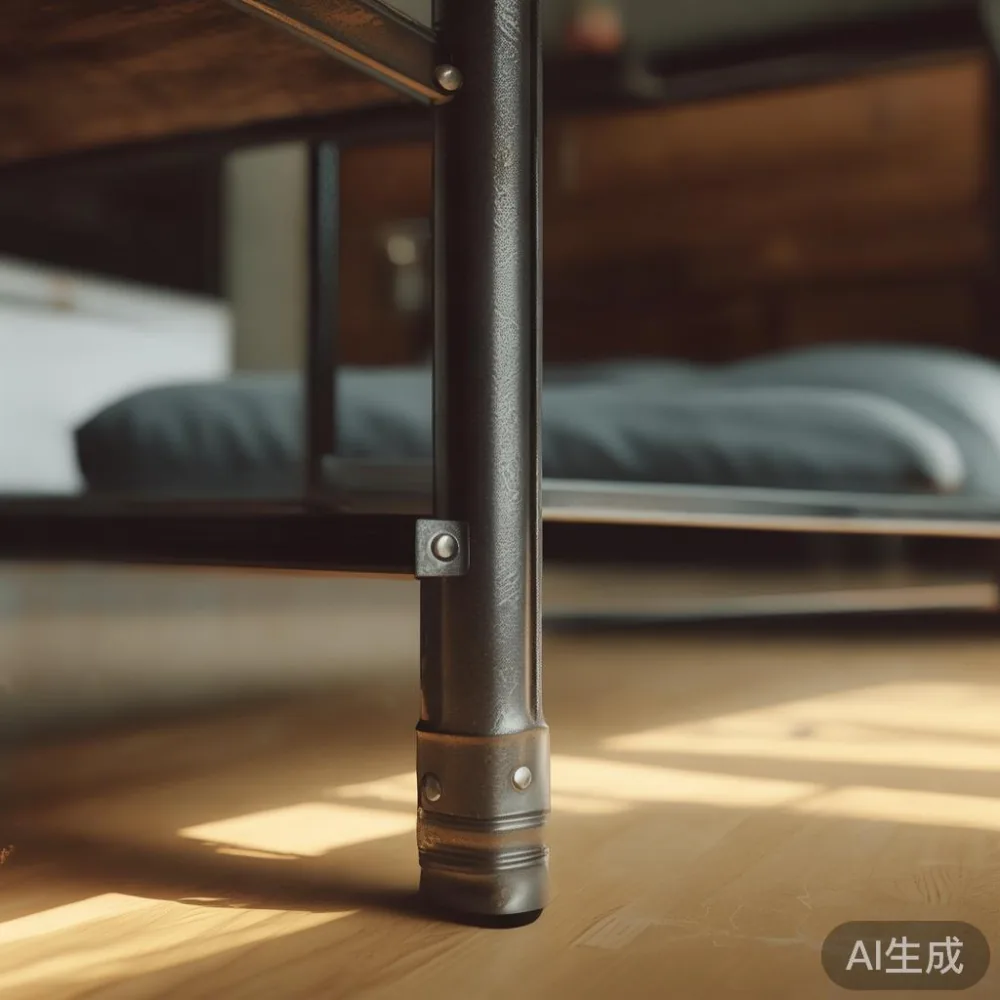
The danger often begins with a small chip, scratch or mounting hole. Water collects at that point, then rust spreads beneath the powder coating. Inspect a metal dining chair every 6 months, with extra checks after rainy periods. Pay attention to the underside of the seat, the lower frame, foot caps and any point close to a floor-cleaning machine. Use a dry cloth first; if residue remains, use a soft brush and a cleaner approved for the exact coating.
For metal furniture used beside a dining table or in a balcony, specify a marine-grade powder coat where possible. Stainless steel grade 304 works well in normal indoor conditions, although it is not automatically rust-proof. Grade 316 has stronger resistance to chloride exposure but costs more. For coastal balconies, wipe stainless components after rain and avoid leaving damp paper, fabric or packing foam against them.
Combination pieces deserve close attention because wood and metal expand differently. A metal bed frame with a solid wood headboard, for example, can transfer stress if its fixing blocks natural wood movement. A metal-framed wardrobe or coffee table with a stone or marble top needs even support and a stable fixing pattern. Ask the manufacturer for joint tolerances, fixing materials and a moisture range rather than assuming all construction methods behave alike.
Which humidity level is comfortable for a Singapore home?
A practical target for wood furniture and occupant comfort is generally 50–65% relative humidity, with limited fluctuation. During a monsoon month, readings of 60–70% for short periods are common and manageable in a ventilated flat. Continuous readings above 70% call for action, particularly around wardrobes, bookcases and joinery. Readings below 40–45% can be uncomfortable in some homes and may cause certain timber pieces to shrink more noticeably.
Air-conditioning lowers humidity but also cools surfaces. Direct cold airflow over a solid wood dining table or wardrobe can create a moisture gradient in one evening, followed by expansion once the unit switches off. Set the room temperature around 24–26°C where possible and avoid aiming vents directly at furniture. Dehumidifiers work best in closed spaces, with a drain hose or an empty tank checked every 1–2 days.
For metal furniture, the same principle applies to surface temperature and drying time. A powder-coated chair should dry after wiping rather than remain wet overnight. Keep at least 30–50 cm from an air-conditioning vent where layout permits, and 20–30 cm from a wall for airflow. In compact HDB interiors, that clearance may need to be balanced against circulation space; avoid pushing a metal wardrobe tightly into a corner without checking the manufacturer’s servicing requirements.
How should I prepare a HDB flat or condominium for furniture delivery?
Measure the route before ordering. Standard HDB lift doors may be around 900 mm wide, but the usable opening can be smaller because of the door panel, frame or intercom hardware. Older lift cabins may also have limited depth or turning space. A 180 cm dining table can fit inside a lift only if it can be angled safely; a rigid 220 cm sideboard may not. Confirm the lift’s posted load limit as well as its internal dimensions.
Corridor width matters too. Common condominium corridors may be approximately 1.2–1.8 m wide, while access routes can narrow at a fire door or turning corner. Measure the narrowest point, add about 10 cm of working margin and protect floors with cardboard or moving blankets. For stairs, check the landing turn and whether two movers can carry the piece. The delivery team should be told about a required service lift, parking distance and the floor number.
Allow 3–7 delivery days for made-to-order pieces once production is complete, although remote-area or peak-season timing can vary. A large flat-pack order may be easier to move but take longer to assemble. Confirm whether delivery is curbside, room-of-choice or includes assembly, because these terms affect labour cost and liability.
Budget GST at 9% on taxable supplies. For example, a dining table listed at SGD 2,800 becomes SGD 3,052 after GST. This calculation is for budgeting rather than a final tax invoice. For the import of selected goods, freight and other charges may also affect the final landed price, so request a written quotation before payment.
How do I style a bed frame and wardrobe without trapping moisture?
For a Singapore bedroom, leave enough space for airflow and visual calm. A low solid wood bed frame, a fitted linen headboard and one wall-mounted reading light can create a French light luxury mood without crowding a 3.5 × 3.8 m room. If you are considering European light luxury sofa vs French provincial sofa options for a nearby living room, compare the sofa’s depth, leg clearance and moisture requirements as well as its visual character.
If you are working through how to style European bed in apartment layouts, prioritise the wall length and door swing before decoration. A 160 cm bed needs at least 70–80 cm of clear space on each side for use, while a 90 cm nightstand needs roughly 45–60 cm across. In a narrow HDB bedroom, a 140 cm bed with compact drawers may function better than a 160 cm model with a wide frame.
For a different design direction, how to style American bed in bedroom questions often focus on a strong headboard and balanced side tables. That approach can work with an industrial metal bed frame and solid wood nightstands, provided each material is allowed to dry and expand normally. Use a wall art panel at least 5 cm away from the headboard to avoid direct contact, and keep bedding from touching a cool exterior wall.
A wardrobe should stand on a level base with rear ventilation specified by the maker. Do not trap a solid wood wardrobe against wallpaper, skirting or a wet balcony wall. If the unit is near a laundry balcony, maintain at least 60–90 cm of separation from the balcony door where space permits. For a compact room, an open metal wardrobe can reduce visual heaviness, but internal wooden shelves still need humidity monitoring.
What should I look for when comparing light luxury furniture?
Light luxury should mean proportion, material and workmanship rather than decorative excess. French light luxury often pairs pale timber, curved profiles and restrained upholstery. American light luxury tends to use recognisable silhouettes with strong lines and comfortable proportions. Post-modern light luxury can combine solid wood with metal furniture, but clear junctions and practical spacing matter more than novelty.
When evaluating a light luxury coffee table, inspect underside joinery, leaf movement and finish consistency. If a marble table is selected, check the top’s support points, weight and level tolerance. Marble is less sensitive to humidity than wood, yet an uneven frame can produce stress around fixing points. A solid wood dining table needs a stable base and expansion allowance. A wardrobe needs adjustable hanging hardware and moisture-conscious installation. A solid wood sofa needs stable frame joints and removable cushions that can be aired.
For an Italian light luxury accent chair, the category may be used for the design character rather than the country of manufacture, so ask for production details. Confirm the frame material, upholstery composition, cushion density, timber species and finish. A useful specification is a frame that can accommodate a typical 60–70% indoor relative-humidity range, with clear guidance for coastal exposure.
Buyers searching under 2000 Modern furniture may find solid wood sofas, dining sets and occasional tables below SGD 2,000, but dimensions and construction vary significantly. Compare a complete set’s delivered price rather than one catalogue item. A dining set listed at SGD 1,600, for example, is SGD 1,744 with 9% GST before any delivery or access surcharge.
How do I maintain a solid wood dining table through a humid year?
Wipe surfaces after meals, especially near sauces and drinks. Use coasters and trivets with a minimum 10 cm clearance from a hot dish. Place a solid wood dining table away from direct afternoon sun and do not use steam cleaners, ammonia-heavy cleaners or abrasive pads.
Check movement once a month. Look under the table for daylight showing through a seasonal joint line, then compare with earlier photographs. A small gap can reflect normal movement if the table remains stable and the joint is designed for it. Do not force a drawer or glue a moving joint without understanding the construction.
Refresh the finish according to wear rather than humidity alone. Oils may need reapplication after frequent use, while lacquer can be assessed for scratches and colour change. Keep the table in a stable indoor environment, away from a damp wall. This protects the top and the metal furniture legs or braces underneath.
For a coffee table, place coasters beneath rings and lift decorative trays occasionally so the surface can dry. A MIDHILL coffee table with a solid wood top and metal structure can suit a post-modern light luxury room, but the maker’s care instructions should define compatible cleaners and whether the top can be refinished.
When should humidity damage be treated as a product issue?
Normal environmental movement should not produce structural instability. A warped dining table, a wardrobe door that repeatedly binds, a bed frame joint that separates, or mould beneath a finish warrants investigation. Keep the room’s hygrometer readings for at least 14 days, retain delivery records and document cleaning and ventilation habits. Photos taken from the same angle can show progression clearly.
Contact the supplier before applying oil, filler or paint over the affected area. An unauthorised coating can complicate refinishing or make it harder to identify the original finish. A 10-year structural warranty may cover specified structural components, but surface wear, standing water and misuse follow different terms.
The simplest protection remains consistent: target 50–65% relative humidity, ventilate damp rooms, keep furniture 20–30 cm from walls where possible, avoid direct air-conditioning airflow and inspect metal furniture every 6 months. With careful measurements and a clear care plan, a solid wood sofa, bed frame, dining table, wardrobe, nightstand or marble table can remain comfortable and visually refined for many years in Singapore.