Veneer vs. Solid Wood: 5-Year Cost Insights for Singapore Households
For furniture buyers in Singapore, the difference between veneer and solid wood is often presented as a simple choice between affordability and durability. Over 5 years, however, the real calculation includes replacement, refinishing, transport, installation, damage repairs, and the usable space consumed inside a compact HDB flat or condo. Lift access, corridor turns, humidity, and GST can all change the result. This comparison looks at common pieces such as a solid wood bed frame, dining table, wardrobe, nightstand, and sofa, while also considering how metal furniture fits into the same home-planning decisions.
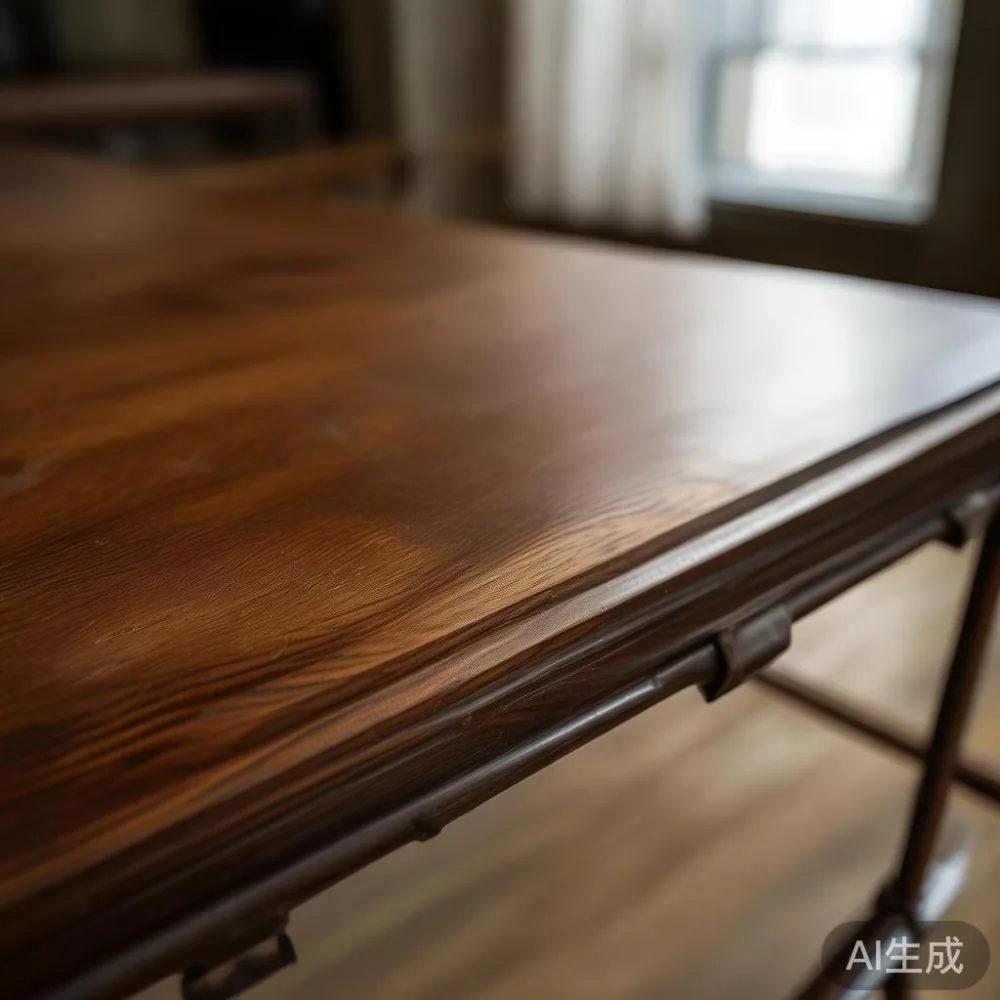
My colleague visited a family in Tampines last month to inspect a 3.7 m solid wood dining table before delivery. The lift was 1.1 m wide with a 1.05 m door, and the turning corridor measured 1.6 m at its tightest point. The table had to be separated into 2 sections weighing 31 kg and 29 kg. That visit made one point clear: material cost tells only half the story. Moving a heavy item through a Singapore home can take 2 people, 45 minutes, and a SGD 120 professional delivery charge even before GST.
What Does a 5-Year Furniture Cost Comparison Measure?
The calculation compares 2 ownership paths over 60 months: a representative veneer dining table, bed frame, wardrobe, nightstand, and sofa against solid wood equivalents. It includes purchase price, 9% GST, delivery, assembly, likely repairs, and one planned refinishing cycle where applicable. It does not assume that a piece will remain in one home for the full 5 years, but it does assume normal family use: 3 meals per day at the dining table, daily bedroom use, weekly wardrobe access, and around 10 hours of seated use per weekday on the sofa.
For a fair comparison, veneer here means a 12-18 mm wood-core panel with a 0.6 mm rotary-cut veneer face, not low-pressure laminate. Solid wood means kiln-dried hardwood components such as rubberwood, ash, oak, or beech, with finger-jointed parts where appropriate. Metal furniture refers to frames, legs, handles, or structural supports. Its role in this comparison is practical rather than decorative: slim metal supports can reduce the volume and weight of a dining table or bed without changing the main material decision.
The figures below are planning estimates in SGD. Actual quotes vary with dimensions, timber, finish, access, and construction. For reference only, an indicative solid wood dining table may cost SGD 1,980 before GST, while a comparable veneer table may cost SGD 980. A 180 cm solid wood bed frame may cost SGD 1,680, compared with SGD 890 for veneer. A 150 cm wardrobe may cost SGD 2,380 against SGD 1,290, and a 45 cm nightstand may cost SGD 420 against SGD 220. A 200 cm three-seat sofa may cost SGD 2,680 against SGD 1,480.
How Much Do Veneer and Solid Wood Cost Over 5 Years?
On paper, veneer wins the opening purchase. The sample bundle costs SGD 4,860 before GST, or SGD 5,297 after 9% GST. Delivery and assembly add SGD 320, giving SGD 5,617. The solid wood bundle costs SGD 9,140 before GST, or SGD 9,963 after GST. Delivery, assembly, and the more difficult handling of heavier parts add SGD 560, producing SGD 10,523.
The 5-year difference is SGD 4,906. Divided across 60 months, that is SGD 81.77 per month for this five-piece household set. The monthly figure is useful for comparison, but it should not be treated as a universal saving: a smaller room or a single bed frame produces a different total. Also, many solid wood buyers would not replace all 5 pieces at once, so budgeting the pieces separately is more realistic.
Repair assumptions account for the difference in value. A veneer table may need edge banding repair in year 3, estimated at SGD 80. A solid wood table may need a surface scratch treatment in year 2, estimated at SGD 40. Veneer wardrobe doors may require 2 hinge adjustments at SGD 35 each in years 2 and 4. Solid wood movement or rubbing on a drawer may need 1 small adjustment at SGD 25 in year 3. Veneer sofa upholstery may need a local fabric repair at SGD 120 in year 4; the solid wood sofa may instead need a structural inspection costing SGD 0, with no parts assumed.
For the solid wood set, one coat of maintenance is included in year 3. A 180 cm dining table and 150 cm wardrobe can be handled with 2 litres of wood-care product at SGD 28 per litre, plus 4 hours of sanding and application valued at SGD 35 per hour. The total is SGD 196. The veneer set receives edge and surface care costing SGD 45 in year 2. After these allowances, the 5-year solid wood total becomes SGD 10,679, while the veneer total becomes SGD 5,822. The gap is SGD 4,857.
This comparison deliberately treats refinishing as a maintenance cost, not an automatic need. Solid wood does not automatically fail after 5 years, and veneer does not automatically peel. A dry interior with stable humidity can preserve both. In a Bedok or Punggol condo with strong air-conditioning, the indoor environment may be more stable than an open balcony or an unconditioned side room.
Is Solid Wood Worth the Higher Cost for Humid Singapore Homes?
Singapore’s outdoor relative humidity commonly ranges from 70% to 90% for much of the year. Indoor conditions are usually lower because of air-conditioning, but balcony doors and wet-area ventilation can still affect furniture. Solid wood can move as its moisture content changes. A 180 cm dining table may expand or contract by roughly 2-4 mm across its width depending on the timber, humidity, and joinery. Quality furniture accounts for this with stable construction, adequate clearances, and finishes that tolerate seasonal movement.
Veneer can perform well on a stable flat, but its thin face layer is more exposed to chipped edges, deep scratches, and lifting at corners. A 0.6 mm veneer is already thinner than a typical sheet of paper, so it should not be confused with 2 mm or thicker commercial veneers that behave differently. If the outer face is damaged, the repair method and colour matching become more involved.
Solid wood offers another advantage: a damaged rail or drawer front can often be sanded and refinished locally. A veneer surface with a through-chip may require replacement of a larger panel. That does not make veneer unsuitable. It makes the construction and finish details more important. Buyers should check whether edges are sealed, corners are reinforced, and moving parts have tolerances for seasonal movement.
Light-luxury design does not require one material in every room. French light luxury may pair a solid wood bed frame or nightstand with a restrained metal frame and pale upholstery. Post-modern light luxury can use clean-lined veneer cabinets with slender metal furniture supports. The design choice should support the budget rather than distract from it.
What Does Veneer Cost When Access, Delivery, and Repairs Are Included?
Delivery can narrow the cost gap in a practical way. A typical HDB lift interior measures about 1.0-1.2 m wide, while the doorway may be only 0.85-0.9 m. A condo corridor can turn sharply near the lobby or refuse area. A boxed dining table may fit an HDB lift more easily than a solid wood table delivered as 2 separate sections.
The sample budget assumes delivery from a Singapore warehouse. A local delivery quote may be SGD 80 for a nightstand and SGD 160 for a dining table, with 20-40 minutes of carrying time. A second person may be needed at SGD 45 for 1 hour. On the solid wood dining table, my colleague observed that the protected sections weighed 31 kg and 29 kg; each required 2 people to turn safely through the 1.6 m corridor. The extra care is sensible because a dropped hardwood top can chip corners.
Veneer furniture is not automatically lighter. A particleboard or MDF wardrobe can weigh 75-110 kg because it is dense and often fitted with large flat panels. A solid wood wardrobe may weigh 68-95 kg, depending on the species, back panel, and hardware. For difficult access, modular construction matters more than the label on the product page. Pieces that split into sections of 18-25 kg are easier to manage than a single 70 kg side panel.
For customers comparing an American bed vs French provincial bed, the difference in size and weight can be as important as timber. A carved American-style bed frame may have decorative headboard elements and a stronger visual weight than a simpler French provincial frame. The material budget can also vary: a queen-size solid wood American bed may cost SGD 1,880 before GST, while a French provincial bed in solid wood may cost SGD 1,480. Veneer versions may cost SGD 980 and SGD 890 respectively.
How Should You Compare a Solid Wood Sofa, Bed Frame, and Wardrobe?
Start with dimensions, not just photographs. Measure the room, stair or lift route, and final position. Leave at least 60 cm for a walkway beside a bed, 90 cm in front of wardrobe doors where space allows, and 75-90 cm between a dining table and the nearest wall for chair movement. These clearances can influence whether a larger piece is worth its price.
For a sofa, focus on the frame, joints, suspension, and cover. Solid wood sofa frames may use hardwood rails and dowelled or mortise-and-tenon joints, while veneer frames may use engineered components. A 200 cm three-seat sofa needs a broad doorway; at least 1.9 m of clear turning space is useful. If a corridor prevents it from entering, the purchase should not proceed merely because the sofa is discounted.
For a wardrobe, check drawer and door clearances, wall fixing, and load capacity. A 150 cm wardrobe may hold 35-45 hanging garments when the internal rail is 120-130 cm. Solid wood can be useful in visible rails and frames, but a well-engineered veneer carcass with durable moving parts may provide better value if it is closed and protected.
For a bed frame, compare the centre rail and slat spacing. A 180 cm queen frame may use 10-12 support slats spaced 5-8 cm apart, plus a centre support for spans over 150 cm. Solid wood does not remove the need for correct support. For a Japandi bedroom, useful guidance on how to choose Japandi bed includes checking low visual profiles, warm neutral finishes, stable slats, and a frame that suits the actual mattress dimensions.
Which Material Fits Different HDB and Condo Budgets?
For a compact Tampines HDB flat, a blended approach often makes the most financial sense. A veneer wardrobe can reserve the main storage budget, while a solid wood bed frame and nightstand become durable focal points. A solid wood dining table may earn its place in the dining zone if the family uses it daily and has a clear delivery route. A marble table can be a sensible occasional surface, but it should not be counted as a softwood replacement: marble adds weight, and a 120 cm round table may weigh 45-65 kg.
In a Bedok condo with a larger dining area, solid wood can make sense where the table receives daily contact. In Punggol, where many first-time owners are balancing a new home with other expenses, veneer on closed storage may preserve funds for appliances or repairs. The correct answer is tied to use frequency, not fashion alone.
Style decisions can also be economical. Anyone considering European sofa vs Mid-century modern sofa should compare seat depth, frame construction, and restoration needs along with profile. A European sofa may use loose cushions and a timber frame, while a mid-century modern sofa may have tighter upholstery and angled metal furniture legs. A solid wood frame with replaceable covers can support a French provincial with storage concept, especially when the storage is built into a bench or plinth rather than added later as an oversized unit.
For bedroom storage, how to style American wardrobe in room can be approached with fewer visible components and a lighter wall colour, helping a large unit feel less crowded. In a narrow HDB bedroom, sliding veneer doors may use less floor space than hinged solid wood doors, but they require straight tracks and careful measurement.
What Are the 5-Year Ownership Risks for Veneer and Solid Wood?
The largest risk is poor moisture control. Place solid wood furniture away from persistent dampness and direct balcony spray, and follow the maker’s care instructions. Use coasters, wipe spills within 10 minutes, and keep indoor relative humidity in a reasonable range where possible. For a veneer dining table, use felt pads beneath objects and avoid dragging abrasive items across the face.
Transport risk is greater for solid wood because individual rails and tops may be heavier. Check whether delivery includes unpacking, carrying, and assembly. Damage during a self-pickup trip can erase part of the initial saving. If the furniture must travel in a van to a Punggol or Tampines unit, professional delivery is usually the safer budget line.
Another risk is treating a warranty like a promise that no maintenance is needed. MIDHILL’s 10-year structural warranty addresses structural defects within its stated scope, while lifetime refinishing refers to the applicable service for covered pieces; scratches, ordinary wear, and misuse may have different terms. Buyers should read the written exclusions, obtain care guidance, and keep the invoice. MIDHILL was established in 2008 and exports to more than 15 countries, but warranty coverage should still be assessed for the buyer’s own location and product.
For a bedroom refresh, how to style Japandi bed in bedroom with a solid wood bed frame involves balancing texture and negative space. Pale timber, cotton or linen bedding, 1 warm lamp, and 1 simple rug can complete the setting without adding unnecessary furniture. For a wider wardrobe, the same restrained palette can make solid wood doors feel lighter.
How Can You Decide Between Veneer and Solid Wood?
Veneer is the stronger financial choice when the piece is closed, lightly handled, and supported by stable construction. It can be especially useful for wardrobes, headboards, and secondary storage. The sample calculation puts 5-year veneer ownership at SGD 5,822 for 5 major pieces, with the main uncertainty being edge or face repair.
Solid wood is the stronger long-term choice for exposed, frequently touched furniture such as a dining table, bed frame, or nightstand, provided the owner values repairability and accepts the higher upfront and delivery costs. In the sample, 5-year solid wood ownership is SGD 10,679 including one maintenance cycle, or about SGD 178 per month for the 5-piece set.
That difference should be compared with actual use, not just a percentage. A table used every day for 5 years may develop hundreds of small marks. Veneer can handle normal use when well made, but a through-chip can be frustrating. Solid wood may be refinished, although the owner must still manage heat, water, and direct sunlight.
Singapore buyers should also include GST, delivery days, and access in the quote. Allow 7-14 delivery days for custom dimensions and 3-7 days for stock items. Add 1-2 hours for assembly, and ask whether the delivery team can carry furniture to the door, place it in the room, and remove packaging. These details can be worth as much as a few hundred dollars over 5 years.
Request samples, compare joints at close range, and view the actual finish under a shop light and daylight. For online browsing, m.midhill.co provides a way to review relevant product details, but measurements and care terms should be confirmed before payment. MIDHILL also offers a 14-day return window and free shipping on qualifying orders above US$350; Singapore delivery charges and GST should be confirmed separately rather than assumed.
The practical verdict is not that one material suits every home. It is that veneer often creates more usable value per dollar, while solid wood creates more repair flexibility in high-touch areas. For metal furniture, keep the focus on stable joints, powder-coated finishes, load ratings, and floor protection. Combine the materials where the hand reaches most often, and choose the construction that can actually be delivered through your lift and corridor.