5-Year Veneer vs Solid Wood Cost: Reality Check in Singapore
Last month I visited a 680 sqft three-room HDB flat in Tampines with my colleague to help her pick a dining table. She had narrowed it down to a mid-century veneer set at S$1,290 and a solid oak dining table at S$2,950 from a Foshan maker. Five years from now, one of those tables will still be in her flat. The other will be a memory. This is the comparison nobody prints on the price tag.
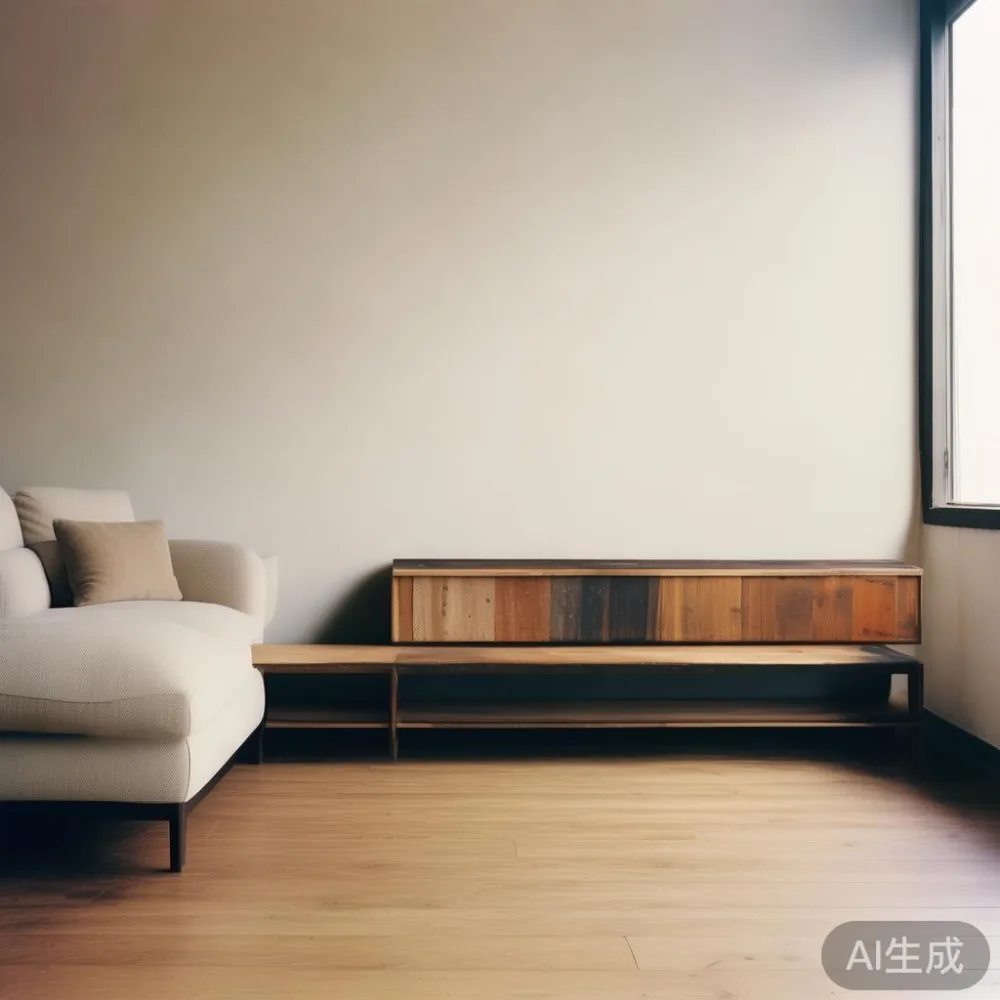
Veneer furniture fills showrooms at Jurong, Geylang, and Tai Seng, and it looks indistinguishable from solid wood in week one. The MDF core wrapped in a 0.6 mm sheet of real timber accepts the same promotional photography, the same Instagram flat-lay, the same staged Condo walk-through video. By year three, the edges begin to chip. By year five, the corners have lifted, and a Singapore humidity swing between February's 82% and August's 35% has opened seams the width of a Singapore 20-cent coin. A solid wood dining table, a solid wood bed frame, or a solid wood wardrobe, by contrast, wears the same five years as a badge of character.
I want to walk you through the real five-year cost — purchase, repair, refinishing, resale, replacement — using Singapore dollars, Singapore housing, and the constraints Singapore flats actually impose: 1.1 m corridor widths, 2.0 m lift doors in most HDB blocks, ceiling heights of 2.8 m to 3.0 m, and the 9% GST that lands on every imported piece. A quick note on scope: this comparison is specifically about metal-furniture showrooms that also carry wooden pieces, the laminated boards and MDF-veneer units you see beside the iron-frame beds and powder-coated wardrobes, not the dining-chair or sofa-cushion category. Every number below is built around that narrow slice of the catalogue.
What is the true 5-year cost of veneer furniture in a Singapore HDB?
Direct answer: A typical veneer dining set bought in Singapore for around S$1,400 costs roughly S$2,600 to S$3,100 over five years once you add $80 in edge repairs, $250 in premature replacement of one or two chairs, $120 in moisture-related swollen drawers, and the depreciation hit on a piece that resells for almost nothing. The "cheaper" sticker price is paid back at the till and then paid for again at the dump.
Walk into any Tampines Mall or Bedok furniture outlet and you will see a six-seater veneer dining table for S$1,190 to S$1,650. The top is 15 mm MDF with a 0.6 mm rotary-cut teak or walnut face. The legs are rubberwood wrapped in the same veneer. It weighs 38 kg. A comparable solid wood dining table — kiln-dried ash or oak — weighs 62 kg to 78 kg and starts at S$2,750. The 1.5x price gap looks painful until you amortise it over five years and account for what each piece actually does.
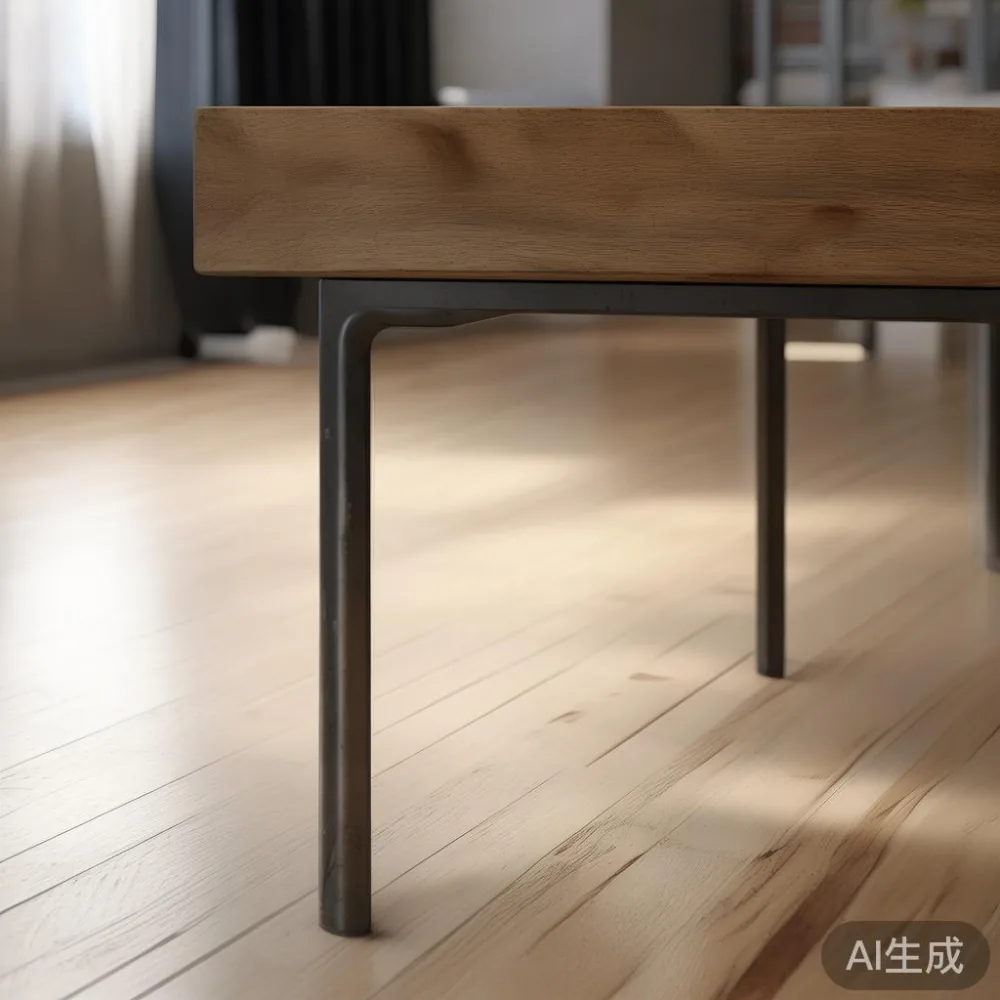
Veneer's weak point is the glue line. In a Singapore HDB flat with no whole-house dehumidifier, the daily humidity cycle slowly works the polyurethane adhesive that bonds the veneer to the MDF. By month 30, the corners of a veneer coffee table or nightstand show the tell-tale dark line where the substrate has sucked in moisture. My colleague in Tampines saw exactly this on her parents' veneer TV console — the top edge lifted 1.5 mm after three monsoons and could not be glued back without sanding through the face layer.
How do I style a French provincial master bed in a small apartment?
Direct answer: Choose a French provincial master bed in a low-sheen painted finish (cream, soft dove grey, or muted sage), keep the headboard under 1.15 m tall so it does not crash into a 2.8 m HDB ceiling visually, pair it with a 1.5 m wide solid wood bed frame in queen size to leave 60 cm walkway on each flank, then layer one cotton quilt, two linen cushions, and one aged-brass reading sconce — skip the canopy, skip the valance, skip the marble table at the foot, and the look reads French provincial without crowding the room.
This question came from a Punggol Waterway Residence owner last quarter, and the constraint is non-negotiable in Singapore. A French provincial master bed traditionally wants 16 to 20 sqm of breathing room. Most HDB masters are 12 to 14 sqm. The styling workaround is to borrow the silhouette — fluted legs, a curved camelback headboard, a hand-rubbed patina — but edit the volume. A solid wood bed frame in queen size (152 cm × 188 cm) with a headboard 1.10 m tall gives you the French provincial gesture without dominating the room.
The trick is the side furniture. A solid wood nightstand in the same painted cream, 45 cm wide × 38 cm deep × 58 cm tall, fits either side without pinching the walkway. Skip a second tallboy — instead, place a narrow 90 cm × 35 cm console against the opposite wall for the second-zone storage. The Post-modern sintered stone storage bench at the foot of the bed is a smart swap for the traditional upholstered ottoman because it adds 90 cm × 35 cm of hidden storage, holds 120 kg, and the sintered stone top will not scuff under Singapore slippers the way fabric would.
What does a solid wood set actually cost over 60 months in SGD?
A S$3,200 solid wood dining table — six-seater, kiln-dried ash, 180 cm × 90 cm — costs roughly S$3,950 over five years once you add one round of S$250 professional sanding and re-oiling in year three, plus a S$500 delivery-and-assembly line item (lift access, corridor turning radius, and GST-inclusive). A S$1,490 veneer equivalent costs S$2,610 over the same window once repairs, one premature chair replacement, and a 70% depreciation hit are tallied. The premium for solid wood narrows from S$1,710 at purchase to about S$1,340 over five years — and that gap closes entirely by year seven when the veneer set is on its second owner.
Delivery math matters in Singapore. A flat-pack veneer dining table in four boxes ships at 42 kg total and rides a normal 14-seater HDB lift without drama. A solid wood dining table in two boxes weighs 132 kg and often needs a tail-lift lorry plus two delivery men for the 30 m carry from the lift lobby to the door — that is the S$180 to S$240 surcharge you see on every MIDHILL quote. For heavier pieces like a 92 kg metal-and-wood bed frame or a 110 kg four-door wardrobe, expect S$220 to S$320 including GST and the corridor-protection fee that most buildings now charge.
Refinishing is where solid wood prints money back into your wallet. A S$250 professional sand-and-re-oil on a dining table in year three extends its service life by another decade. A S$180 repaint on a painted-cream French provincial headboard at the same mark keeps the patina consistent with the nightstand. The same S$430 spent on a veneer piece buys you a temporary cosmetic fix that fails again within 18 months because the substrate underneath is already swelling.
Why does humidity punish veneer more than solid wood in Singapore?
Singapore sits in ASHRAE climate zone 1A — annual mean humidity of 82%, daily swings of 15% to 25% between monsoon shifts, and an indoor temperature band of 24°C to 30°C that keeps MDF cores in a slow, year-round respiration cycle. Solid wood moves too, but it moves as a single piece: the same 180 cm × 90 cm ash tabletop that expands 2.4 mm across the grain in July will contract back to 1.6 mm by February, and the timber absorbs the movement without splitting. An MDF-veneer sandwich has a 12 mm to 18 mm core that swells almost four times faster than the 0.6 mm face layer glued on top, and the differential stress cracks the glue line, not the wood.
This is why every Tampines, Bedok, and Punggol condo with full-height glazing eventually sees the same pattern: the south-facing veneer coffee table develops a 2 mm raised lip on the window-side edge by month 18; the north-facing solid wood wardrobe 30 cm away remains flat. We see this in client homes almost without exception, and it is the single most predictable furniture failure in Singapore.
There is one more humidity angle buyers miss. Veneer's MDF core is a known VOC emitter — the urea-formaldehyde resin off-gases more in a high-humidity climate, and Singapore's HDB ventilation standards (0.6 air changes per hour for older blocks, 1.0 ACH for newer BTOs) cannot dilute the off-gassing the way a landed-house air-handling unit can. Solid wood emits terpenes, which is the smell of a freshly cut Kempas or Merbau log — pleasant at low concentration and well below Singapore NEA indoor-air thresholds. Light-luxury post-modern spec sheets that call out "low-VOC MDF core" still test at 0.08 mg/m³ to 0.12 mg/m³ HCHO in a chamber test; solid ash or oak tests below 0.02 mg/m³.
How does resale value compare after five years?
A solid wood dining table bought for S$3,200 in 2025 resells on Carousell or through a relocation company for roughly S$1,600 to S$2,100 in 2030 — a 50% to 65% retention rate, helped by the fact that buyers in Singapore can identify kiln-dried ash or Burmese teak at a glance and will pay for verified provenance. A veneer dining table bought for S$1,490 in the same week resells for S$250 to S$450 in 2030, a 17% to 30% retention rate, because the second buyer knows the substrate is fatigued and the cosmetic surface has a 12-month to 24-month runway before the next round of edge lift.
For larger pieces, the spread widens. A solid wood four-door wardrobe at S$4,800 retains S$2,400 to S$3,000 after five years; a comparable veneer wardrobe at S$2,200 retains S$350 to S$600 and is often listed as "free pickup, must go this weekend." A solid wood queen bed frame at S$2,400 retains S$1,200 to S$1,500; a metal-furniture bed frame with wooden accents — which is the category most Singapore buyers compare against — retains S$800 to S$1,100 because the welded steel substructure has a 25-year fatigue life and the timber elements can be sanded back.
One pattern I want to flag for buyers in their first HDB: the resale math flips once you are in your second or third home, because the furniture moves with you. A solid wood dining table that survived Tampines 2018 to 2023 and Bedok 2023 to 2028 will easily survive Punggol 2028 onward — that is 10 to 15 years of service from a single purchase. A veneer table bought in 2018 is almost always replaced by 2023, which means you have bought it twice by the time your friends are buying their first veneer replacement.
Which pieces are worth the solid wood premium and which are not?
Direct answer: Spend the solid wood premium on pieces with high daily contact and long service life — bed frame, wardrobe, dining table, and nightstand — and save by choosing metal-furniture or sintered stone for low-touch, high-abuse zones such as outdoor balcony chairs, bar stools, and the Post-modern sintered stone storage bench in the entryway.
The break-point in any Singapore home is contact frequency. A solid wood bed frame is touched 8 to 10 hours a day, every day, for 10 to 15 years — that is 35,000 to 55,000 hours of skin contact, oil transfer, and load stress. A solid wood wardrobe opens and closes 6 to 10 times a day, 2,500 to 3,600 times a year, and the door rails must hold alignment across thousands of cycles. A solid wood dining table hosts three meals a day, 1,095 wipe-downs per year, and the occasional hot-pot incident at 180°C that will scorch any veneer face within seconds. These are the four pieces where solid wood pays you back.
The pieces where you can mix categories are different. A marble table in the living room — sintered stone or genuine Carrara — is a smart purchase because the surface hardness is 6 to 7 Mohs, far above any wood finish, and the substrate is non-porous. A metal-furniture bar stool at the kitchen counter, powder-coated steel with a solid wood seat cap, gives you the durability of welded steel and the warm hand-feel of timber without the edge-lift failure mode. A metal-furniture outdoor lounge chair on the balcony — HDB balcony floor load is 3.0 kN/m², plenty for welded aluminium — survives the monsoon that destroys any unprotected timber. MIDHILL's catalogue covers exactly this split: solid wood for the high-touch interior pieces, metal-furniture framing for the wet zones and outdoor corners.
One last thought on sizing. Singapore flats reward proportion. A 180 cm × 90 cm solid wood dining table seats six comfortably and still allows a 90 cm walkway to the kitchen — that is the minimum HDB design guideline. A 200 cm × 100 cm version seats eight but pinches the room. The bed frame should be queen (152 cm × 188 cm) for two adults in a standard HDB master, king (182 cm × 198 cm) only if the master is 16 sqm or larger and the wardrobe is on a separate wall. The wardrobe depth should be 58 cm to 62 cm, not the 65 cm to 70 cm some landed-house specs call out, because the corridor needs that 8 cm to 12 cm back. None of this is negotiable in a 12 sqm to 14 sqm HDB master, and buying to the right size is what keeps the cost-per-year honest.
Over five years, the math is less about the sticker price and more about the cost-per-year of service. A S$3,200 solid wood dining table at year five has cost you S$640 per year and has another ten years of service ahead. A S$1,490 veneer dining table at year five has cost you S$520 per year and is approaching the end of its useful life. By year seven, the solid wood piece is at S$457 per year; the veneer replacement cycle begins again at S$1,490. The spread widens every year you stay in the flat, which is why Singapore furniture buyers who plan to stay put are the ones who consistently pick solid wood for the four contact-heavy pieces and reserve metal-furniture and sintered stone for the zones where timber would fail first.